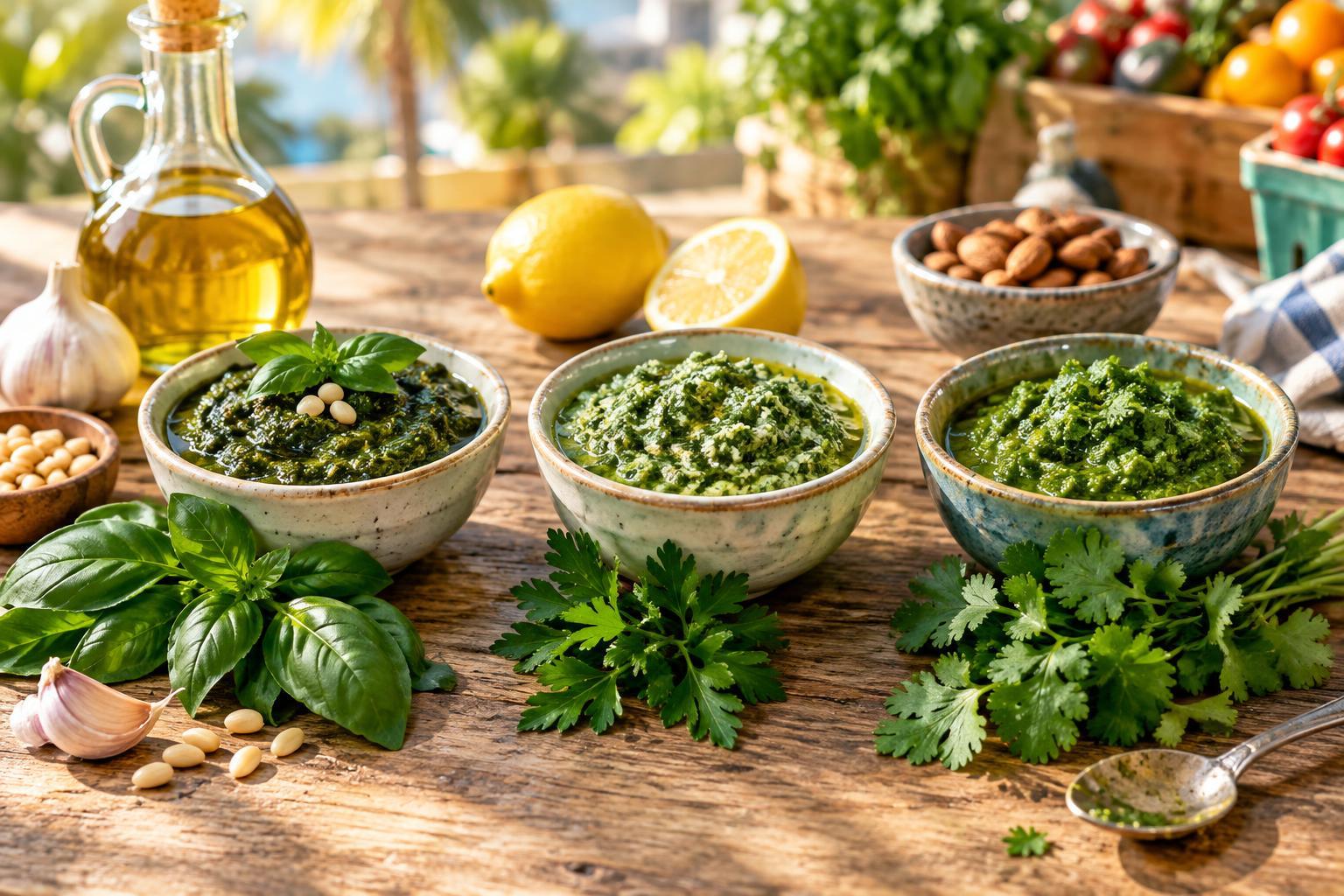
One method, three distinct sauces
A bunch of fresh herbs can become a useful sauce in minutes. While basil pesto is the familiar version, the same basic method works with parsley or cilantro: chop tender leaves with nuts or seeds, garlic, and oil, then season to taste. Cheese and lemon juice can add richness and brightness, but neither has to be automatic. Think of pesto as a flexible way to use herbs rather than a formula that must taste the same every time.
The herb is the decision that matters most. Basil makes a fragrant, gently sweet sauce. Parsley gives a cleaner, grassier result that lets other ingredients speak up. Cilantro brings a sharper, citrus-like character that changes what you may want to serve alongside it. If you are choosing herbs at a market, look for lively leaves without slimy patches or a strong off smell. A small taste of a clean leaf can help you decide which direction dinner should take.
What each herb brings to the bowl
Basil pesto is soft and aromatic, especially when paired with olive oil, garlic, hard cheese, and pine nuts or walnuts. It is an easy match for pasta, tomatoes, roasted vegetables, and sandwiches. Basil can be bruised by prolonged processing, so stop once the mixture is finely chopped and spoonable. If its flavor seems lost beneath the garlic, add another handful of leaves rather than more seasoning.
Flat-leaf parsley makes a brighter, more savory pesto. Its sturdy flavor stands up to toasted almonds, walnuts, or pumpkin seeds, and it works well on potatoes, beans, grilled vegetables, or fish. Tender upper stems can go in with the leaves; discard thick, tough lower stems. Because parsley is less sweet and perfumed than basil, a squeeze of lemon often gives the finished sauce welcome lift.
Cilantro produces the boldest shift. Try it with pumpkin seeds and a little lime juice, and consider leaving out the cheese so its fresh flavor stays prominent. Spoon it over rice bowls, tacos, roasted sweet potatoes, or corn. Some people experience cilantro’s flavor very differently, so parsley is a useful alternative when cooking for a group.
Build a batch, then adjust it
For a small batch, start with about 2 loosely packed cups of clean, dry herb leaves, 1/3 cup nuts or seeds, one small garlic clove, and 1/3 cup oil. Add 1/3 cup finely grated hard cheese if it suits the herb and the people you are serving. Pulse the solids in a food processor, then add the oil gradually until the pesto reaches the texture you want. A knife and cutting board work too: finely chop the solids before stirring in the oil.
Taste before adding much salt, particularly if you used a salty cheese. Lemon or lime juice can brighten a heavy-tasting batch; more oil loosens one that is too thick. If the garlic dominates, stir in more herbs or nuts. Toasting nuts or seeds deepens their flavor, but let them cool before blending. For guests with food allergies, check every ingredient and avoid assuming that a different nut or seed is a safe substitute.
Drying the herbs after washing helps keep the sauce from turning watery. A salad spinner or clean towel does the job. Make only what you expect to use soon, refrigerate leftovers promptly in a covered container, and freeze portions if you want to keep them longer. Added citrus changes the taste; it is not a substitute for proper storage.
Use the sauce beyond pasta
Pesto is easiest to appreciate when it finishes a dish rather than disappearing into it. Toss basil pesto with warm pasta and a splash of pasta water, or spread a thin layer inside a tomato sandwich. Stir parsley pesto into cooked white beans, or dollop it on roasted carrots. Add cilantro pesto to a grain bowl just before serving, where its aroma will remain noticeable.
You can also combine herbs when one bunch is not quite enough. Basil and parsley make a milder sauce than basil alone; parsley can soften cilantro’s edge without hiding it. Start with equal handfuls, taste, and adjust the next batch to your preference. That habit turns a simple market purchase into several possible meals, with less pressure to follow a recipe exactly.