One state, many food stories
Florida is easier to understand as a collection of food regions than as a single cuisine. Its long coastline, varied growing conditions, and connections to the rest of the South, the Caribbean, and Latin America have shaped what people grow, catch, cook, and share. Those influences overlap: a seafood dish served in one region may feel familiar in another, while two cooks in the same town may prepare it differently.
A useful starting map has three broad areas: the Panhandle, the peninsula, and the Keys. It is a guide, not a set of borders. Indigenous foodways, African American cooking, migration, trade, and family traditions have all contributed to Florida’s tables, often in ways a short regional label cannot capture. Approach a market stall or menu with curiosity rather than expecting one dish to represent an entire place.
The Panhandle: Southern roots and Gulf seafood
Across the Panhandle, Florida’s food traditions share much with neighboring Southern states. Cornbread, grits, beans, greens, and slow-cooked dishes sit comfortably alongside seafood from the Gulf and nearby bays. Fried fish or shrimp can be a straightforward celebration of a good catch, while a pot of peas or greens may tell just as much about home cooking. Preparation varies by household, so there is no single Panhandle plate to look for.
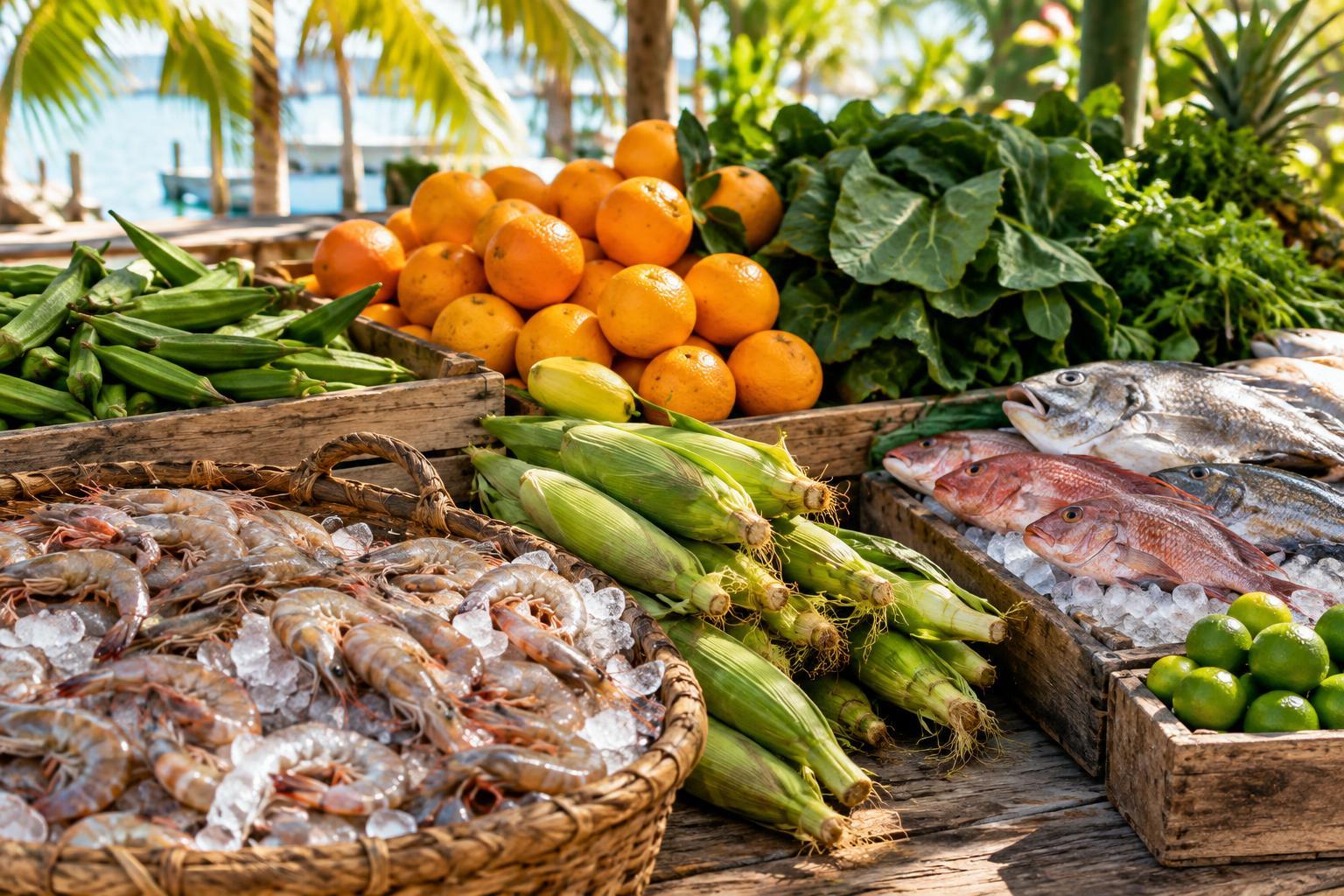
For a beginner, the pairing of seafood and produce is a helpful way in. Ask a fish seller what is available and how they like to cook it; then look for vegetables that would round out the meal. Okra might be stewed, sautéed, or used to give body to a soup. Sweet potatoes can be roasted for a simple side. What is local or in season will change, and a seller can often explain the difference between something caught or grown nearby and something brought in from elsewhere.
This region also rewards attention to ordinary foods, not only restaurant specialties. A family-style meal built around field peas, greens, and cornbread reflects a different part of the food story than a seafood basket, but both can belong at a Panhandle table.
The peninsula: citrus, farms, and intersecting cultures
Moving down the peninsula, it becomes harder to describe a single dominant tradition. Inland farms, Gulf Coast fishing communities, Atlantic Coast towns, and large cities offer different combinations of ingredients and cooking styles. Citrus is a familiar symbol of Florida, but fresh greens, tomatoes, peppers, squash, and other crops also have a place at market tables when growing conditions suit them. Availability depends on location and weather, so let the stalls tell you what is ready.
The peninsula’s kitchens also reflect generations of Cuban, Puerto Rican, Haitian, other Caribbean, and Latin American cooking, alongside Southern and African American traditions. You might notice citrus used to brighten a savory dish, a pot of seasoned beans served with rice, or plantains prepared in different ways. These are examples of broader food traditions people have brought to Florida and sustained here, not interchangeable labels for every community or restaurant.
To explore without trying to cover everything at once, choose one ingredient and see how people use it. A tomato may become a fresh salad, a sauce, or part of a cooked dish. Ask a grower how they enjoy it at home, then try one preparation yourself. That small conversation can teach more than a checklist of foods.
The Keys: island flavors and resourceful cooking
The Keys have their own sense of place, shaped by the surrounding water, a warm climate, and ties to the Caribbean and mainland Florida. Seafood is central to many familiar dishes, but what is available and appropriate to buy can vary. Rather than arriving with a fixed order in mind, ask what is on offer and how it is commonly prepared. A simple grilled or pan-cooked fish can leave room for a bright squeeze of citrus and a modest side.
Key lime pie is perhaps the best-known Keys dessert. Its tart filling and sweet base show how a small ingredient can become a regional signature. You do not need to settle debates about the one correct recipe to enjoy it: notice the balance of sweet and sharp flavors, and how each baker makes it their own. More broadly, Keys food can be a lesson in making satisfying meals from what is accessible, rather than assuming every ingredient must come from the islands.
How to explore regional food with care
At a Florida market, begin with open questions: What grew or was caught nearby? How do you prepare it? Is there a good substitute if it is unavailable? Sellers may offer different answers, and that is part of the point. Florida’s regional food traditions live in households, farms, boats, shops, and kitchens, not in a fixed list of must-eat dishes.
Bring the idea home with a simple meal: one seasonal vegetable, a protein or hearty bean dish, and a flavor that interests you, such as herbs, pepper, or citrus. Keep the preparation manageable and credit the tradition that inspired it without claiming your version is definitive. The best beginner’s guide is one you can keep adding to, conversation by conversation and meal by meal.