One sandwich, two familiar versions
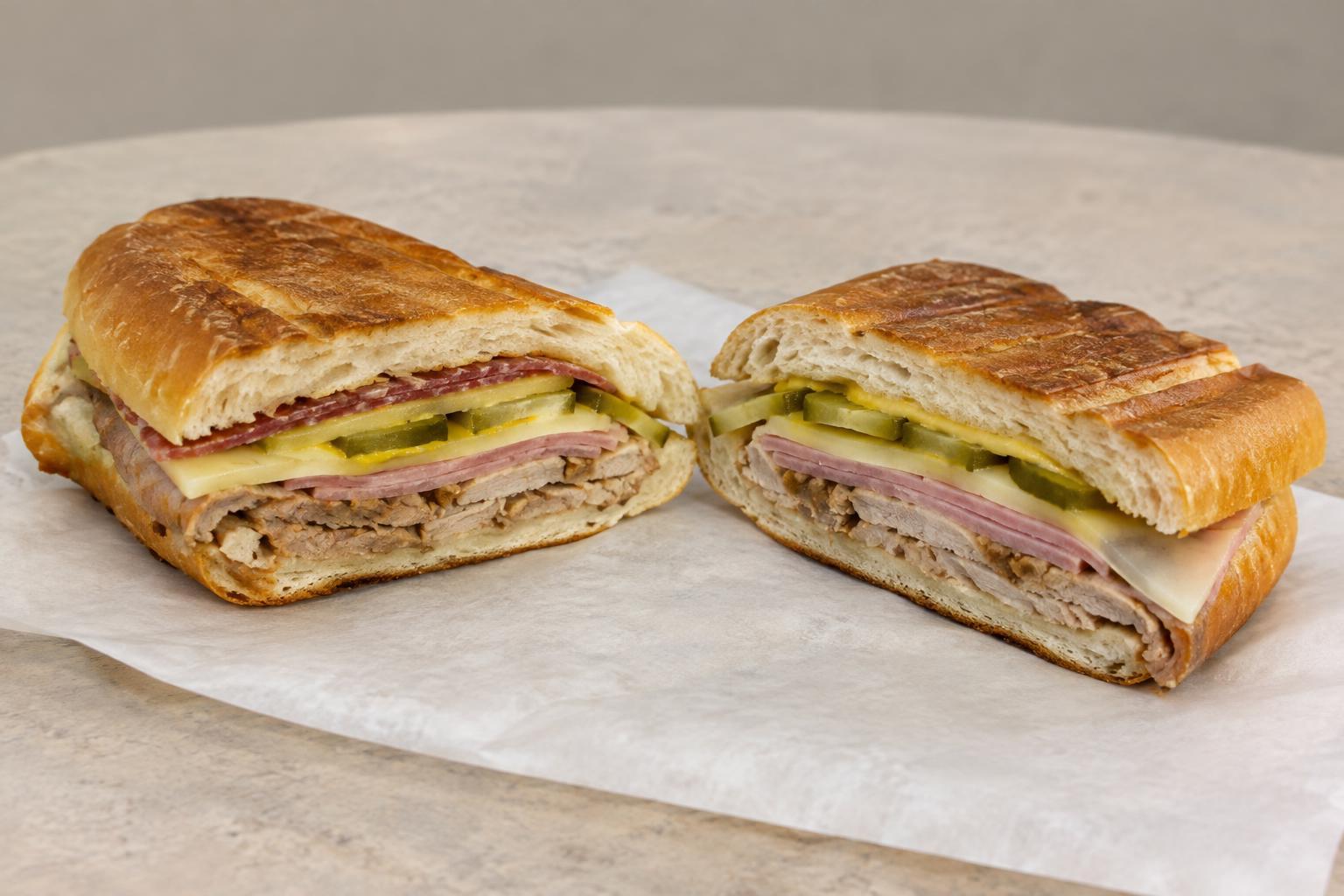
Order a Cuban sandwich in Tampa and you may find ham, roast pork, Swiss cheese, pickles, mustard and salami tucked into Cuban bread. Order one in Miami and the salami is commonly absent. Both versions are typically pressed until the bread is crisp and the cheese softens. The contrast is easy to taste, but it is more than a disagreement over one ingredient.
A sandwich name rarely guarantees an identical recipe from shop to shop. Cooks choose their own pork seasonings, slice meats at different thicknesses and use different amounts of mustard or pickle. Even so, salami remains the clearest shorthand for the distinction between the Tampa and Miami traditions. Understanding why it appears in one and not the other begins with the communities that made these sandwiches part of everyday life.
Why Tampa makes room for salami
Tampa’s sandwich tradition is closely associated with its historic cigar-making neighborhoods, including Ybor City and West Tampa. Cuban workers were central to those communities, alongside immigrants from other places, including Italy and Spain. Food in a neighborhood like that did not develop behind cultural walls. Ingredients and habits moved between households, lunch counters and workplaces.
Salami in the Tampa Cuban is commonly understood as a reflection of that Italian presence. Its cured, peppery flavor adds another layer to the softer pork and ham without changing the sandwich’s basic structure. This does not mean every Tampa shop makes the sandwich the same way, or that a single cook can be credited with settling the recipe. It means the local version carries a recognizable trace of the city where it took shape.
Why Miami often leaves it out
Miami’s Cuban sandwich tradition is strongly shaped by the city’s Cuban community. The familiar Miami combination centers on roast pork, ham, Swiss cheese, pickles and mustard, pressed in Cuban bread. Without salami, the flavor of the pork stands out more clearly against the tang of the pickle and mustard. It is a different balance, not an unfinished Tampa sandwich.
Miami’s food culture has its own variety, so it is worth being careful with blanket rules. A sandwich sold in Miami might depart from that common pattern, just as one sold in Tampa might. The useful distinction is about local expectations: salami is a signature ingredient in the Tampa version, while many Miami diners expect a Cuban sandwich without it. Neither expectation requires declaring the other city wrong.
What matters beyond the meat
The shared ingredients and preparation help explain why both versions belong to the same sandwich family. Cuban bread provides a light interior and a crust that becomes especially crisp under pressure. Ham contributes salt, roast pork brings a richer bite, and Swiss cheese ties the warm layers together. Pickles and mustard cut through that richness. When the sandwich is pressed, those elements meet in every mouthful rather than sitting as separate fillings.
The details still matter. A generous pile of meat cannot rescue bread that has gone soggy, and too much mustard can overwhelm the pork. Some people prefer a firm, deeply crisp press; others like a little more softness at the center. Those choices can change the eating experience as much as the presence of salami. Comparing versions is most rewarding when you notice how the whole sandwich works, not just whether it passes an ingredient checklist.
How to taste the difference
For a simple comparison at home, keep the bread, ham, roast pork, Swiss cheese, pickles and mustard the same for two sandwiches. Add a modest layer of salami to one, then press both until the bread is crisp and the cheese melts. Taste the version without salami first to notice the pork and sharp condiments; then try the salami version and see how the cured meat changes the balance.
If you are ordering while traveling, ask how a shop builds its Cuban rather than assuming every counter follows a citywide rule. That question can open a more interesting conversation about a place’s own recipe. Tampa’s salami and Miami’s usual omission are useful guides, but the larger tradition is one of local cooks adapting a familiar sandwich to the people they serve.