What makes a boiled peanut different?
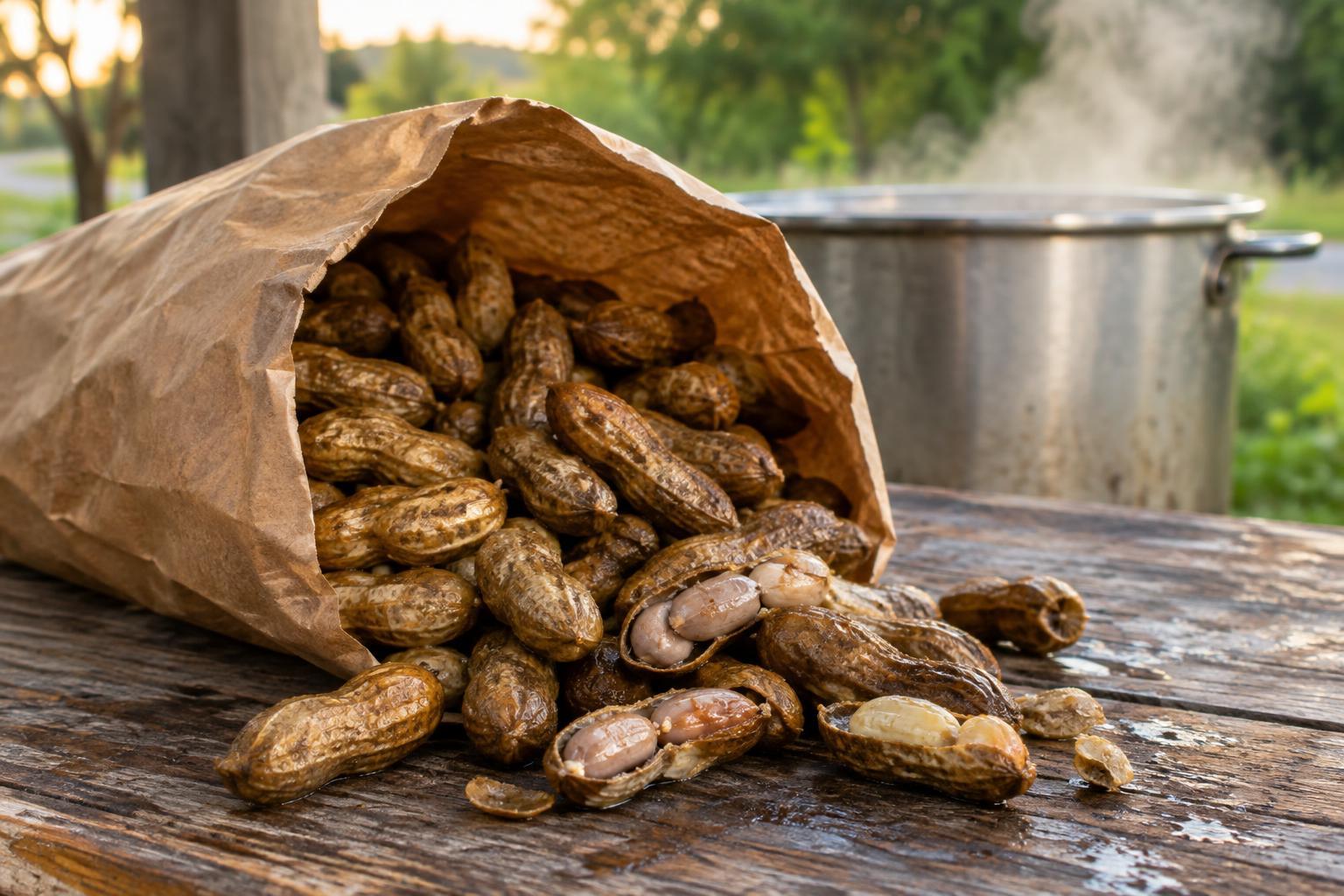
A boiled peanut is cooked in its shell in salted water until the nut inside becomes soft. Instead of the dry crunch of a roasted peanut, expect a tender bite and a shell that may hold some cooking liquid. The flavor can be mildly salty or boldly seasoned, depending on the pot. If you are trying one for the first time, think of it as its own snack rather than a softer version of a roasted peanut.
Boiled peanuts are associated with food traditions across the American South, not just Florida. In Florida, they can feel especially at home along roadsides and at casual gatherings where a bag is meant to be opened and shared. Their presence is not uniform across the state, however. A visitor is more likely to encounter different local preferences than one definitive “Florida-style” boiled peanut.
The peanut and the pot
Vendors may use green peanuts, which are freshly harvested and have a higher moisture content, or raw dried peanuts that have not been roasted. Both can be boiled, but they do not start from the same texture, and cooking times may differ considerably. “Green” describes the peanut’s freshness here, not the color of its shell. If the distinction matters to you, ask what is in the pot rather than assuming from a sign.
Salt is the basic seasoning, but a pot may also contain pepper, garlic, or a blend described as Cajun-style. That label tells you something about the intended flavor, not a fixed recipe or the background of the person cooking it. Heat levels vary, too. A sensible first purchase is a small portion, particularly if you are unsure whether you enjoy soft peanuts or spicy seasoning.
Because boiled peanuts are served in their shells, the eating method is part of the experience. Crack a shell, take out the peanuts, and discard the shell; some people sip the salty liquid first. Have a napkin handy, and ask where shells should go if you are eating at a market or stand. The simple courtesy makes this portable snack easier to enjoy without leaving a mess behind.
A roadside snack without a single origin story
It is tempting to treat a food seen beside a Florida highway as uniquely Floridian. Boiled peanuts have wider Southern roots, though, and the versions found in Florida reflect both shared regional habits and individual choices. A family gathering, a produce stand, and a neighborhood market may each serve them differently. The most useful question is not which version is the authentic one, but how the person making this batch likes to prepare it.
Roadside food also invites assumptions about where ingredients were grown. Buying boiled peanuts in Florida does not establish that the peanuts were grown in Florida. If local sourcing is important to you, ask the seller directly. The answer may depend on availability, the type of peanut they prefer, and how regularly they prepare a batch. That conversation can tell you more about the snack in your hand than its packaging alone.
How to buy and enjoy a bag
When you find boiled peanuts, ask whether they are plain or seasoned and whether they are served warm or chilled. If samples are offered, try one before choosing a larger bag. A well-cooked peanut should have a texture you enjoy; some people favor a firmer bite, while others want it quite soft. Differences between batches are normal, so it is reasonable to ask a vendor to describe today’s pot.
Boiled peanuts are moist, prepared food, not a shelf-stable bag of roasted nuts. If you will not eat them soon, ask the seller how they recommend storing that batch and refrigerate them promptly rather than leaving them in a warm car. At home, keep them chilled and reheat thoroughly when you want a warm snack. If you have a peanut allergy, avoid them entirely; a different cooking method does not change the ingredient.
The pleasure of boiled peanuts lies partly in their informality. They reward a pause, a place to put the shells, and a willingness to try a texture that may be unfamiliar. Whether your favorite bag is simply salted or heavily spiced, it offers a small, approachable way to notice how a broad Southern food tradition takes shape in individual Florida kitchens and roadside pots.