When to look for Florida papaya
Papaya grows best where warmth lasts and frost is uncommon, so its availability is not the same across Florida. Fruit from warmer areas may appear at markets over an extended period, while supplies elsewhere can be more sporadic. Weather, the condition of individual plants, and the grower’s harvest schedule all affect what reaches a stand. Rather than planning around a single statewide papaya season, ask vendors when they expect their next harvest.
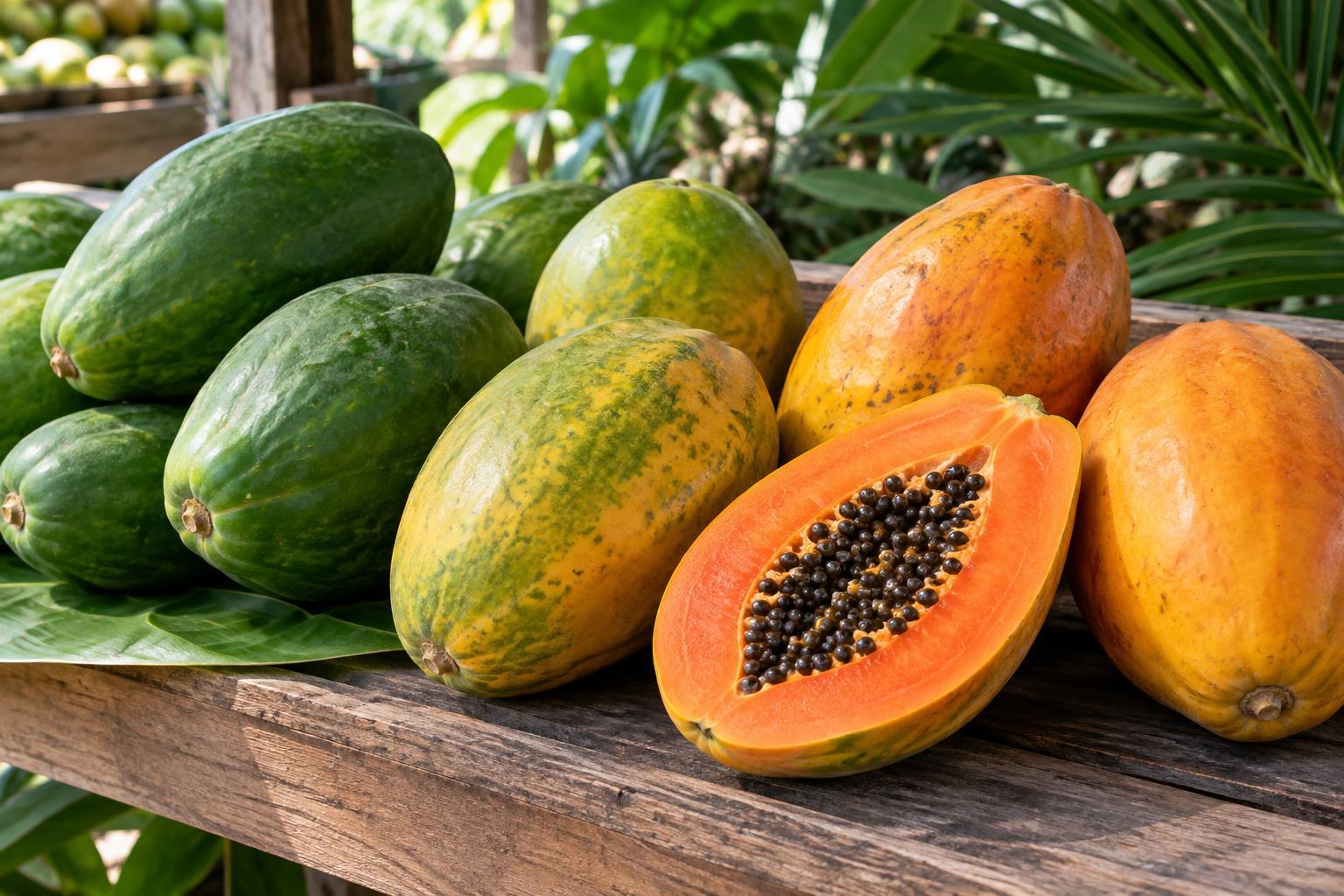
Market papayas also vary in size and shape. A small fruit is not necessarily underripe, and a large one is not necessarily sweeter. Variety and growing conditions influence both. If a vendor offers papayas at several stages of ripeness, say when you intend to eat yours. A fruit for tonight calls for a different choice than one you hope to serve later in the week.
Choose for the dish you want to make
For fresh eating, look for a papaya with yellow developing across much of the skin and a gentle give when pressed lightly. It should feel substantial for its size and smell pleasantly fruity near the stem. Minor surface marks are common on ripe fruit; soft, sunken patches, leaking liquid, or an unpleasant smell are better reasons to pass. Handle papayas gently, since pressure can bruise their flesh.
Green papaya is a different ingredient, not simply a ripe papaya you have to wait for. Its firm flesh can be cut into thin shreds for a crunchy salad or added to a cooked dish. If you want that texture, choose a firm fruit that is still green and confirm with the seller that it was picked for use unripe. A papaya picked very immature may not develop the flavor or texture you expect from a ripe fruit, even if its skin changes color at home.
Ripen and store it with care
Keep a papaya intended for ripe eating at room temperature until it softens slightly and develops more yellow color. Check it each day rather than relying on a fixed number of days: a nearly ripe fruit may change quickly in a warm kitchen. Once it is ripe, refrigerate it and use it soon for the best texture. If you bought green papaya for a firm preparation, keep it cool and plan to use it before it begins to soften.
Wash the outside before cutting, even though you will discard the peel. Set the fruit on a steady board, slice it lengthwise, and scoop out the dark seeds. You can then peel the halves or cut the flesh away from the skin. Refrigerate cut papaya promptly in a covered container. Discard pieces that develop an off smell or a slimy texture.
Let its ripeness guide the recipe
Ripe papaya needs little preparation. Serve it chilled with a squeeze of lime, spoon it over yogurt, or combine it with other fruit just before serving. Its soft texture also works in a smoothie, particularly when the fruit is ripe enough to taste sweet on its own. Start simply: strong additions can cover papaya’s mild flavor.
For a savory use, pair ripe cubes with lime, herbs, and a little chile, then serve them alongside a meal rather than cooking them for a long time. Green papaya is better suited to shredding or slicing thinly. Dress it shortly before eating if you want it crisp, and taste as you go; the dressing often provides much of the dish’s flavor. For more ideas about building a meal around coastal ingredients, browse Food by the Sea · Across the Water.
Make a market purchase count
If papaya is unfamiliar, buy one fruit before committing to several. Ask whether it was harvested for ripe eating or green preparation, and check its ripeness again when you get home. That small distinction can prevent a disappointing fruit salad or a shredded salad that turns soft before dinner.
Papaya is also a reminder that Florida produce does not follow one tidy calendar. Growing conditions differ from place to place, and a market table reflects what its growers can bring that day. Enjoy the fruit when you find it, adapt your plans to its stage of ripeness, and ask questions when the choice is unclear. If the connections between food and coastal places interest you, explore Coastal Culture · Across the Water for further browsing.