Start with the vegetable, not the calendar
A planting date can help you anticipate a harvest, but it cannot tell you exactly when to pick. Variety, weather, sunlight, and growing conditions all affect how quickly a vegetable develops. In a Florida garden, warm days can also change the pace of ripening. Check plants regularly as they approach harvest size, and use what you see and feel as your guide.
The best stage depends on how you plan to eat the crop. A small cucumber may be crisp and tender, while one left on the vine too long can become seedy. A pepper can be usable while green or left to develop its mature color, depending on the variety and the flavor you want. If you are growing an unfamiliar variety, keep its seed packet or plant label handy: expected size and color are often more useful clues than a fixed number of days.
Look for signs of readiness in common crops
Harvest leafy greens when leaves are large enough to use and still look tender. For plants that continue growing from the center, take a few outer leaves at a time rather than removing the growing point. Leaves that have become tough or strongly bitter may be past the stage you prefer. Lettuce and similar greens can lose their crispness quickly after picking, so harvest only what you can cool or use soon.
Check green beans often once pods begin to form. Many are best picked when the pods feel firm and the seeds inside have not become prominent. Cucumbers are generally picked while firm and before they become oversized or yellow, though the right size varies by variety. Okra pods also tend to be more tender when picked young; a pod that feels woody is likely too mature for the texture most cooks want.
Tomatoes offer several useful stages. A fully colored, gently yielding tomato may be ready to eat soon, while one that has begun changing from green toward its mature color can finish ripening off the plant. Pick peppers according to the color and flavor you want, checking that they feel firm and look sound. Do not rely on color alone for every crop: a variety’s normal appearance matters.
Pick without setting the plant back
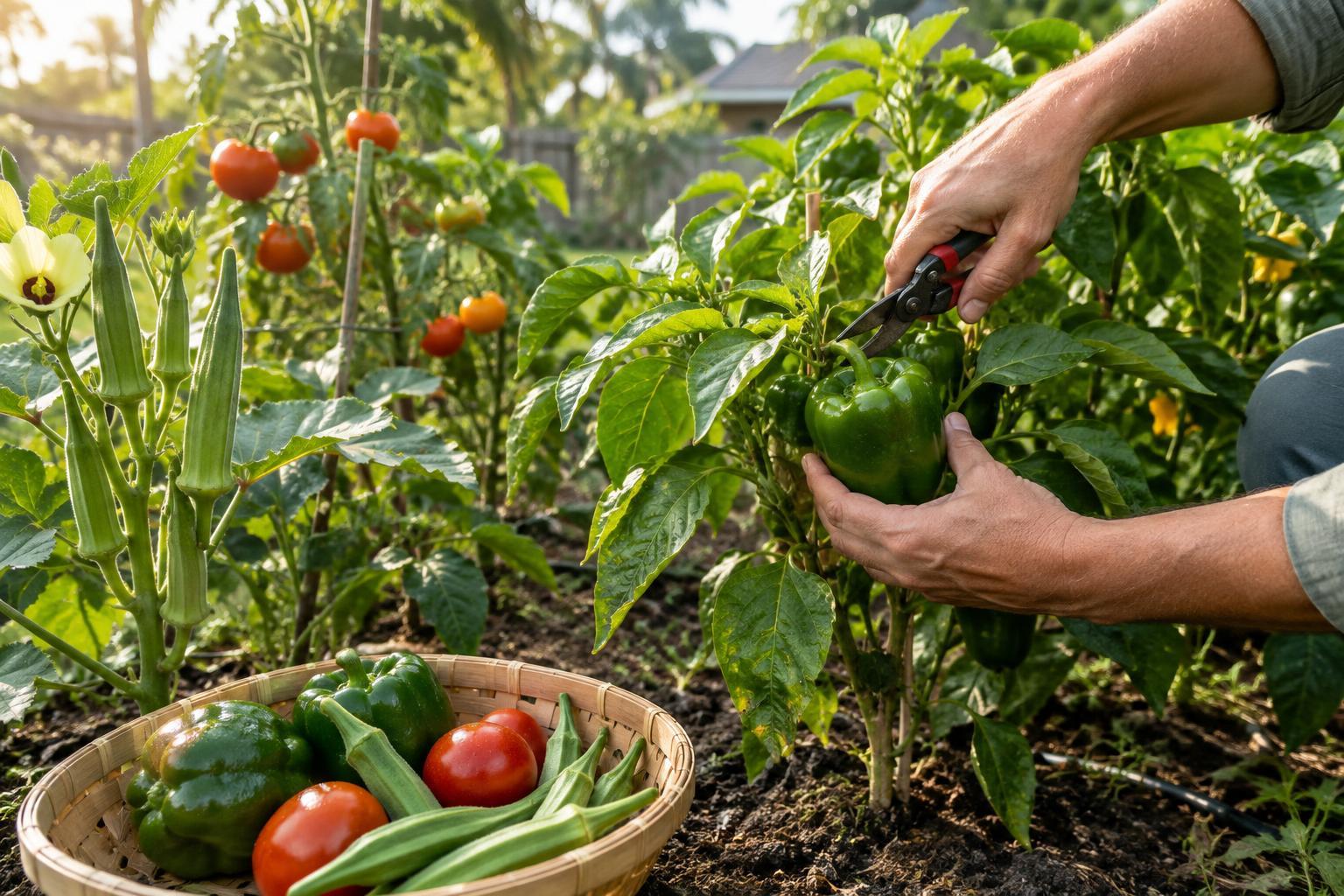
A gentle harvest protects stems and leaves that are still producing. Hold a vine or branch steady as you pick, and avoid pulling hard enough to uproot a plant or tear a long section of stem. Use clean snips or pruners for crops with stubborn stems, including many peppers and okra pods. For beans, support the stem with one hand while removing the pod with the other.
Try to harvest when you have time to handle the produce promptly rather than leaving a full basket in direct sun. A dry plant is usually easier to move through without spreading moisture from leaf to leaf, and dry produce is less slippery to handle. If you notice a damaged or overmature fruit, remove it carefully and decide whether any part is still usable. Regular picking can help keep the plant accessible and makes it easier to spot new growth, pests, or signs of stress.
Give the harvest a good start in the kitchen
Sort what you pick before putting it away. Set aside bruised or split vegetables for prompt use if they are otherwise sound, and discard anything showing decay. Keep tender greens out of heat and cool them soon. Beans, cucumbers, and peppers also benefit from prompt attention after a warm garden harvest, although storage needs differ among crops.
Handle tomatoes differently from leafy vegetables: if they need more time to ripen, leave them at room temperature out of direct sun and check them daily. Wash produce before preparing it, using clean running water and removing visible soil. If you wash vegetables before storage, dry them well; lingering moisture can make some crops deteriorate faster.
Finally, note what worked. A brief record of the variety, the size or color you picked, and whether you liked the result is more useful than trying to memorize every harvest. Next time, you can pick a little earlier for tenderness or wait longer for a different flavor. Harvesting is part of learning your garden, one basket at a time.