What cane syrup is
Cane syrup is made by cooking down juice pressed from sugarcane until it thickens. The result is pourable and sweet, with a flavor that can include earthy, toasted, or slightly grassy notes. Its taste and thickness vary from one producer to another, so a first spoonful is more useful than any single description. It is not the same thing as maple syrup, which comes from tree sap, or molasses, which is associated with sugar refining.
In parts of North Florida, cane syrup is a familiar table sweetener and cooking ingredient. That does not make it universal across the region, let alone across the state. Families have different habits, and a jar on one breakfast table says little about the next household’s pantry. Treating cane syrup as one thread in a varied regional food culture makes room for those differences.
How it fits into everyday meals
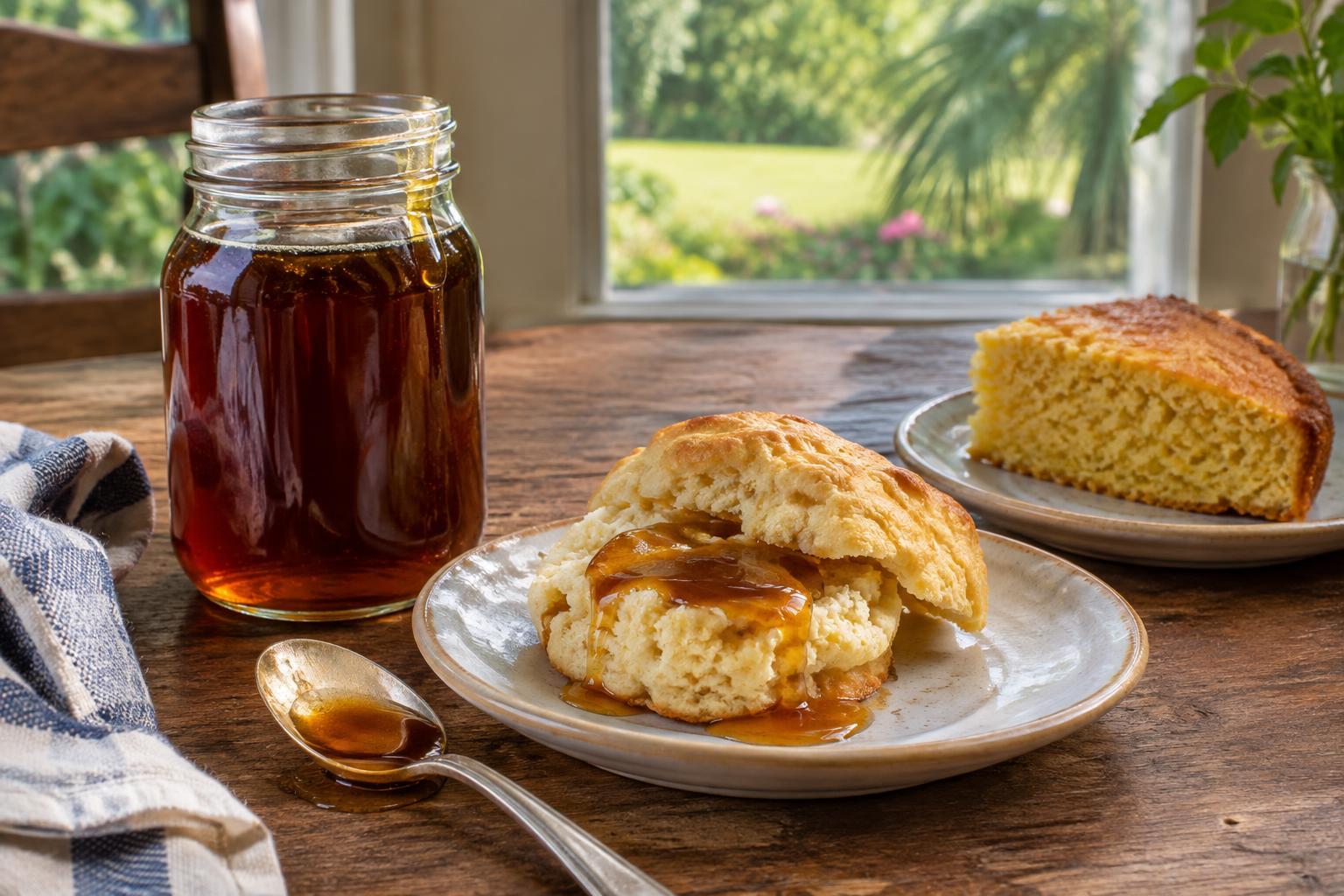
The simplest way to try cane syrup is to pour a little over a warm biscuit or piece of cornbread. Butter adds richness and softens the syrup’s stronger notes. You can also stir a small amount into plain yogurt or oatmeal, where its flavor is easier to notice than it would be in a heavily spiced dish. Start with less than you might use of a milder sweetener, taste, and add more if you want it.
Cane syrup is useful beyond breakfast. In baking, it can bring sweetness and moisture to cookies or quick breads, though substituting it for dry sugar may change a recipe’s texture. For a savory use, try a little in a glaze for roasted vegetables, paired with something sharp such as vinegar. The aim is balance, not a dish that tastes like dessert.
Food traditions are often easiest to understand through the ordinary questions a cook asks: What is already in the pantry? What will taste good with tonight’s meal? For a wider look at how everyday practices become part of a place’s story, browse Local History · Curious City Explorer alongside your food explorations.
Reading a jar and tasting with curiosity
If you encounter cane syrup at a market, read the label before assuming that every bottle contains the same thing. Ingredient lists can help you distinguish a straightforward cane syrup from a blended pancake syrup or another sweetener. If a producer is available to talk, you might ask how they like to use it or whether the batch has a light or robust flavor. There is no need to ask them to speak for an entire region.
At home, taste a drop on its own, then try it with a neutral food such as a biscuit. Notice whether the flavor seems mild, earthy, or deeply cooked to you. Keep the jar according to its label’s storage directions and use clean utensils when serving. These small habits make it easier to enjoy what you bought and decide which dishes suit that particular syrup.
Objects such as jars, kitchen tools, and recipe cards can prompt questions about how people prepare and share food, but they rarely tell the whole story by themselves. If that sort of exploration appeals to you, Museum Visits · Curious City Explorer offers another way to browse places and the objects people choose to preserve.
Share the ingredient without flattening the tradition
A useful introduction to cane syrup is an invitation to taste, not a claim that it defines North Florida cooking. Serve it beside biscuits with butter and perhaps another topping, so guests can compare flavors and choose what they like. If you are adapting a family recipe, keep track of how much syrup you used and what changed; its liquid sweetness may behave differently from granulated sugar.
You can also make tasting playful without turning someone else’s food history into a costume or a reenactment. Set out small samples with bread or fruit, invite people to describe what they notice, and leave room for different answers. For more ideas centered on hands-on exploration, browse Creative Play · Curious City Explorer. The best takeaway may be a practical one: an ingredient’s regional associations can spark curiosity, while its flavor earns a place in your own kitchen.