Harvest timing starts with the planting date
Sweet potatoes are warm-season plants grown for their edible storage roots. In Florida, the right time to dig depends more on when the slips were planted, the variety, and growing conditions than on a single statewide harvest month. A variety’s stated days to maturity is a useful starting point, but it is an estimate rather than a deadline. Gardeners in different parts of the state may plant and harvest at different times.
As the expected harvest window approaches, gently loosen the soil beside one plant and check a root. If it has reached a size you would enjoy cooking, you can begin harvesting. Smaller roots are edible, too; leaving the crop longer may allow more growth, provided the soil remains suitable and the roots stay sound. Yellowing vines alone are not a dependable sign of readiness, since heat, water stress, or pests can also affect the leaves.
Choose a time when the soil is workable rather than soggy. Prolonged wet conditions can make digging messy and may leave roots more vulnerable to damage or decay. If you are shopping instead of growing, ask the vendor whether the sweet potatoes were recently dug or have already been cured. A market appearance does not necessarily tell you when a crop was harvested.
Dig gently and sort before curing
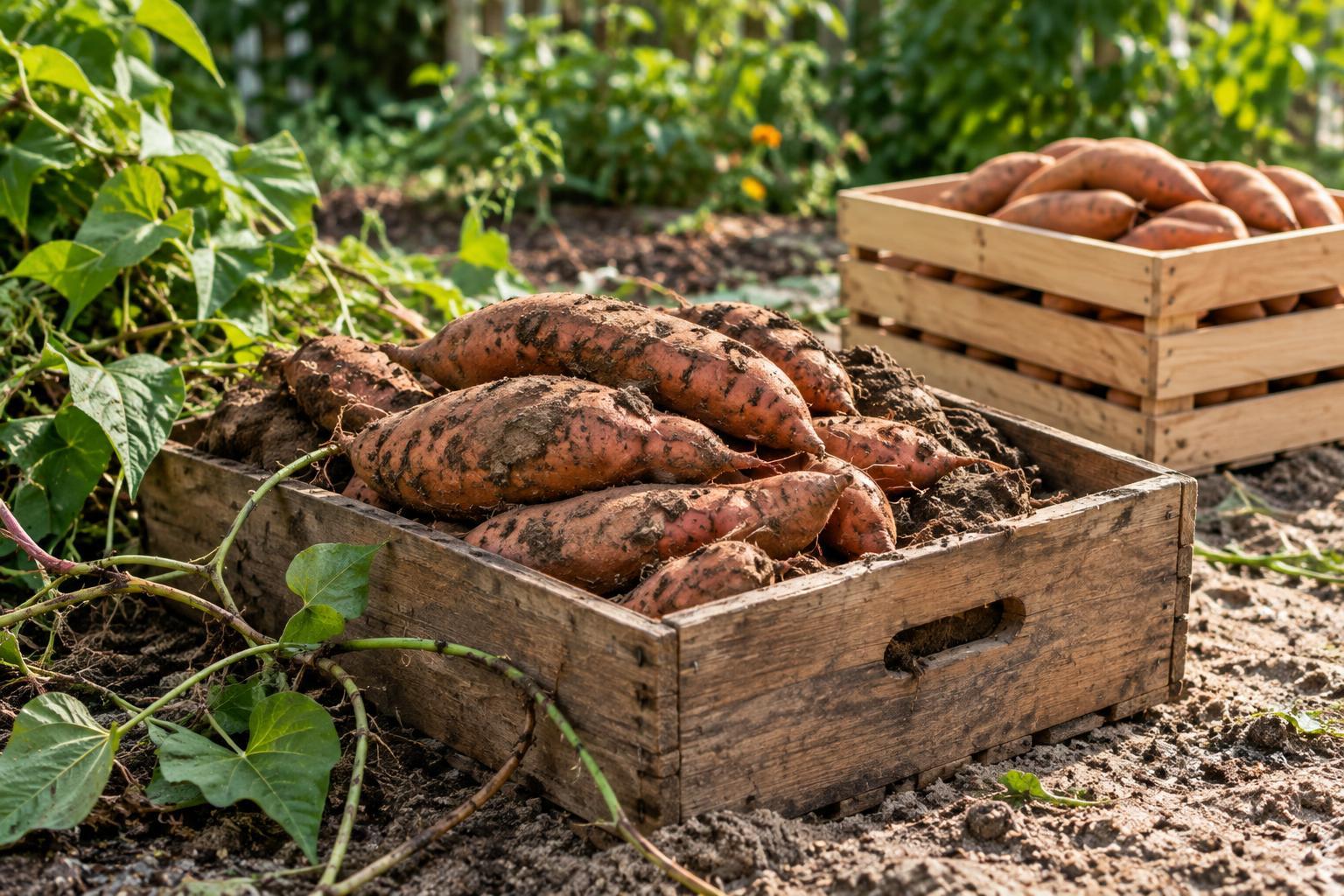
Sweet potato skins are delicate just after harvest. Cut back the vines enough to see where the plants grew, then start loosening soil well away from the crown with a digging fork or spade. Work inward carefully and lift the roots by hand when possible. Avoid tossing them into a bucket or leaving them in strong sun while you finish the row.
Brush off loose soil once the roots are dry enough to handle, but do not wash roots you plan to store. Set aside any that are badly cut, bruised, soft, or showing signs of rot. A small surface scrape may heal during curing; a deep puncture is a better reason to cook the root soon. Sorting now also gives you a chance to notice the range of sizes and shapes a home harvest can produce.
Why freshly dug roots need curing
Curing is a warm, humid holding period that helps minor skin abrasions heal and can improve sweetness and eating quality. It is different from simply leaving roots on a kitchen counter to dry. Freshly harvested sweet potatoes are typically cured for several days in conditions around 80–85°F with high humidity and some air movement. Keeping those conditions steady can be difficult at home, particularly when Florida weather swings between hot afternoons and cooler nights.
Use a clean, sheltered space where roots can sit in a single layer without touching wet surfaces. A loosely covered container may help retain humidity, but it should not trap condensation against the roots or prevent airflow. Do not use an oven or another appliance that could overheat them. Check the roots regularly and remove any that become soft or moldy. If you cannot provide a suitable curing space, plan to eat the harvest sooner rather than assuming it will keep for months.
Store cured sweet potatoes cool, not cold
After curing, move sound roots to a dark, ventilated place that stays roughly 55–60°F. That is cooler than many Florida homes, but warmer than a typical refrigerator. Refrigeration can cause chilling injury, which may affect flavor and texture and shorten storage life. Keep roots away from direct sunlight, heat sources, and damp floors, and give them enough space for air to circulate.
A suitable storage spot is not always available at home. If yours is warmer than the ideal range, buy or keep smaller amounts and check them often rather than counting on long storage. Use any root that begins to soften promptly if it is otherwise sound; discard roots with extensive rot or mold. Wash sweet potatoes just before cooking, not before putting them away.
Bring the harvest to the table
Cured sweet potatoes are versatile enough for both simple meals and market-inspired cooking. Roast wedges until their edges brown, bake whole roots for an easy side dish, or add cubes to a pot of beans and greens. If you have a mix of sizes, cook the smaller roots first and save firm, unblemished ones for storage.
Whether your sweet potatoes came from a garden or a market stall, their care follows the same basic sequence: handle gently, keep damaged roots out of storage, cure freshly dug roots when conditions allow, and store cured roots somewhere cool and dry to the touch. Those steps help you make the most of a crop without relying on a fixed Florida harvest calendar.