Start with the plant, the patio and the season
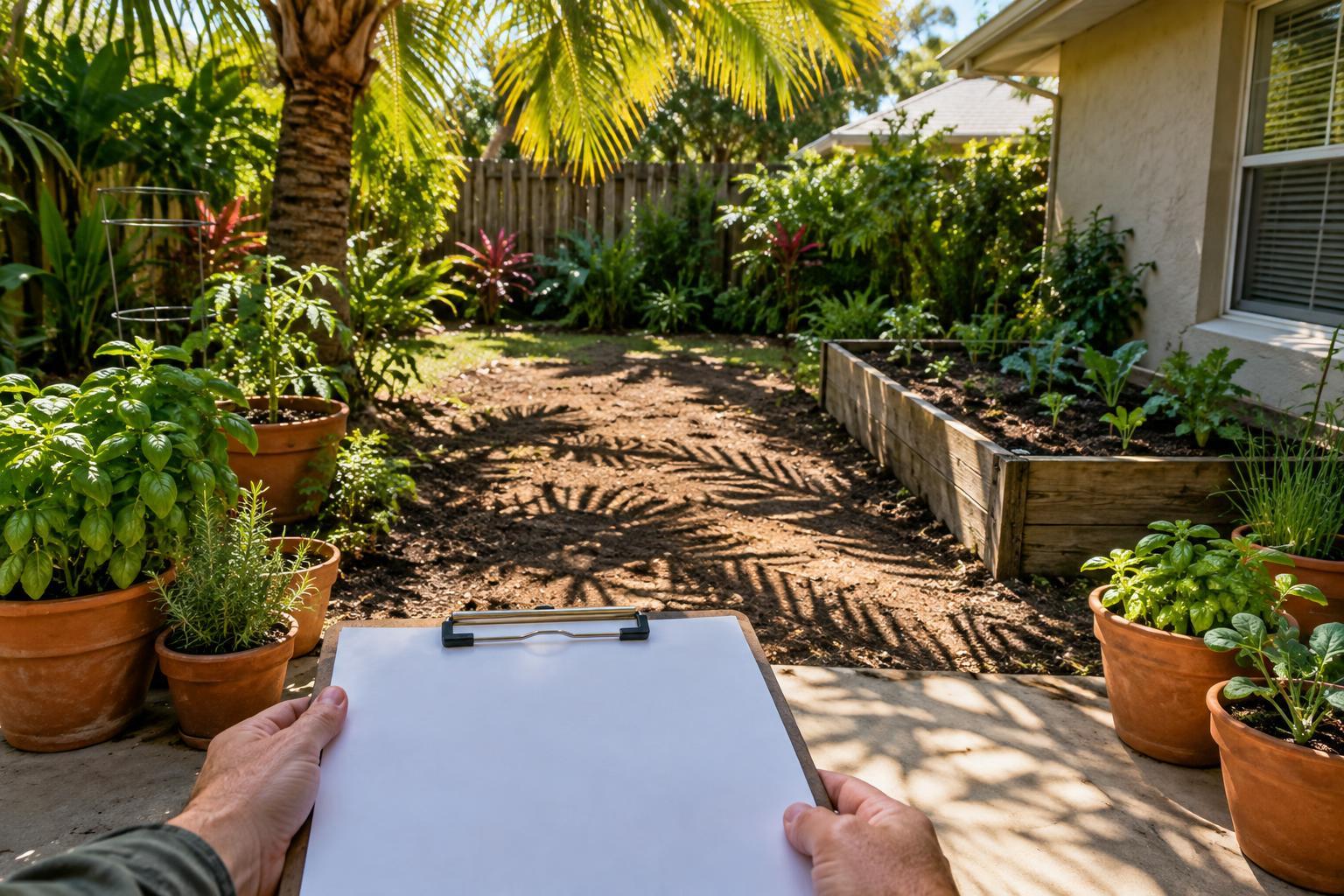
Before buying a pot, note how many hours of direct sun your patio receives and when that sun arrives. A bright patio in winter can feel very different in summer, when afternoon sun heats paving and container walls. Fruiting crops such as peppers generally need more direct light than leafy greens or many herbs. If your space gets limited sun, start with a small planting rather than filling every corner at once.
Florida’s growing conditions also vary by location and season. Summer heat and frequent rain may be harder on some edible plants than cooler months, while a sheltered patio can be warmer or drier than the yard beside it. Choose plants suited to the conditions you can offer, then match each one with enough root space and a mix that drains well.
Pick containers with room for roots and a way for water to leave
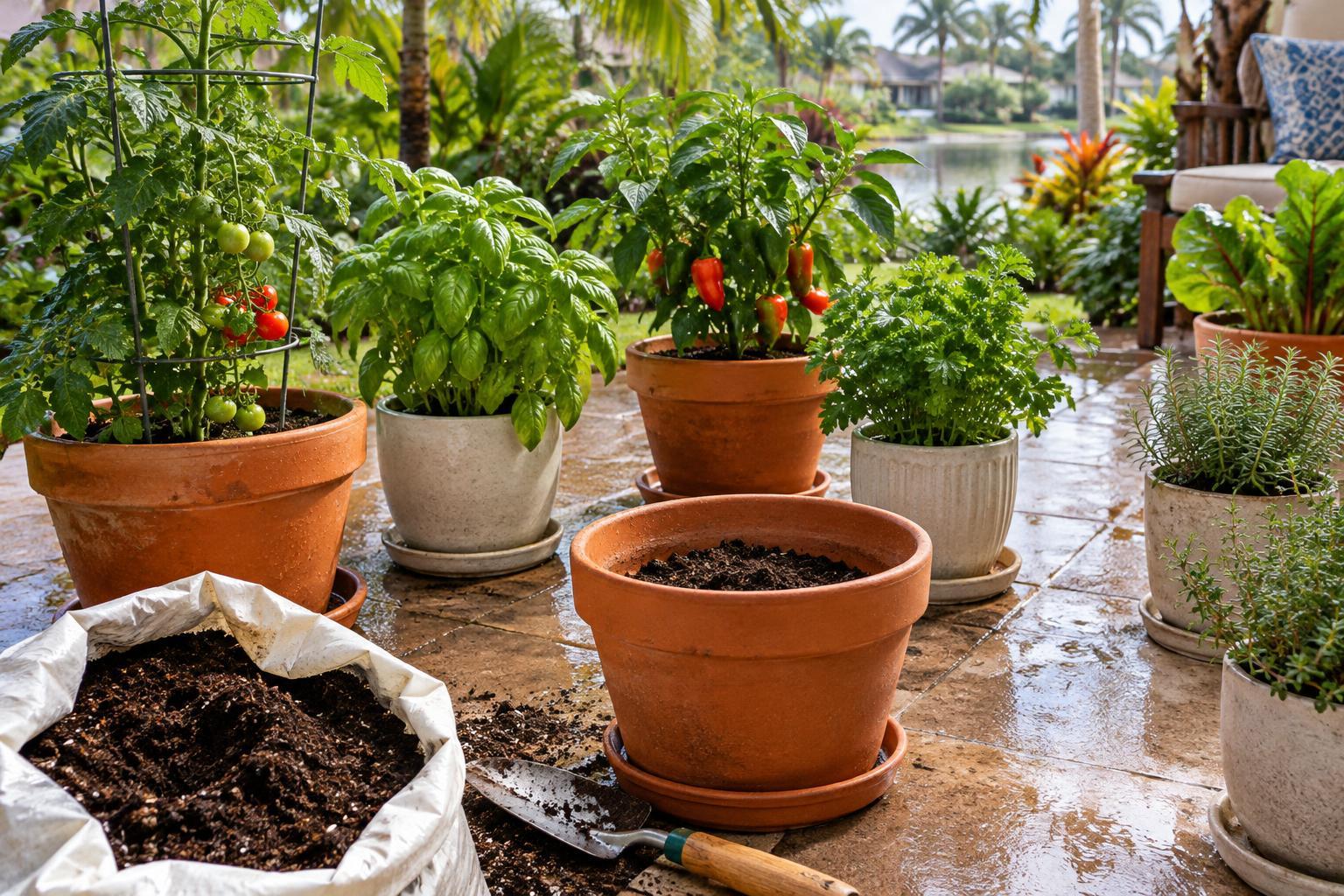
Every edible-plant container needs drainage holes. Without them, water can collect around roots even when the surface looks dry. A small pot may suit a compact herb, but a pepper or tomato needs a substantially larger container to support its roots and hold enough moisture between waterings. Check the plant’s mature size when choosing; if you are deciding between two practical sizes, the larger one usually gives you more flexibility.
Material matters, too. Lightweight plastic or resin pots are easier to move and often dry more slowly than unglazed clay. Clay can be useful where a mix stays wet, but it may require closer attention during hot, dry spells. Dark containers in strong sun can heat up quickly. Whatever material you choose, make sure the pot is stable when filled, especially on a breezy patio. For edible plants, use containers intended for gardening or food use rather than ones with an unknown history of storing chemicals.
Use potting mix, not yard soil
A container needs a growing medium that holds some moisture while leaving space for air and excess water to move through. A general-purpose potting mix made for containers is a sound starting point. These mixes commonly combine lightweight ingredients that retain moisture with materials that improve drainage. The exact blend matters less than how it performs in your pot: after watering, it should become evenly moist without remaining soggy for days.
Avoid filling patio pots with soil dug from the yard. In a container, it can compact and drain poorly. A little finished compost may be part of a potting mix, but compost alone is usually too dense or inconsistent for a whole pot. Skip a layer of rocks at the bottom; it does not replace drainage holes or reliably solve a waterlogged mix. Fill the container with mix instead, leaving a little space below the rim so water can soak in rather than run over the sides.
Match moisture management to Florida weather
Newly planted containers need regular checks while roots establish. Put a finger into the mix rather than judging by the surface alone. If the upper portion feels dry, water thoroughly until some runs out of the drainage holes, then allow the pot to drain. How often you need to repeat this depends on pot size, plant growth, exposure and weather. Small pots and porous containers may dry quickly; large pots under cover may stay moist longer than expected.
During stretches of heavy rain, move pots under cover if the mix is staying saturated, or raise them slightly so their drainage holes are not blocked against the patio. Empty standing water from saucers after watering or rain; it can keep roots wet and provide a place for mosquitoes to breed. In hot weather, placing pots where they receive morning sun and some afternoon relief may help reduce stress, provided the plants still get enough light to grow.
Set up for easy care, then adjust
Arrange pots where you can reach them comfortably with a watering can and inspect leaves and soil without moving everything. Leave space for air to circulate and for plants to reach their mature size. If the patio is exposed to strong wind or storms, avoid balancing heavy plants on narrow stands and plan where you can move smaller containers when necessary.
Potting mix does not supply nutrients indefinitely. Follow the directions on a fertilizer labeled for container vegetables or herbs, rather than adding extra in hopes of faster growth. Over time, mix can settle and roots can crowd the pot; slowing growth, frequent wilting despite careful watering, or roots emerging from drainage holes may signal that it is time to refresh the mix or move up a container size. Treat the first planting as a useful test: observe how your patio handles sun and rain, then adjust one pot at a time.