Get to know the soil you have
Much of Florida has sandy soil, but conditions vary from yard to yard. Sand usually lets water pass through quickly and holds fewer nutrients than soil with more clay or organic matter. That can be helpful after heavy rain, yet it also means a vegetable bed may dry out soon after watering. A handful of damp sandy soil often feels gritty and falls apart rather than forming a firm ball.
Before adding anything, watch how your proposed bed behaves. Does water soak in quickly, or does it linger in a low spot? Does the surface become hard and bare between plantings? Also consider what happened on the site before it became a garden. If you suspect contamination from past construction, spills or other activities, use a separate soil assessment rather than assuming a routine fertility test will detect it.
Test before you amend
A soil test is a better starting point than a bag of all-purpose amendments. A routine garden test can report pH and available nutrients; the exact measurements depend on the laboratory and the test you request. Your local extension office or soil-testing laboratory can tell you how to collect a sample, how much to send and which test suits food crops. Check those instructions first, because sampling requirements differ.
For a typical in-ground vegetable bed, collect small amounts from several spots across the area where roots will grow, using clean tools and avoiding unusual patches such as a former compost pile. Combine those portions into one representative sample for that bed. Sample separate areas independently if they have different soils or histories. Test before adding fertilizer or lime, and note whether the bed has recently received compost or other amendments so you can make sense of the results.
Use the results to make a plan
Soil pH affects how readily plants can access nutrients. If a report recommends adjusting pH, follow guidance suited to the crops and the tested soil rather than adding lime by habit. Some Florida soils are naturally alkaline, and adding lime where it is not needed may make certain nutrients less available. Likewise, a fertilizer recommendation is not a reason to apply more than suggested: sandy soil can lose soluble nutrients as water moves through it.
If the report shows that nutrients are adequate, focus on keeping them available to plants. Spread fertilizer only when needed, according to its label and your test guidance, and avoid applying it just before heavy rain. Where appropriate, smaller applications during a crop’s growth can be easier to manage than putting everything down at planting. Recheck the soil periodically, especially after changing how you manage the bed.
Build organic matter without overdoing it
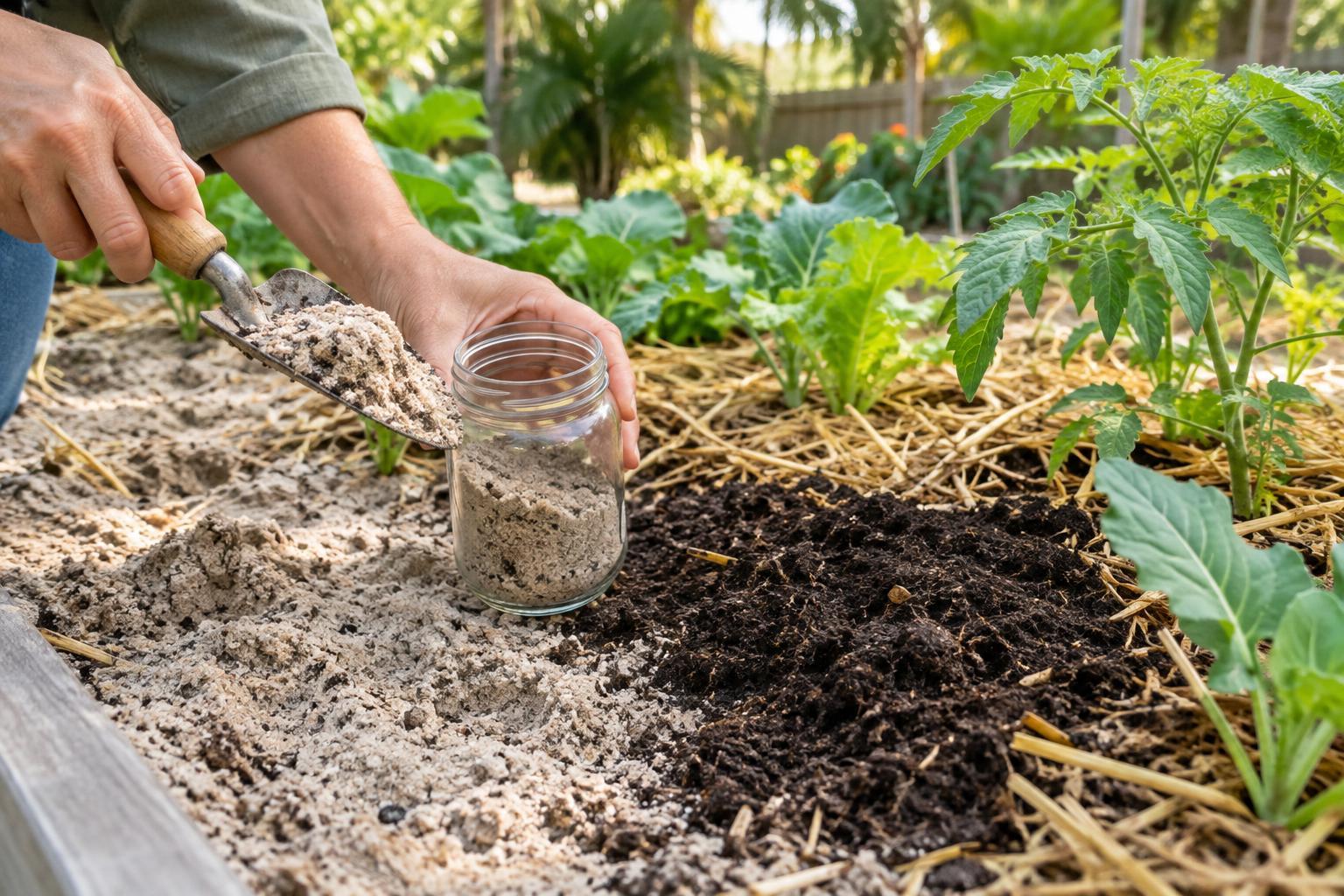
Finished compost can improve the growing environment by adding organic matter to sandy soil. Work a modest layer into a new bed’s root zone, then continue adding compost between crops or as a light surface dressing. Start with mature compost that smells earthy rather than raw or sour. More is not always better: repeated heavy applications, particularly of nutrient-rich compost, can raise nutrient levels beyond what plants need. Let soil tests and plant growth guide future additions.
Cover exposed soil with an organic mulch, keeping it back from plant stems. Mulch helps slow surface drying and suppress weeds, while gradually breaking down. Between food crops, a cover crop suited to the season can also protect bare ground; cut it down and allow time for its residue to settle before planting again. These practices work gradually. Sandy soil will still drain like sandy soil, but a bed with regular organic inputs is often easier to water and maintain.
Match watering and planting to the site
Check moisture a few inches below the surface instead of judging by how the top looks. Water deeply enough to reach the active root zone, then adjust the timing to the crop, rainfall and how quickly the bed dries. Drip irrigation or a soaker hose can deliver water close to roots with less wetting of paths and leaves. If water runs straight through or pools elsewhere, change the amount or timing rather than assuming every bed needs the same schedule.
Raised beds filled with a suitable growing mix may be useful where native soil is especially poor, difficult to manage or unsuitable for food crops. They still need testing, watering and organic-matter care over time. Whether you grow in a raised bed or the ground, the most reliable improvement is a repeatable routine: test, amend only where needed, keep soil covered and observe how crops respond.