Start with the space you have
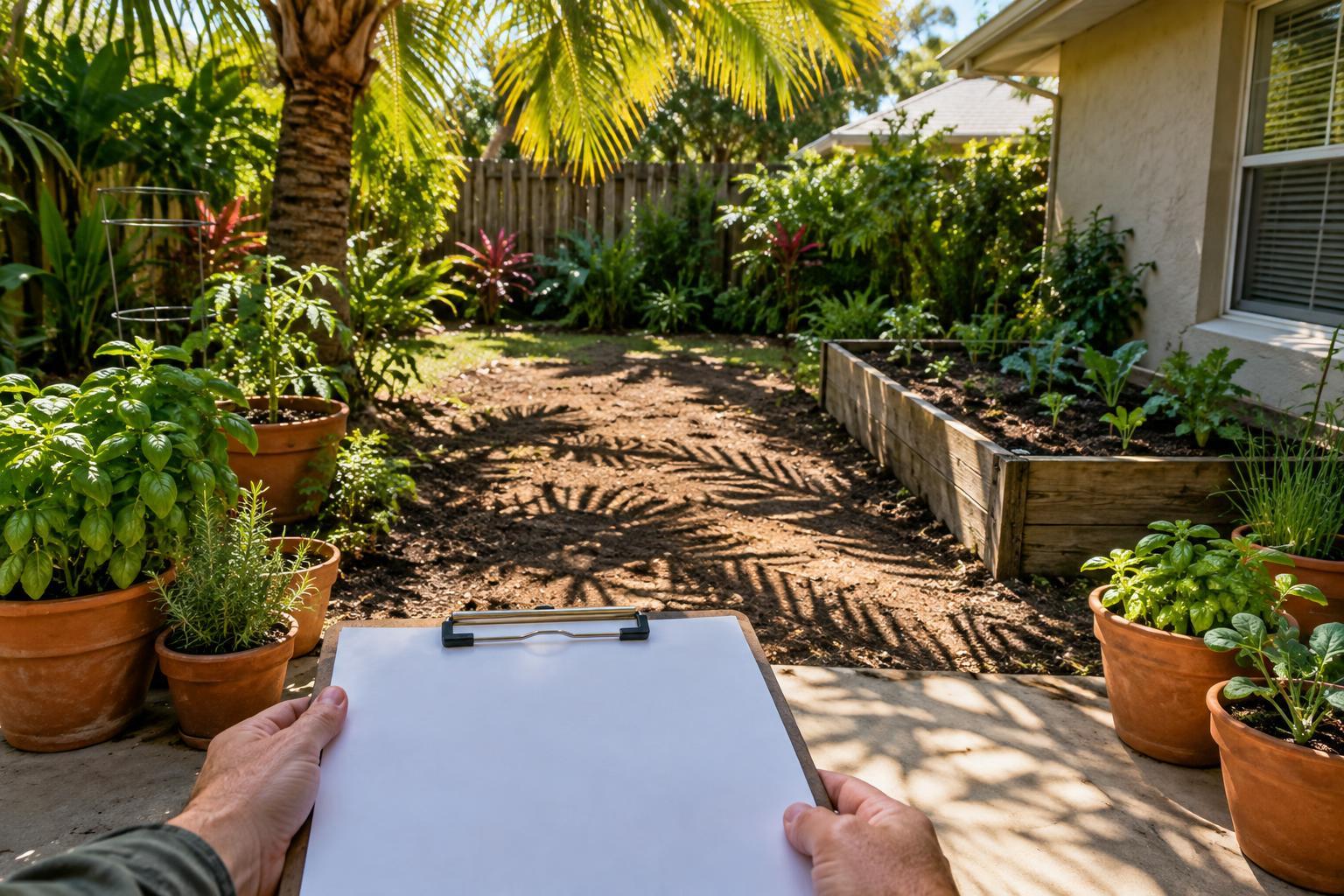
There is no single best way to grow food in Florida. A balcony with a few pots can be productive, while a yard with room for beds may offer more planting options. Before buying supplies, watch where sunlight falls, notice where rainwater collects, and think about how easily you can reach your plants with a hose or watering can. Most fruiting crops need generous direct sun; leafy greens and some herbs can be more forgiving, particularly when afternoons are hot.
Also consider your routine. Florida’s warmth can encourage vigorous growth, but heat, heavy rain, and sandy or poorly draining ground can complicate watering. The best setup is one you can check regularly, especially during a plant’s first weeks. Start at a manageable size and leave room to change course after you learn how your space behaves.
Containers: flexible, but quick to dry
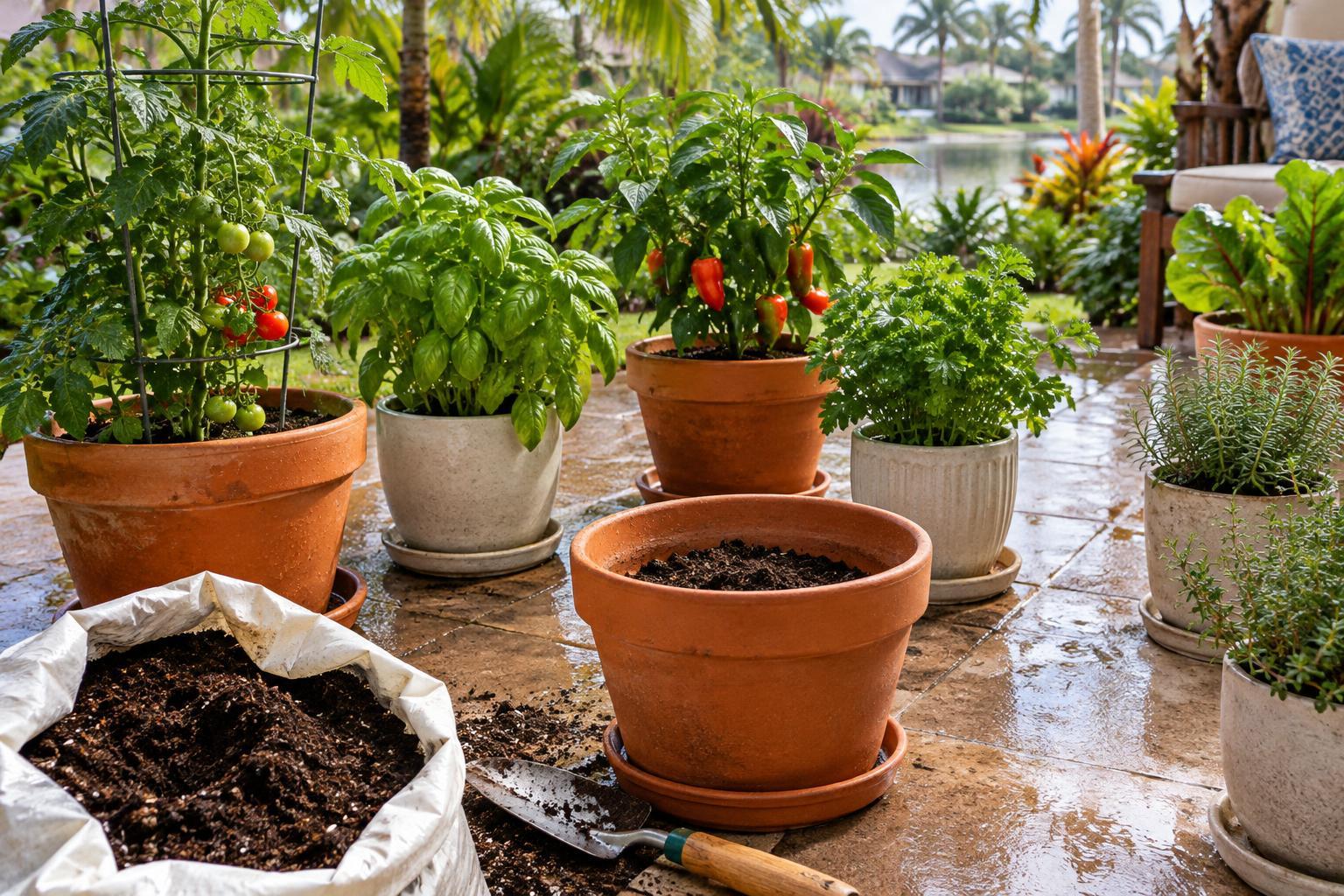
Containers make sense for patios, balconies, paved areas, and renters who may need to move their garden. You can shift a pot to adjust its light or shelter it during severe weather. Starting with fresh potting mix also gives you more control over the growing medium than planting directly in unknown soil. Herbs, leafy greens, and compact varieties of larger crops are useful candidates, provided their pots are big enough for the roots.
Choose containers with drainage holes and use a potting mix intended for containers rather than digging soil from the yard. Roots need both moisture and air; a pot that stays waterlogged is as troublesome as one that dries out. Dark or small pots exposed to strong sun may heat up and lose moisture quickly. Check the mix with a finger before watering instead of relying on a fixed schedule, and expect to check more often during hot, dry spells.
The trade-off is limited root space. Plants can outgrow pots, need more frequent watering, or require nutrients as the potting mix is depleted. A few generously sized containers are often easier to maintain than a crowd of tiny ones.
Raised beds: control with an upfront investment
Raised beds define a growing area and let you fill it with a planting mix suited to vegetables. They can be especially appealing where native ground is compacted, drains unpredictably, or is difficult to work. A bed built to a comfortable width makes planting, weeding, and harvesting easier without stepping on the soil. Beds can also help organize paths and keep mulch out of the planting area.
They are not automatically low-maintenance. Materials and soil cost money, and a bed may need topping up as its contents settle. Raised soil can dry faster than the surrounding ground, while a bed placed over a persistently wet spot still needs a way for water to move away. Before building, check the site after a heavy rain and plan for both drainage and convenient watering. If using reclaimed materials, avoid anything with an uncertain treatment history.
In-ground plots: more room, more site work
An in-ground plot uses the space and soil already available, making it a practical choice if you have a sunny yard and want room to expand. Established plants can explore beyond the boundaries of a pot or bed. Ground-level planting also avoids the cost of containers or bed frames, though preparing the site takes effort.
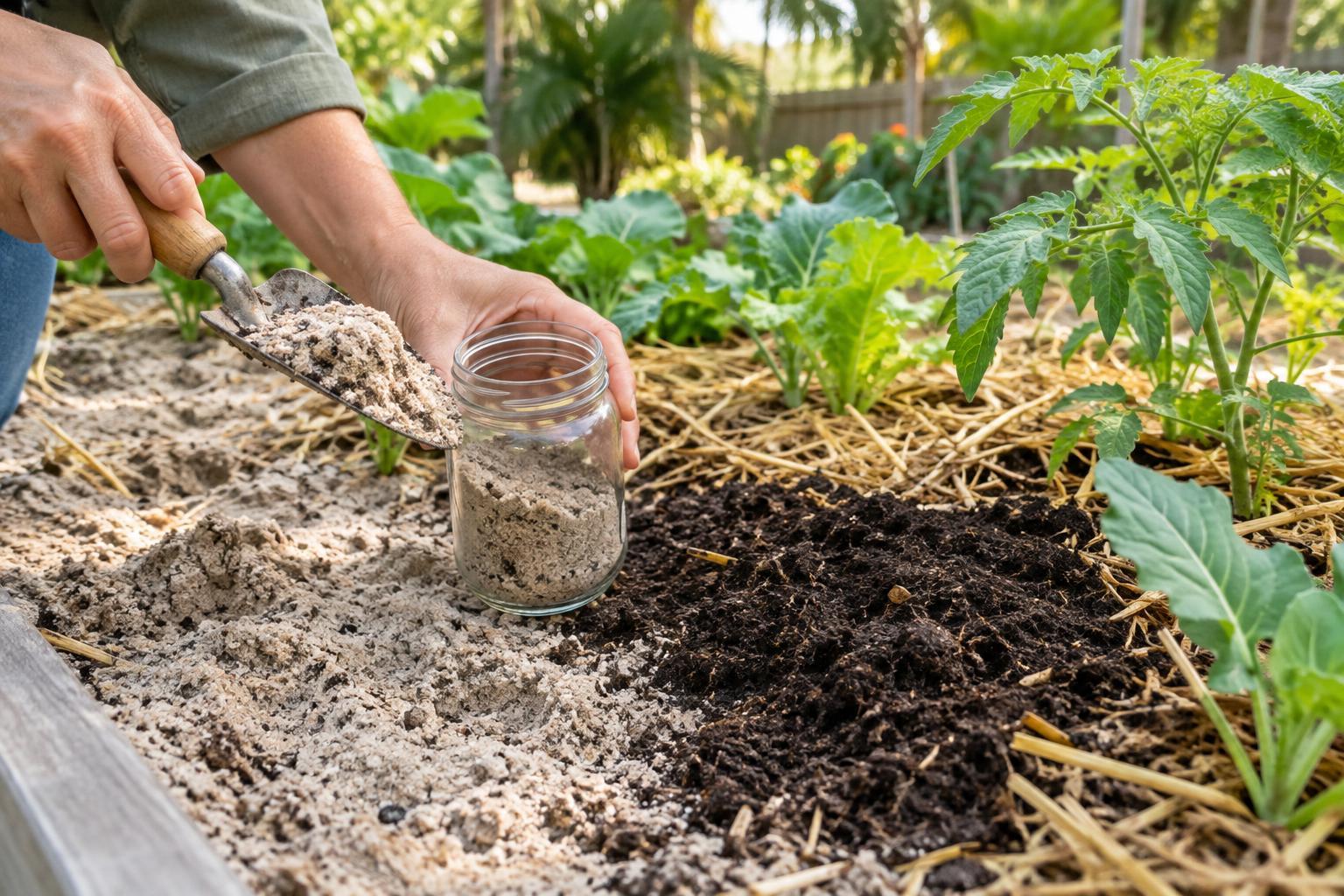
Look closely at the soil before clearing a large area. Some Florida yards are sandy and drain rapidly; others have fill, compacted patches, or spots that hold water. A soil test can help you understand conditions before adding amendments. Build soil gradually with appropriate organic matter, mulch to reduce exposed soil, and keep foot traffic on paths rather than planting rows. If you are unsure about a site’s past use or soil quality, a raised bed or containers with clean growing mix may be the more comfortable starting point.
Choose by your main constraint, then try a small crop
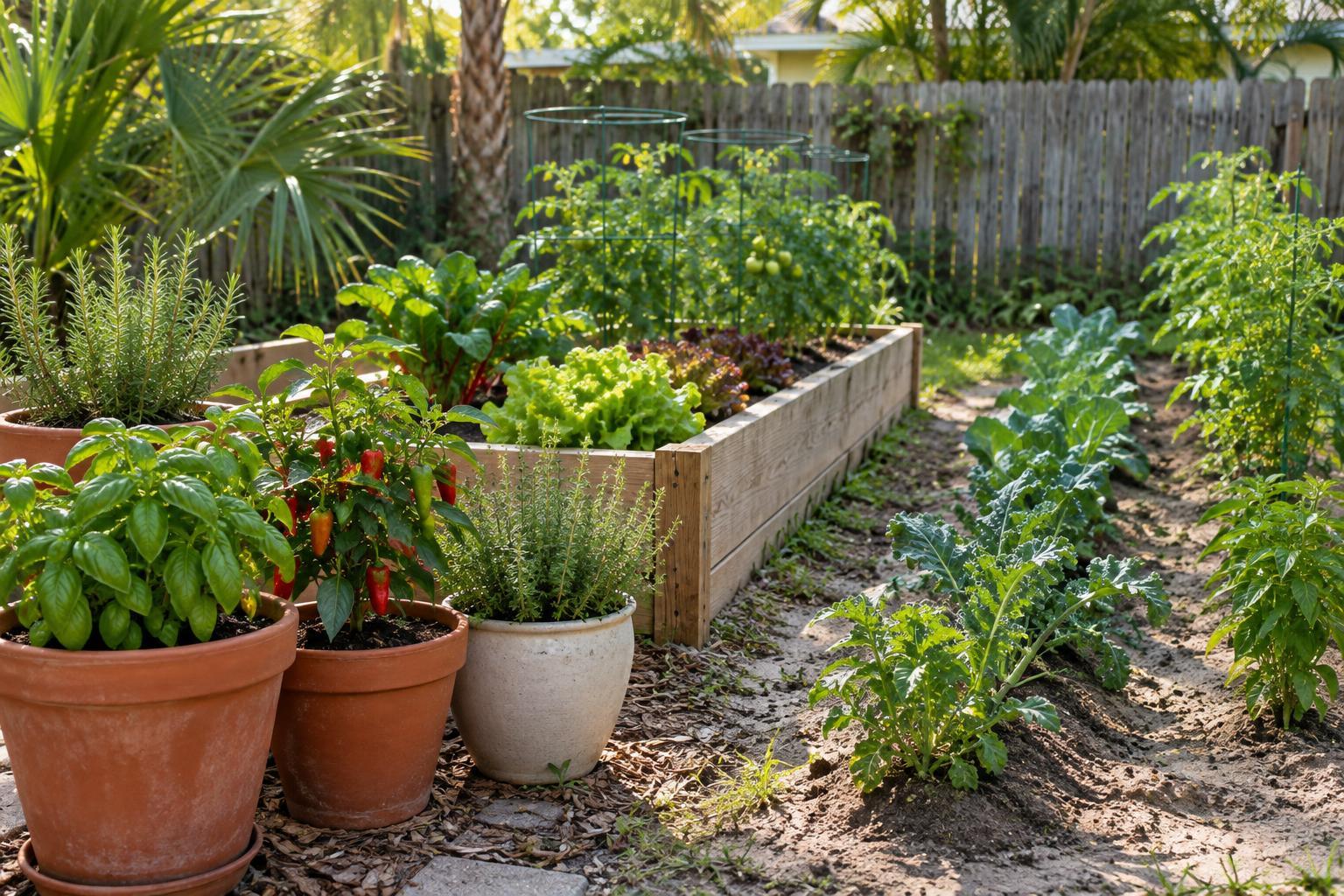
If space or portability is the limit, begin with containers. If workable soil and comfortable access matter most, consider a raised bed. If you have suitable ground and want a larger planting area, try an in-ground plot. You can also combine approaches: pots near the kitchen for frequently picked herbs, with a bed or plot for crops that need more room.
Whichever you choose, start with a few foods you enjoy eating and can tend consistently. Observe how quickly the soil dries, how water moves after rain, and when the site receives sun. Those notes will guide your next planting more reliably than building the biggest garden on day one.