Planting by a calendar meant for somewhere else
One of the easiest mistakes is assuming that spring is the best time to plant every vegetable. In much of Florida, mild weather is more comfortable for crops such as lettuce, peas and many leafy greens, while intense summer heat can make them struggle. Warm-season crops have different needs, but even they may have trouble setting fruit during periods of extreme heat or heavy rain. A seed packet’s general planting advice is a starting point, not a Florida-specific schedule.
Plan for your part of the state rather than treating Florida as one growing zone. Frost risk, summer conditions and the length of a comfortable growing window vary between northern, central and southern areas. Before buying seeds or transplants, check a regional planting guide and note whether your chosen crop prefers cool or warm weather. Start with a few vegetables suited to the coming season; you can expand once you see how they perform in your yard.
Ignoring what happens below the surface
A sunny spot does not guarantee healthy plants. Sandy soil may dry out quickly and hold fewer nutrients than vegetables need, while low-lying or compacted ground can stay wet after a storm. Gardeners sometimes respond by adding fertilizer whenever a plant looks weak, although poor drainage, dry roots or unsuitable weather could be the real problem.
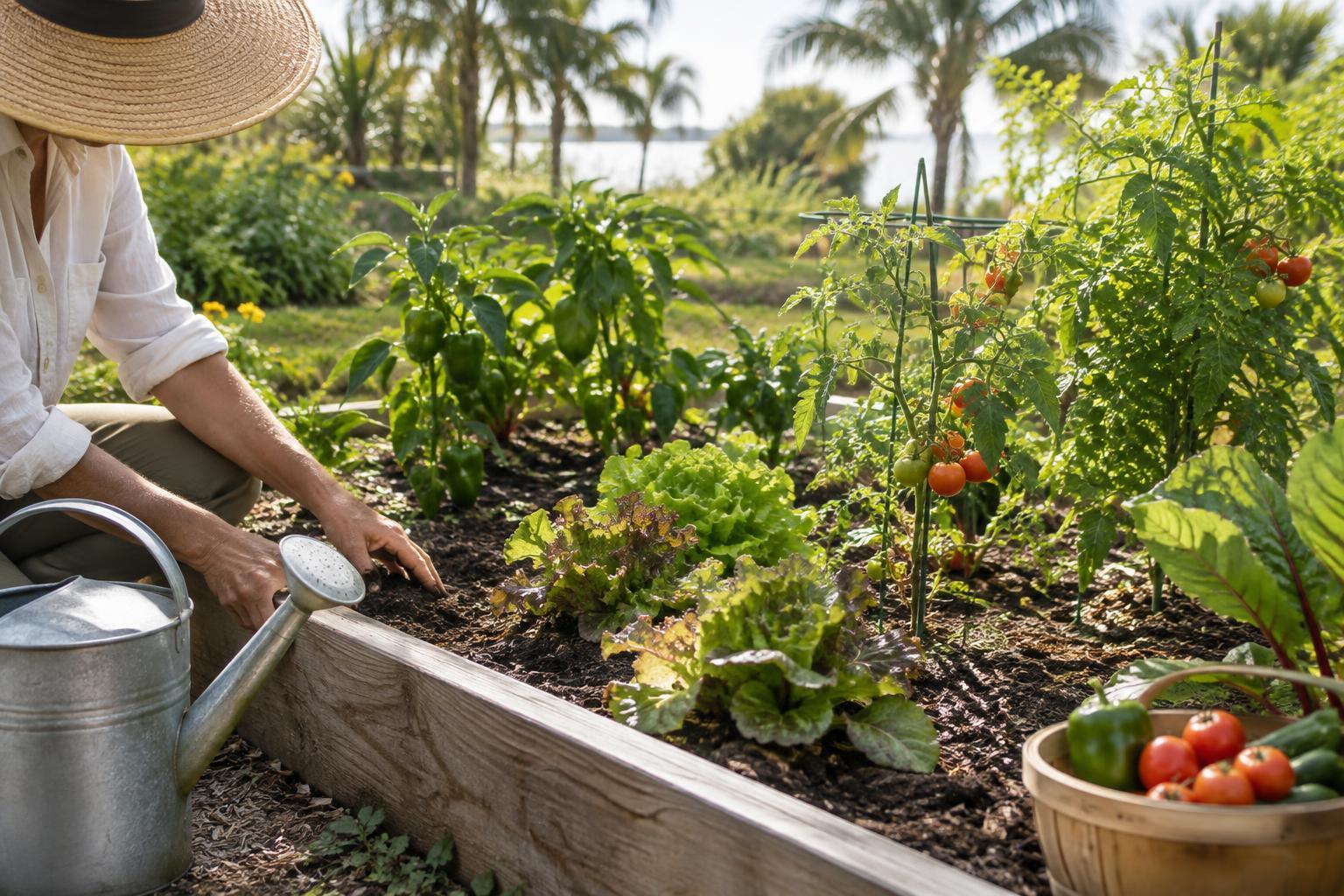
Before planting, observe how water moves through the site. If puddles linger, consider a better-drained location, a raised bed or containers with drainage holes. Mix finished compost into an in-ground bed to improve its texture and use a potting mix intended for containers rather than filling pots with yard soil. If growth remains disappointing, a soil test can help you make more informed choices about amendments instead of guessing. Follow product directions when fertilizing; more is not automatically better.
Watering on autopilot
Florida gardens can go from dry to soaked quickly. Watering for the same length of time every day, regardless of rain or soil conditions, may leave roots too wet. Waiting until leaves wilt dramatically is not a reliable alternative: a plant can droop temporarily in afternoon heat even when the soil still contains moisture.
Check the soil near the root zone before watering. If it feels dry below the surface, water slowly and thoroughly enough to reach the roots, then let the soil begin to dry before watering again. Containers often need closer attention than in-ground beds, especially in hot or windy weather. A layer of mulch can reduce evaporation and help keep soil from splashing onto leaves, but leave a little space around stems. After heavy rain, check drainage before adding more water.
Crowding plants or overlooking afternoon sun
Squeezing extra seedlings into a small bed can seem efficient. As plants mature, though, crowded leaves reduce airflow, make it harder to inspect stems and compete for water and nutrients. Likewise, a spot that looks pleasantly sunny in the morning may expose tender crops to punishing afternoon heat. Too much shade can cause other vegetables to grow well without producing much of a harvest.
Read the mature spacing on seed packets or plant labels, then thin seedlings even when every sprout looks promising. Watch your garden space at several times of day before deciding where crops will go. Fruiting vegetables generally need substantial direct light, while some leafy crops may benefit from protection during the hottest part of the day. In containers, group plants by similar light and watering needs so one care routine does not work against another.
Waiting too long to inspect and harvest
A garden that looked healthy last weekend can develop chewed leaves, spotted foliage or overripe vegetables before the next visit. The mistake is not failing to prevent every problem; it is treating all damage the same way or waiting until a small issue has spread. Insects, disease and weather injury can look similar at first glance, so spraying without identifying the cause may do little good.
Take a short walk through the garden regularly. Look under leaves, check stems and fruit, and notice whether damage is increasing. Remove badly affected plant material when appropriate, keep fallen produce from accumulating and identify a pest before choosing a control method. Harvest vegetables at a useful size rather than leaving them on the plant indefinitely. Keep simple notes on what you planted, where it grew and what happened. Those observations will make the next season’s choices better suited to your own Florida garden.