Start by reading the stall
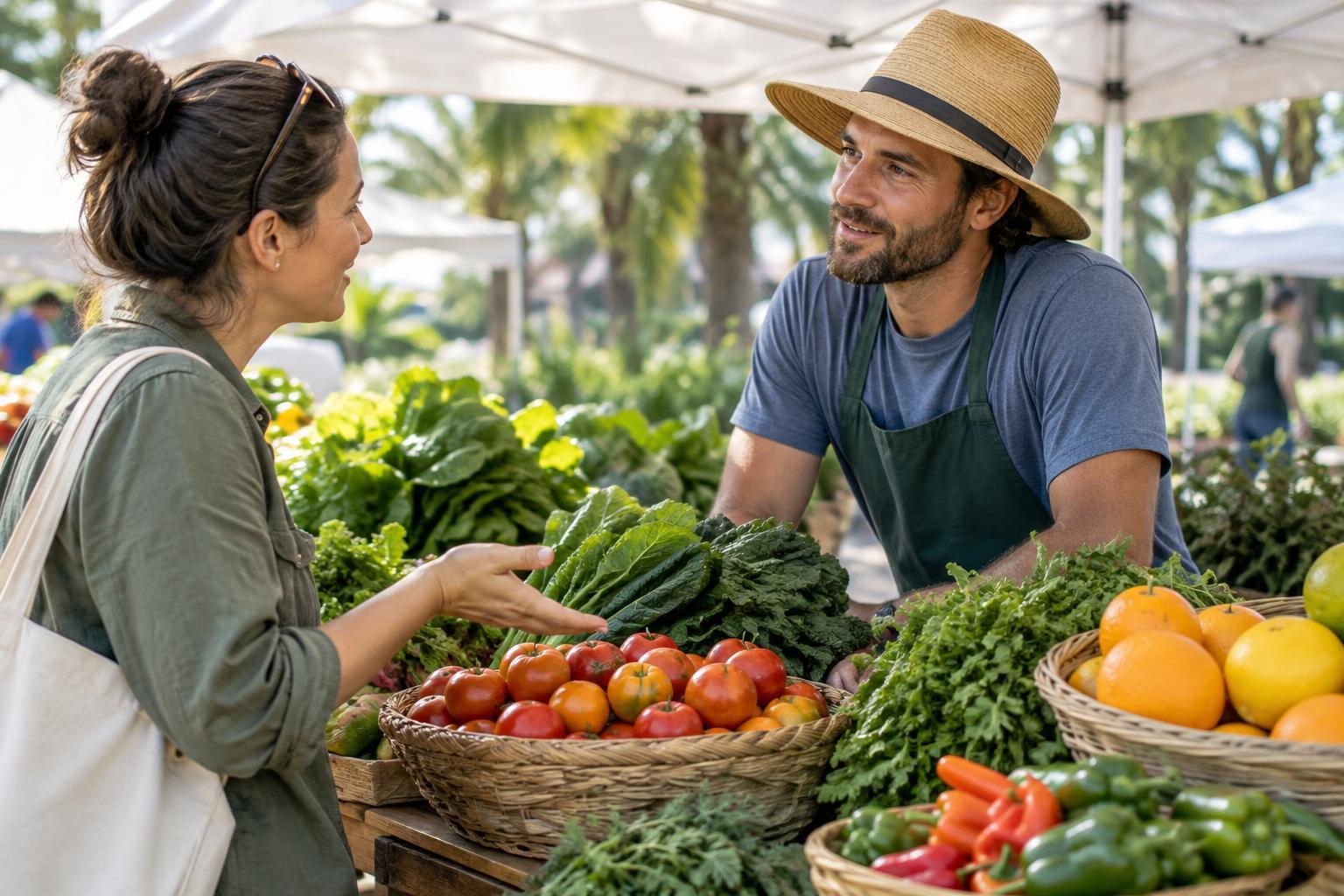
A farmers market is a shared shopping space, but each stall has its own setup. Some vendors invite customers to choose from open bins; others prefer to select and bag items themselves. Before reaching in, take a moment to notice signs, bags, tongs, and the way the vendor is serving the people ahead of you. If the arrangement is unclear, a quick “May I choose these myself?” is easier than guessing.
Give other shoppers room to see the display and give the seller room to work. Step to the side while deciding what to buy, especially if you are comparing several items or looking up a recipe. In a crowded Florida market, a little space can also help keep delicate produce from being bumped or dropped.
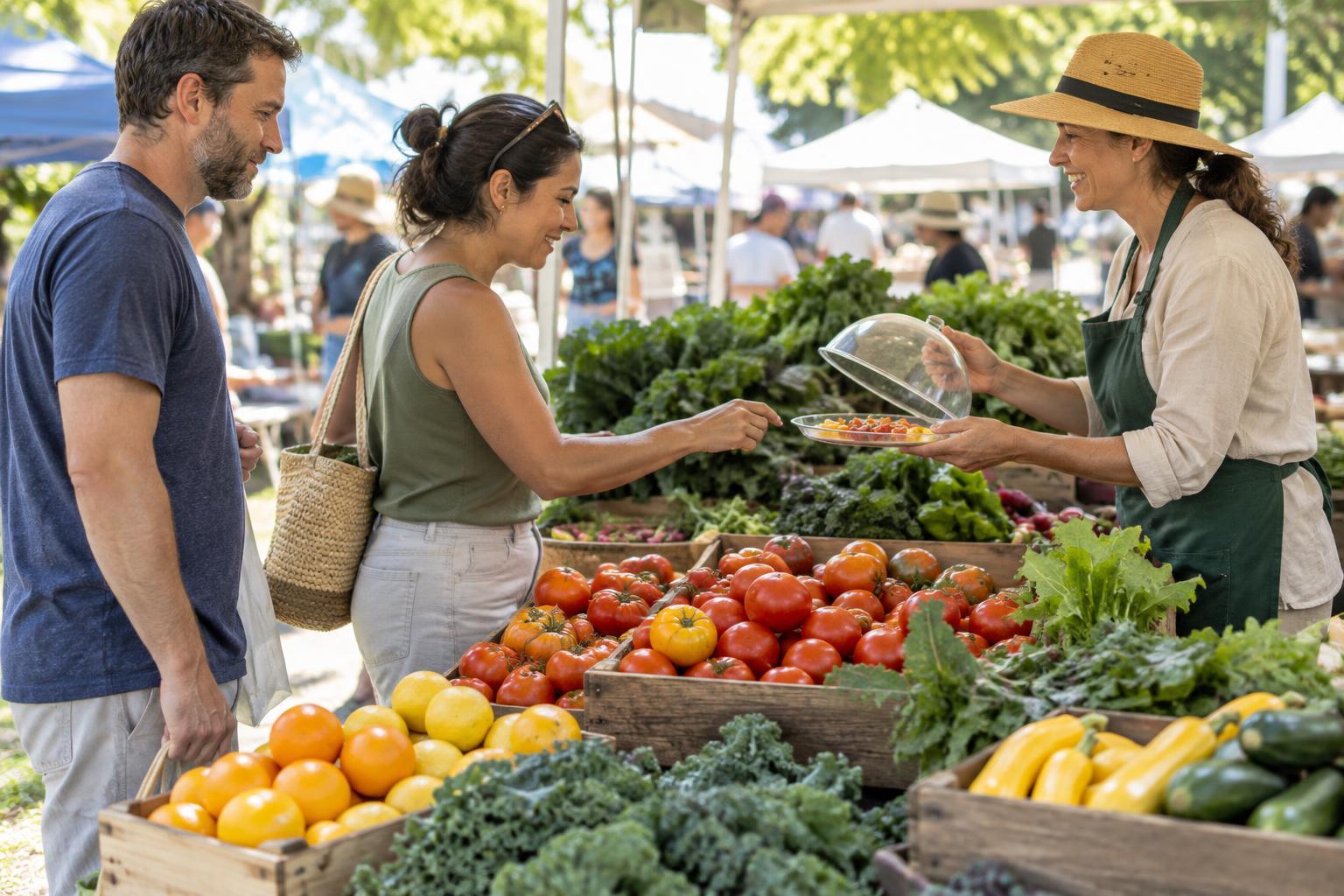
Treat samples as an invitation, not an open container
Samples can introduce you to an unfamiliar fruit, a new preparation, or a variety you might otherwise pass by. Take one only when a vendor has clearly offered it, and use the serving utensil or individual portion provided. If samples are behind the table, ask rather than reaching across the display. Keep used picks, cups, and napkins out of produce bins and return them to a designated bin when one is available.
A taste does not obligate you to buy. A simple thank-you is enough if the item is not for you. If you do have questions about ingredients or preparation, ask when the vendor has a moment, and do not rely on a sample alone to answer an important dietary question. Vendors may pause or stop sampling for practical reasons, so accept a “not today” without pressing for an exception.
Handle produce gently and with purpose
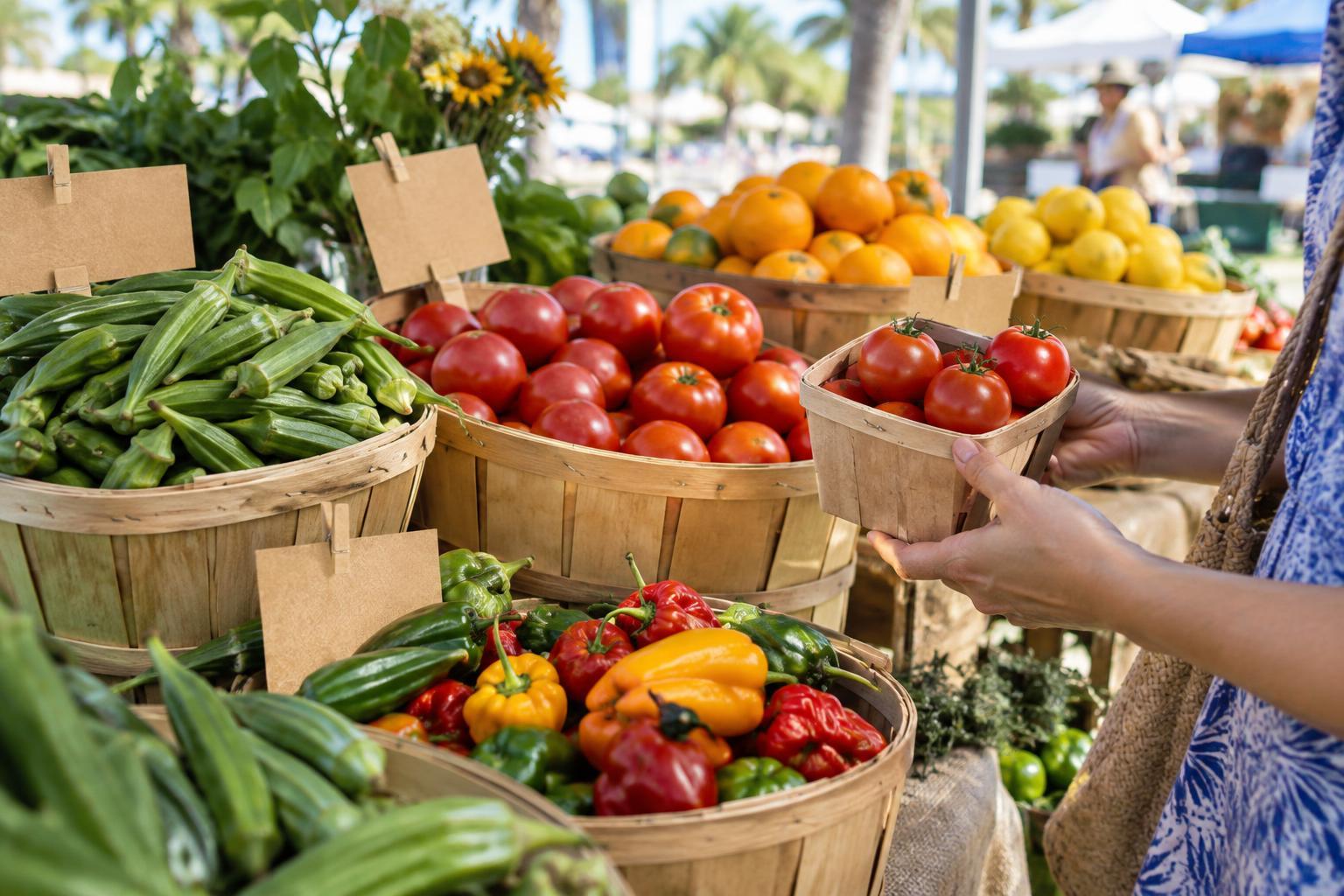
Looking closely is part of choosing good food. Repeatedly squeezing tomatoes, digging through a stack of berries, or moving several displays to find one perfect piece can damage food that someone else might buy. Start with your eyes: check color, visible condition, and the size you need. When touch is appropriate, lift an item carefully and put it back where you found it if you decide against it.
Ask before opening containers, rearranging bunches, or separating items sold as a set. If you spot a bruised piece, let the vendor know instead of quietly returning it to the bottom of a pile. For especially ripe fruit or tender greens, the seller may be best placed to choose for you. You can describe what you plan to do with it—eat it today, cook it later, or let it ripen—and let them guide the selection.
Keep the line moving without rushing anyone
At a busy stall, look for a line or an informal order of arrival before stepping forward. If it is hard to tell who is next, ask the people nearby. Browsing from the side is fine, but wait your turn to request a sample, ask for an item behind the table, or pay. A shopper asking a question may still be in line even if they have stepped aside to let others see.
When your turn comes, having your choices and payment ready helps. If you need time to decide, invite the next person to go ahead. Save longer conversations for a quieter moment when possible; questions about ripeness, storage, and how to use an ingredient are welcome parts of market shopping, but they are easier to explore when a queue is not waiting.
If there is a mix-up about who arrived first, a calm “Were you next?” usually resolves it. Courtesy matters more than winning a place in line. Make room for shoppers carrying bags, using mobility aids, or shopping with children, and avoid blocking the stall entrance while you sort your purchases.
Finish the exchange thoughtfully
Before leaving, check that you have the items you selected and understand the price. If you change your mind, hand unwanted produce back to the vendor rather than leaving it on another part of the table. Keep your own bags clear of the seller’s work area unless you are invited to set them down, and gather your change and purchases before moving aside.
Market etiquette is not a test with one rule for every stall. It is a habit of paying attention: follow posted guidance, ask when you are unsure, and remember that the food on display is both someone’s work and another shopper’s potential dinner. Those small choices make the market more comfortable for everyone.