Start with what you want to know
A farmers market gives you a chance to learn about your food from the people selling it. Still, a short exchange at a busy stall cannot tell you everything about a farm. The most useful approach is to decide what matters to you before you ask. You might be curious about how a grower handles insects, whether a crop was grown in soil or a container, or whether the vendor grew the produce themselves.
Ask about a practice rather than starting with a label. Certification terms can have specific meanings, while everyday descriptions such as natural or spray-free may mean different things to different people. A vendor may use methods you value without holding a certification, or may sell both certified and uncertified items. Keeping the question specific makes it easier to get an answer you can use.
Make room for a brief, respectful answer
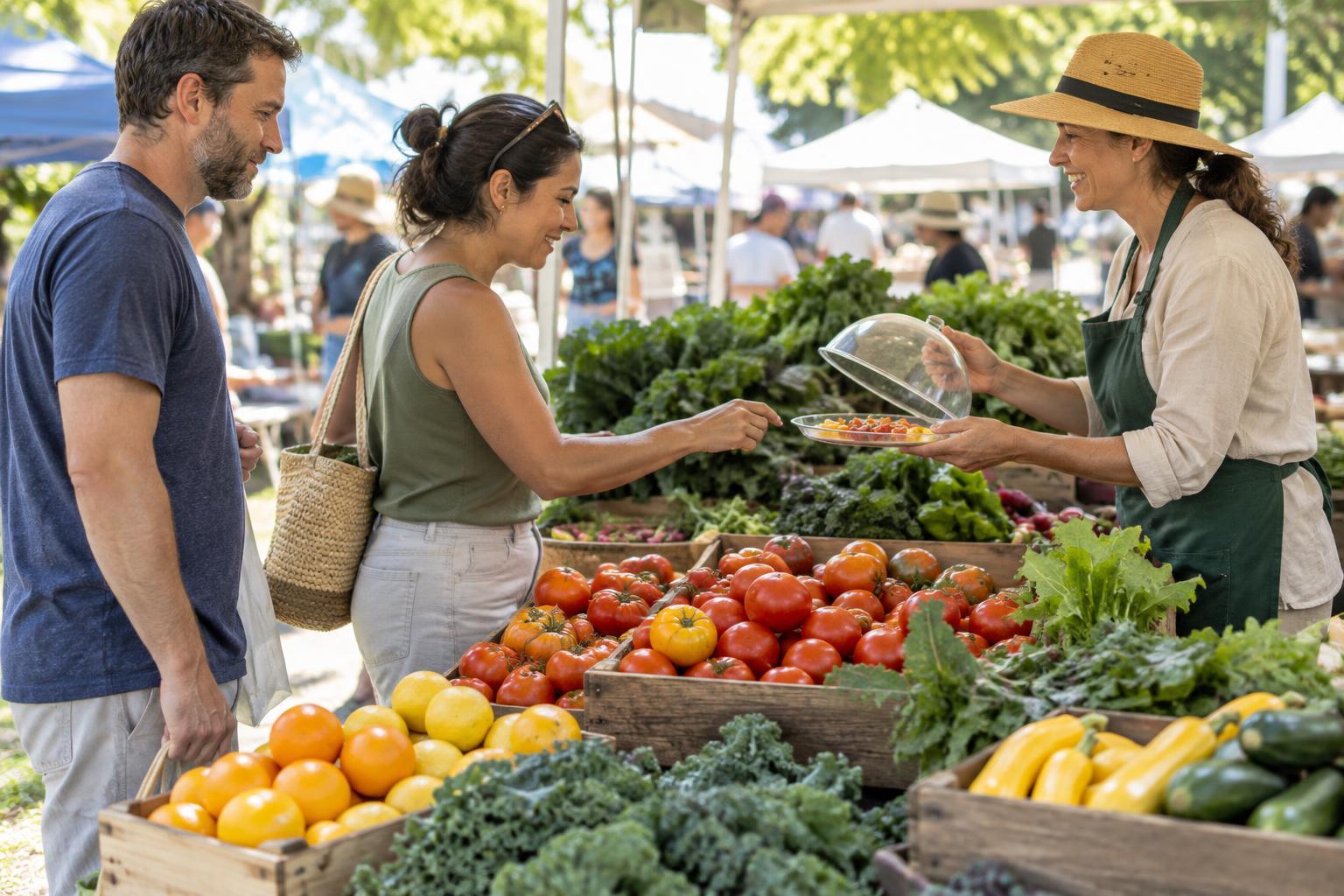
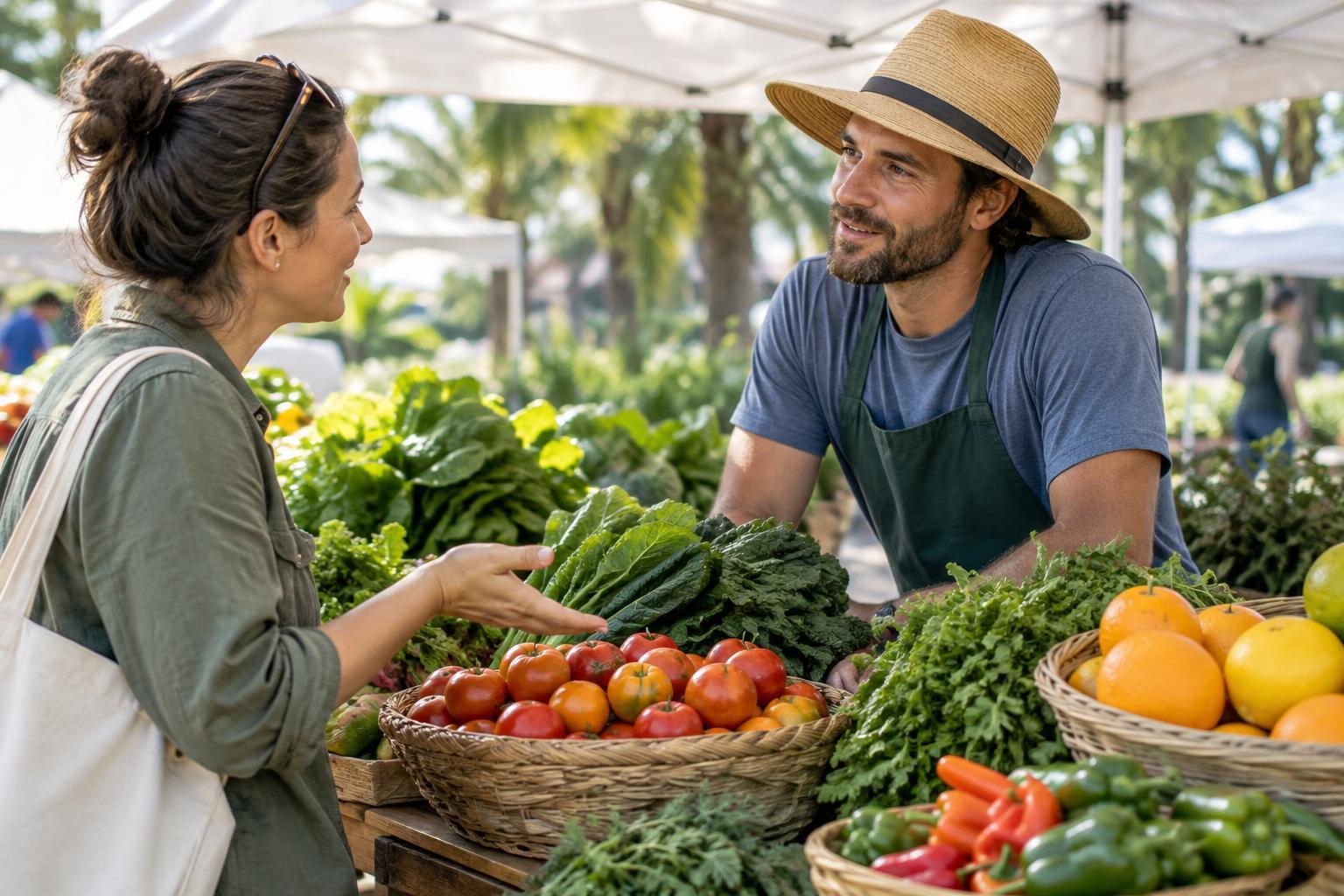
Choose a moment when the stall is not handling a long line, and begin with one question. You could ask how the tomatoes were grown, what the farm does when pests become a problem, or whether the greens came from the vendor’s own fields. These are open questions: they invite an explanation without suggesting that one answer is the only acceptable one.
If the answer is brief, a gentle follow-up can help. Ask whether a particular approach applies to everything on the table or only to one crop. If the vendor is busy, thank them and offer to return later. Market conversations work best when both sides have time to pay attention; you do not need to conduct a full interview before buying a bunch of herbs.
Ask about the item, not just the farm
Growing practices can vary by crop and season. A farmer might protect delicate greens differently from citrus or root vegetables. Weather, insect pressure and the stage of a crop can also affect the choices a grower makes. Questions tied to the produce in front of you are often more informative than a broad request to describe the entire farm.
It also helps to clarify who produced an item. Some market vendors grow what they sell; others may bring products from neighboring growers or carry a mix. Neither arrangement tells you, by itself, how the food was grown. If sourcing matters to you, ask which items the vendor grew and whether they know about the practices used for the others. A straightforward answer is more helpful than an assumption based on the appearance of the stall.
Understand the limits of labels and shorthand
Words on a sign can be a starting point, but they may not answer your particular question. For example, someone describing produce as locally grown is talking about where it came from, not necessarily how it was grown. Likewise, an absence of a certification sign does not establish which methods a farm does or does not use. If a certification is important to you, ask whether it applies to the specific product you are considering.
Listen for concrete descriptions: how weeds are managed, what happens when insects appear, whether soil amendments are used, or how the crop is watered. You do not have to master farming vocabulary to ask these questions. It is reasonable to say that you are learning and would appreciate a plain-language explanation. It is also reasonable to leave with an incomplete answer and make your own shopping decision.
Let curiosity guide the purchase
A good exchange does not have to end in agreement. Your priorities may include growing practices, flavor, price, freshness, accessibility or support for a particular producer. Consider the vendor’s answer alongside those priorities rather than treating a single term as a complete measure of quality. If something is unclear, ask for clarification instead of guessing what the vendor meant.
Over time, returning to the same stalls can make these conversations easier. You may learn which questions bring out useful detail and how a grower’s approach changes across the season. In Florida markets, where shoppers may encounter everything from leafy greens to tropical fruit, asking about the specific item keeps the discussion grounded. The aim is not to test a vendor. It is to understand what you are buying well enough to choose with confidence.