A useful shorthand, not a single tradition
“Floribbean” generally describes cooking that brings together Florida ingredients and flavors associated with the Caribbean. On a menu, that might mean local fish served with a citrusy sauce, tropical fruit paired with chile, or familiar Florida produce prepared with a Caribbean-inspired seasoning. The word is especially useful for describing a style of restaurant cooking: flexible, bright and open to combination.
But the label does not name one inherited cuisine with one set of rules. Florida is a large state, and the Caribbean is a region of many islands and coastal communities, each with its own foodways. A dish made by a family in Miami, one served at a restaurant in the Keys and one cooked in a Tampa home may share ingredients without sharing the same story. “Floribbean” works best as a starting point for a question—what came together here?—rather than as the complete answer.
The ingredients tell only part of the story
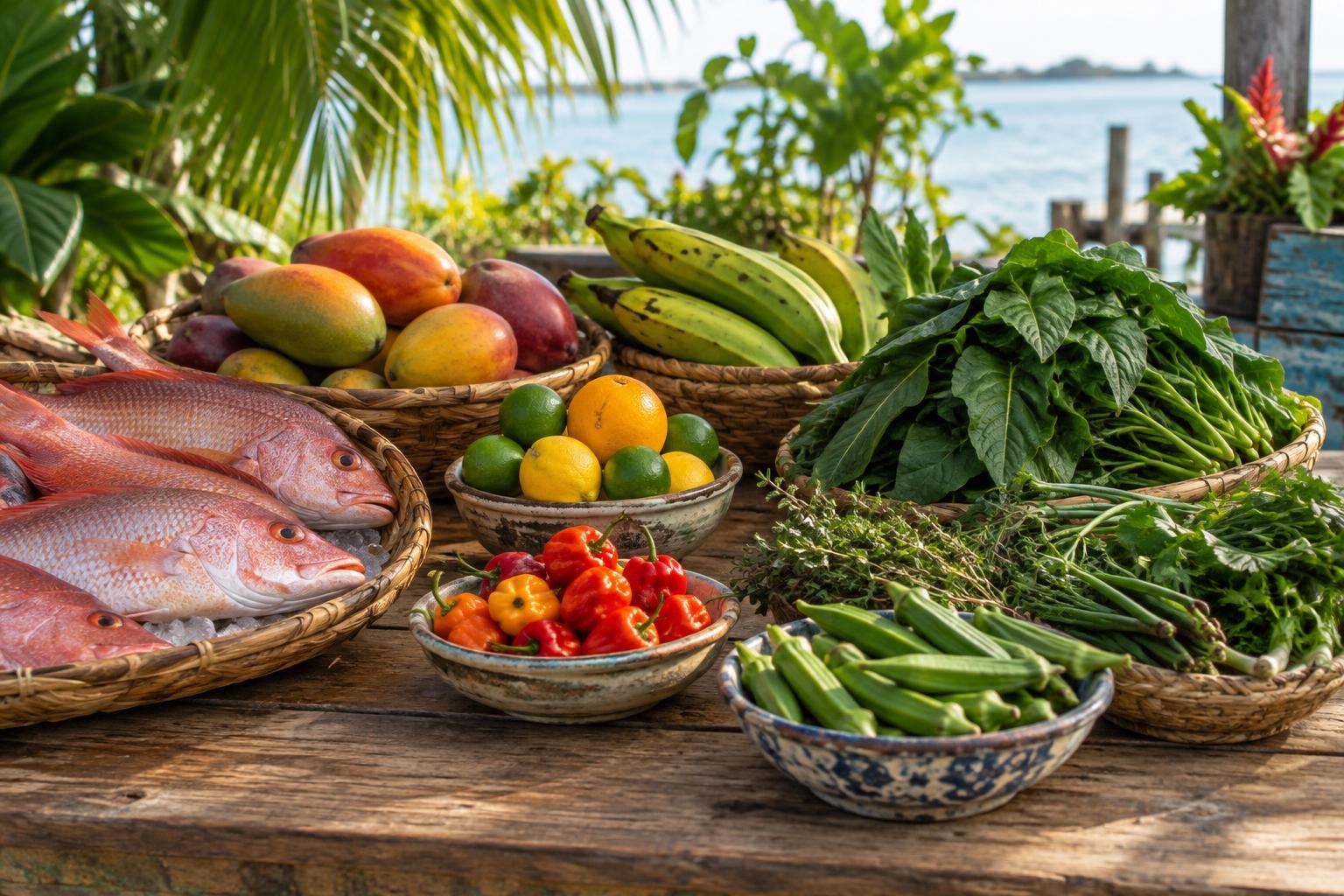
Citrus, seafood, peppers, plantains, rice, beans and tropical fruit can all fit into a conversation about Floribbean cooking. So can herbs, spices, marinades and slow-cooked preparations. What matters is not simply that these ingredients appear together, but how a cook uses them. A sharp squeeze of lime, a gently spiced sauce or a sweet fruit relish can change the character of a dish without defining its cultural origin.
Florida markets make the possibilities tangible. A shopper might find fish, greens, citrus or seasonal fruit and imagine a meal built around acidity, heat and freshness. Availability varies by place and season, though, and a market basket is not a history lesson. Plantains, for example, may be familiar in several Caribbean and Latin American kitchens, but their presence alone does not make a dish representative of any one of them.
Whose histories fit under the umbrella?
Florida’s food culture has been shaped by Indigenous peoples, by African Americans and the descendants of enslaved Africans, and by generations of migrants from the Caribbean, Latin America and elsewhere. Those histories involve different places, skills and circumstances. Treating every shared ingredient or technique as evidence of a seamless “fusion” can hide the people who maintained food traditions through displacement, work and family life.
The Caribbean itself is not one culinary voice. Cuban, Haitian, Jamaican, Bahamian and Puerto Rican food traditions, among many others, have distinct dishes and meanings; even those names encompass regional and household differences. When a particular tradition is known, naming it is often more informative than calling it Floribbean. A dish should not lose its identity simply because it is prepared or sold in Florida.
How menus and descriptions can be more precise
“Floribbean” can describe a cook’s deliberate blend of influences, especially when the cook uses the term for their own work. It is less helpful when used as a catchall for anything containing mango, chile or coconut. A menu that names its ingredients and preparation gives diners a clearer picture: grilled fish with a citrus marinade says more than a broad regional label on its own.
Context matters, too. If a dish adapts a specific preparation, it is worth identifying that connection when it is known and relevant. If it is simply an original combination of available ingredients, there is no need to invent a lineage for it. For writers and diners alike, the aim is not to police every creative plate. It is to leave room for cooks to explain their work and for established traditions to be recognized on their own terms.
Bring curiosity to the table
At a market or restaurant, a few grounded questions can reveal more than a label: What ingredient is in season? How is the sauce made? Is this a family preparation, an adaptation or a new combination? Answers will differ, and a cook may not wish to turn a meal into a cultural explanation. Listening without demanding a tidy origin story is part of appreciating the food.
At home, the same approach encourages thoughtful cooking. Start with what is fresh, learn the name and method of a dish before adapting it, and describe your own version honestly. “Floribbean” can remain a useful invitation to explore Florida’s connections across the water. It becomes richer when it opens a conversation about particular places and people instead of standing in for all of them.