When is Florida eggplant in season?
Florida-grown eggplant is often easier to find during the milder parts of the year, particularly from fall through spring. Eggplant likes warmth, but intense summer heat, heavy rain and pest pressure can make growing and harvesting more difficult. Availability also varies by region, variety and the weather in a given growing season. A market may have local eggplant one week and none the next.
If buying local matters to you, ask the vendor where the eggplant was grown rather than relying on the time of year alone. An eggplant on a Florida produce table is not necessarily Florida-grown. Vendors can also tell you what they expect to bring in the coming weeks, though harvest plans can change.
What you might find at the market
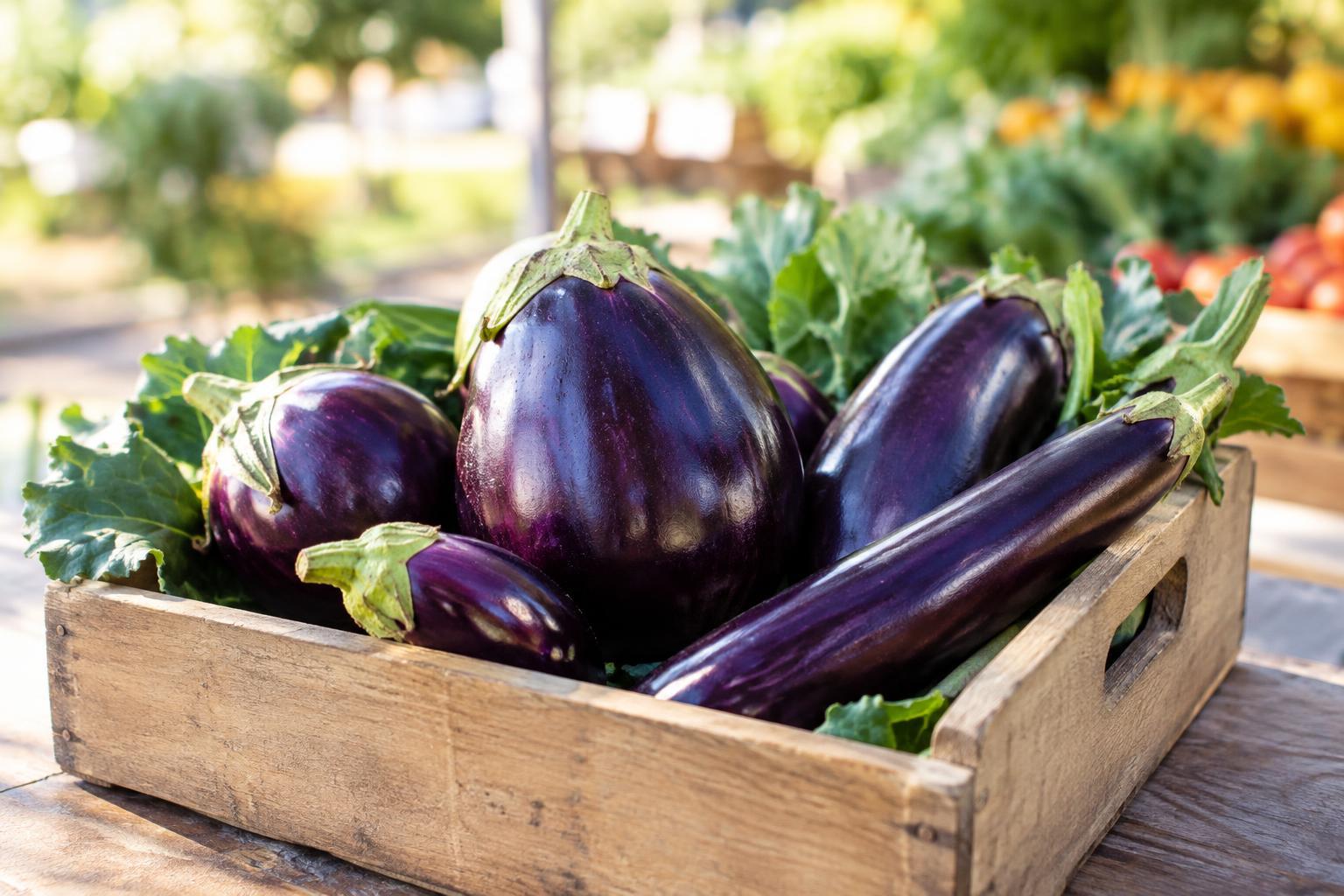
The familiar large, deep-purple eggplant is only one possibility. Markets may also carry smaller round fruits, slender varieties or eggplants with pale or striped skins. Their shapes affect how you might cut and cook them: a broad eggplant gives you generous slices for roasting, while a slender one is convenient for stir-fries or quick grilling. Smaller eggplants can be handy when you are cooking for one or want to use the whole purchase at once.
Choose an eggplant that feels firm and relatively heavy for its size, with skin that looks smooth and sound. Minor surface marks are not necessarily a problem, but deep cuts, soft patches, leaking spots or a sunken area are reasons to choose another. Check the stem end, too. Once you get home, plan to cook a particularly ripe or slightly bruised eggplant first.
How long does a whole eggplant keep?
Eggplant is best treated as a vegetable to cook soon rather than one to stockpile. In a cool indoor spot, a sound whole eggplant may stay in good condition for a day or two. A warm Florida kitchen can shorten that window. Keep it out of direct sun and away from heat, and check it before cooking.
If you will not use it promptly, place it in the refrigerator’s crisper drawer in a loose or perforated bag. Avoid sealing it tightly where moisture can collect, and leave it unwashed until you are ready to prepare it. Try to use refrigerated eggplant within a few days for the best texture. It is sensitive to prolonged cold, so it may develop dull patches or softened flesh even before it becomes unusable.
These are practical quality guidelines, not a guarantee of shelf life. An eggplant that was harvested recently and handled gently may last longer than one that spent time in the heat. Discard it if it becomes slimy, develops mold or has an unpleasant smell.
After you cut it
Cut eggplant can brown when exposed to air. Browning alone does not mean it has spoiled, but the cut surfaces also lose their fresh texture quickly. Refrigerate leftover raw pieces in a covered container and aim to cook them within a day or two. If you are preparing eggplant ahead for a meal, cutting it shortly before cooking will usually give you a better result.
Refrigerate cooked eggplant promptly in a covered container. Its texture will soften further as it sits, especially if it has been roasted or simmered in sauce. Leftovers are often best suited to dishes where that softness works in their favor, such as a pasta sauce, a spread or a grain bowl.
Buy with a meal in mind
The easiest way to avoid waste is to decide how you will use eggplant before buying several. Roast cubes with oil until tender, grill thick slices, or simmer pieces with tomatoes and other vegetables. Eggplant absorbs oil readily, so add it deliberately and give the pieces room in the pan if you want browned edges rather than steamed ones.
When local eggplant is plentiful, try a variety you have not cooked before and ask the grower how they like to prepare it. Buy only what you can use in the next few days. That approach leaves room to enjoy a seasonal market find while it is still at its best.