Understanding Florida’s green bean season
Green beans often fit best into Florida’s cooler growing season. Heat, heavy rain and cold snaps can all affect a crop, so supply may shift from week to week. Growing conditions also differ across the state: a harvest window in South Florida need not match one farther north. Rather than treating a seasonal calendar as a promise, use it as a reason to look for beans at the market and ask where they were grown.
A full display does not necessarily mean every bean came from a nearby farm. Market sellers may offer produce from different parts of Florida or beyond, depending on what is available. If local origin matters to you, ask which beans are Florida-grown and whether the seller expects more on the next market day. A brief conversation can be more useful than assuming that all green beans share one statewide peak.
Choosing beans that will hold up at home
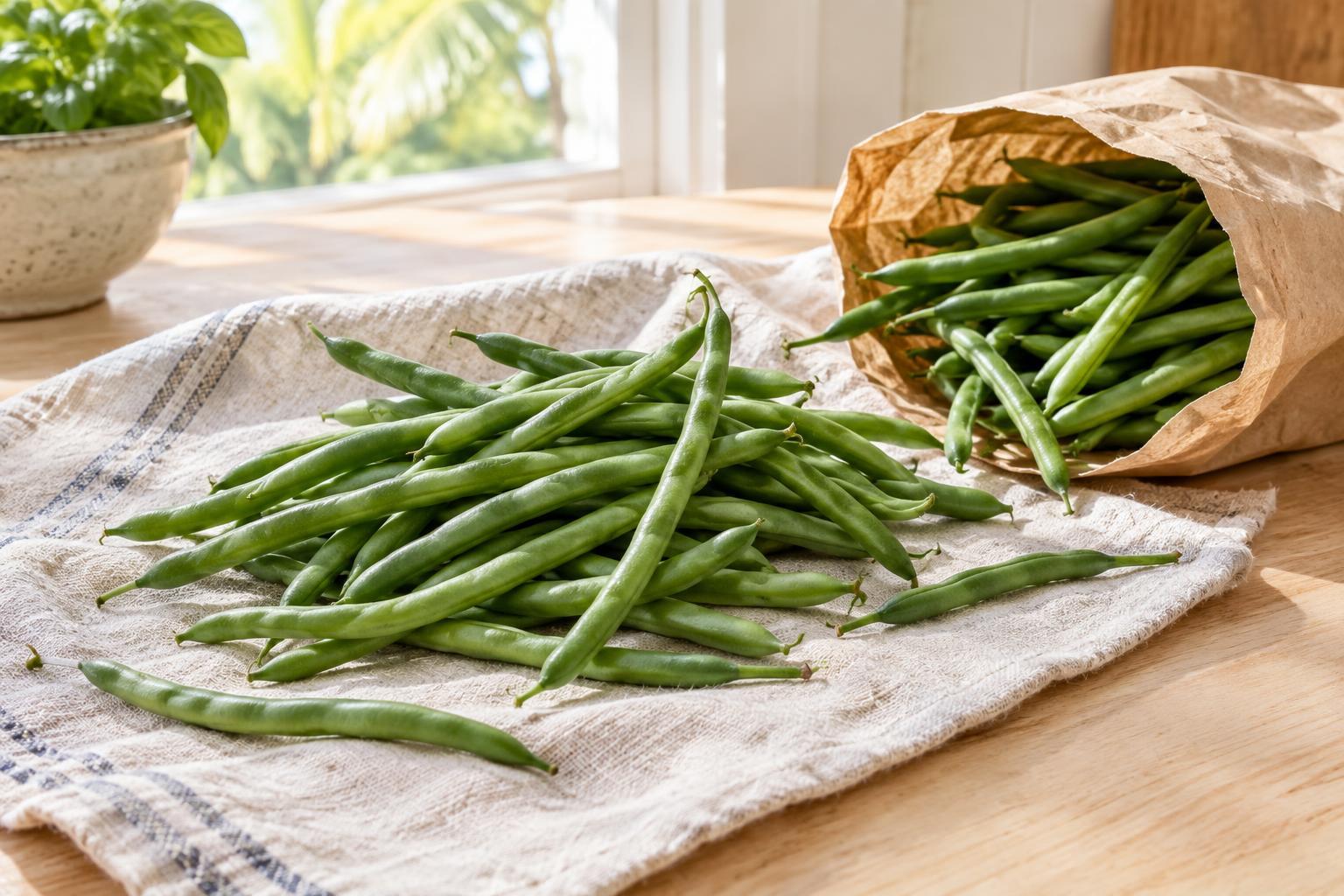
Look for pods that feel firm and look reasonably smooth, with color typical of the variety being sold. Many fresh green beans break cleanly when bent, though thickness and tenderness vary. A little variation in size or shape is normal. Pass over pods that feel limp, have extensive soft spots or show visible mold. If the beans are displayed in a deep pile, take a moment to check those underneath as well as those on top.
Buy an amount you can use within a few days if texture is your priority. Smaller, slimmer pods often cook quickly, while larger ones may suit longer cooking; neither size is automatically the better purchase. Ask the seller whether the beans are best for a quick sauté or a slower simmer if you have a dish in mind. Once home, sort out any damaged pods so one wet or decaying bean does not sit against the rest.
Why condensation is the storage problem
Green beans need protection from drying out, but they do not benefit from being sealed up while wet. Moisture left on the pods can collect inside a tightly closed bag, especially when produce moves between warm market air and a cool refrigerator. Droplets can leave the beans damp and encourage spoilage. The goal is a cool place with some humidity, not a pocket of trapped water.
If you notice moisture inside a bag after the trip home, open it and check the beans. Gently pat off visible water with a clean towel and let the pods become surface-dry before putting them away. Avoid leaving them spread out for a long time in a warm kitchen; this is a short drying step, not a way to store them. Wash the beans just before cooking rather than before refrigeration.
A simple refrigerator routine
Place dry, unwashed beans in a produce bag with some airflow, such as a loosely closed or perforated bag. A dry paper towel can absorb small amounts of moisture; replace it if it becomes damp. Keep the bag in the refrigerator’s crisper drawer, where the beans are less exposed to the drying airflow of an open shelf. Do not pack the drawer so tightly that delicate pods get crushed.
Check the bag when you reach for other produce. If droplets have formed, dry the inside of the bag or switch to a fresh one, and remove any pods that have turned soft or slimy. Use the beans while they remain crisp and appealing rather than relying on a fixed number of storage days. For a larger purchase you cannot cook soon, blanching and freezing is another option, though the thawed beans will have a softer texture.
From market bag to meal
When you are ready to cook, rinse the beans under running water and trim the stem ends. For a straightforward side dish, cook them until they reach the tenderness you like, then toss with olive oil, citrus and a little salt. They can also go into a pot with tomatoes and aromatics for a softer, slower-cooked preparation. Both approaches make use of good beans without requiring every pod to be identical.
Keeping the beans dry before cooking gives you flexibility: crisp pods are easier to sort, trim and prepare when the meal comes around. At the market, focus on sound beans and a realistic amount for your household. At home, give them cool storage without a wet, sealed bag. Those small habits help a seasonal purchase make the trip from stall to table in good condition.