Make a loose plan before you go
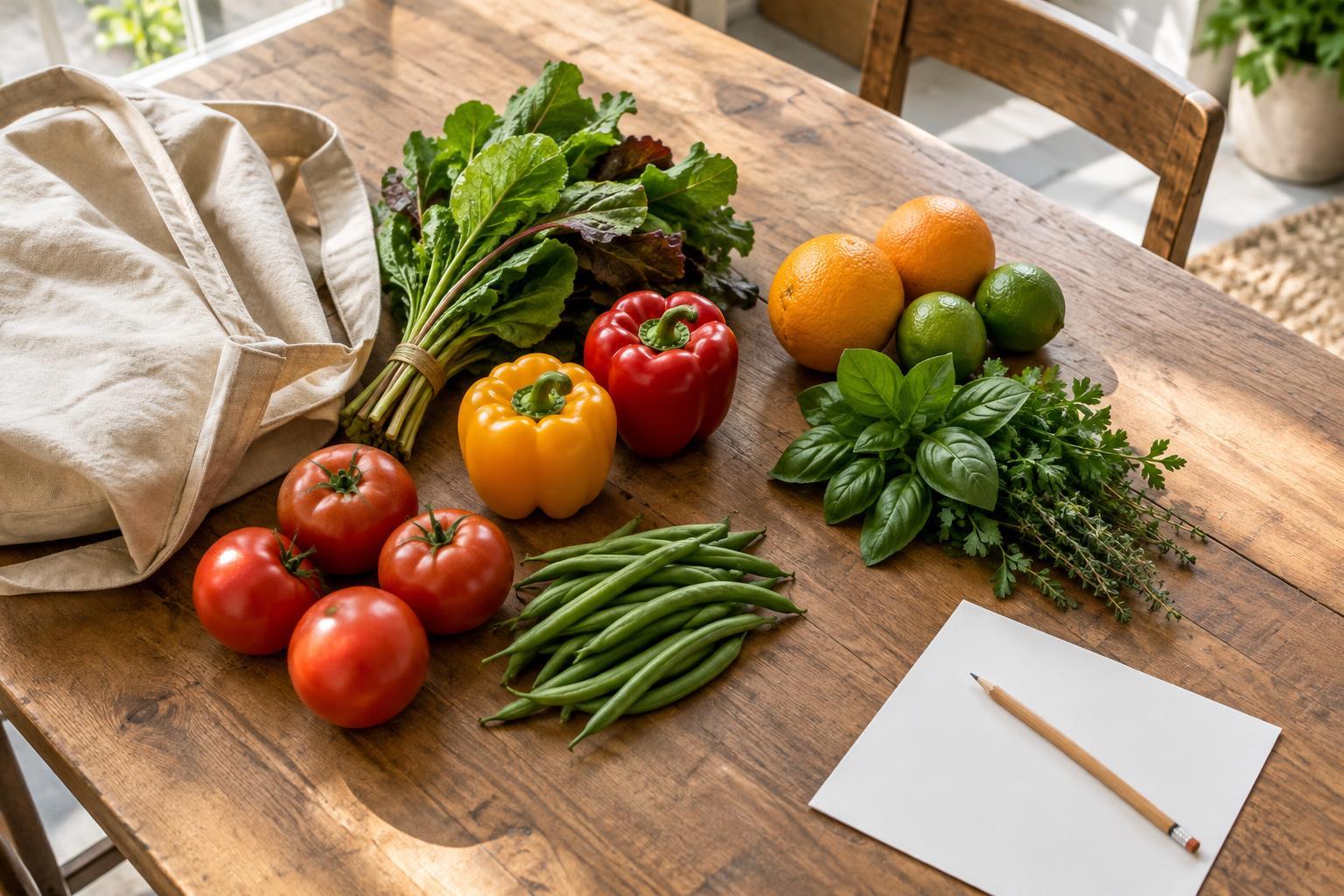
A farmers market is a place to discover what looks good, not just to fill a rigid grocery list. Before your first visit, think of two or three meals you could make with flexible ingredients: a salad, a vegetable sauté or a simple fruit breakfast. Write down what you already have at home, then leave room on your list for an ingredient you did not expect to find.
Check the market’s own information before you leave for its location, hours, parking or transit options, and any rules about pets or payment. Schedules and vendor lineups can change, so avoid planning a meal around a particular stall unless you have confirmed it will be there. If you can, allow enough time for one unhurried walk through the market before buying. That first pass helps you compare choices and decide what you can comfortably carry.
Pack for the weather and the trip home
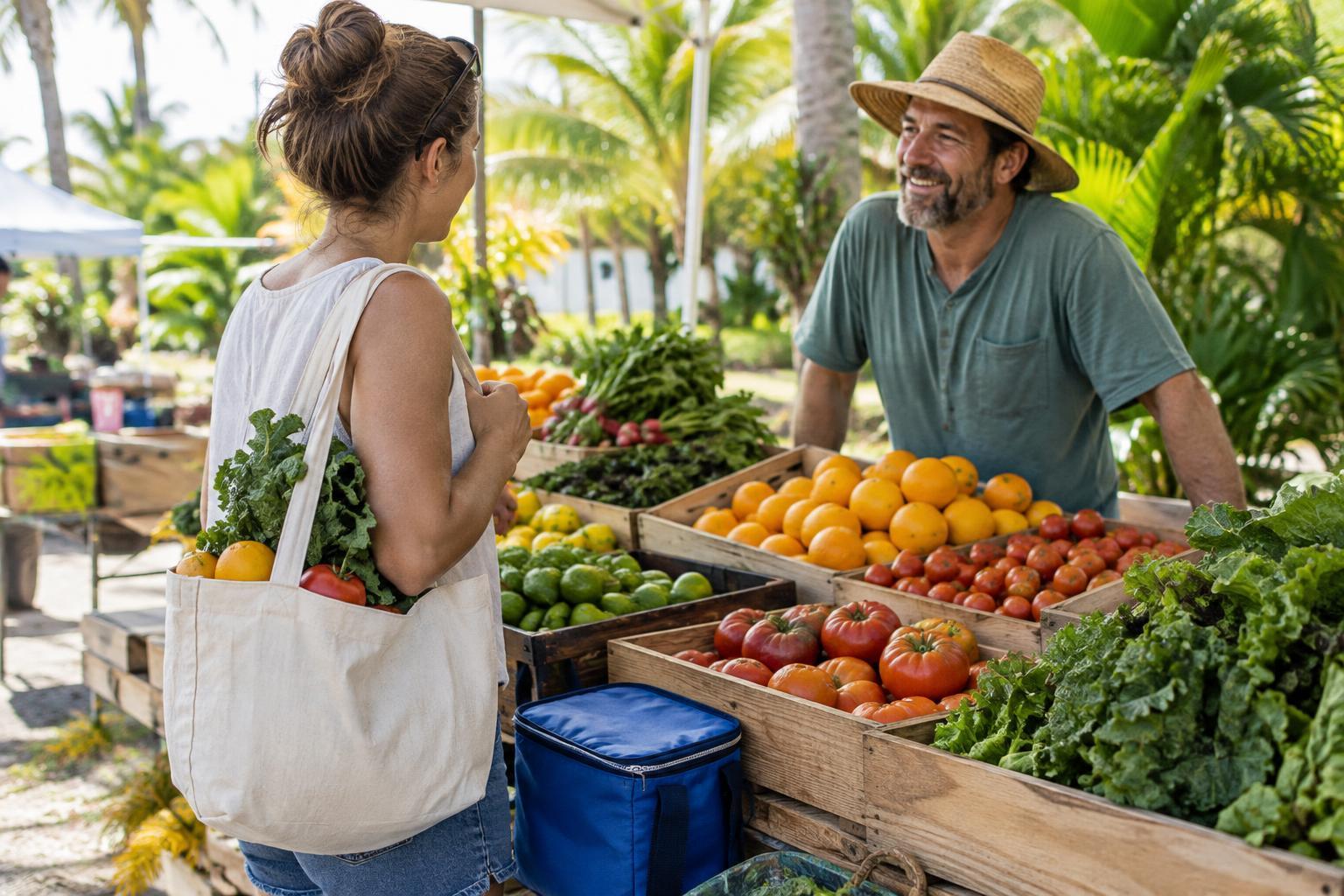
Bring a sturdy tote or basket for larger items and a few smaller bags to separate delicate produce from heavy purchases. Reusable bags are handy, but do not assume every vendor can fill a container you brought from home. A small cooler or insulated bag with a cold pack is useful if you expect to buy perishable foods or make other stops before going home.
Florida shopping often means planning for warmth, sun or a passing shower. Comfortable shoes, drinking water and rain protection can make browsing more pleasant. Bring a payment option that works for you; carrying some small bills may be helpful, while payment methods vary by vendor. If you want to keep your hands free, pack lightly rather than bringing every shopping bag you own.
Walk the stalls, then start a conversation
On your first lap, notice what is abundant, what is sold in small quantities and which items need the gentlest handling. Produce availability varies with growing conditions and the time of year. A market may also include prepared foods or products sourced from elsewhere, so ask if knowing where something was grown or made matters to you. Labels and a brief conversation are more reliable than assumptions based on a stall’s appearance.
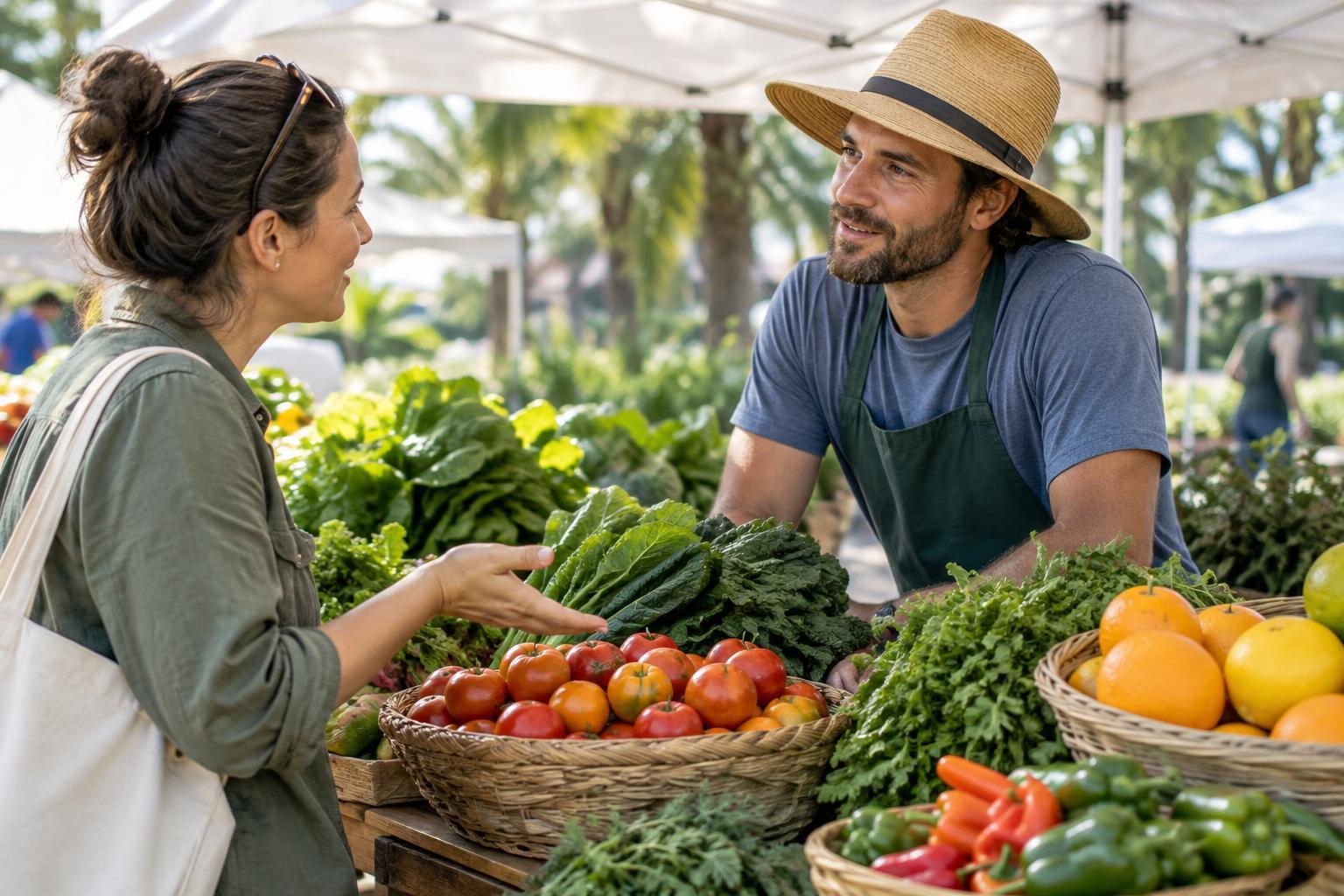
You do not need to know every variety to shop well. Try a specific, friendly question: “Is this ready to eat today?” or “How would you prepare this?” If you are cooking later in the week, ask which item will keep best. Vendors may have useful suggestions, but they are also serving other shoppers; step aside when you need time to think, and let others order while you decide.
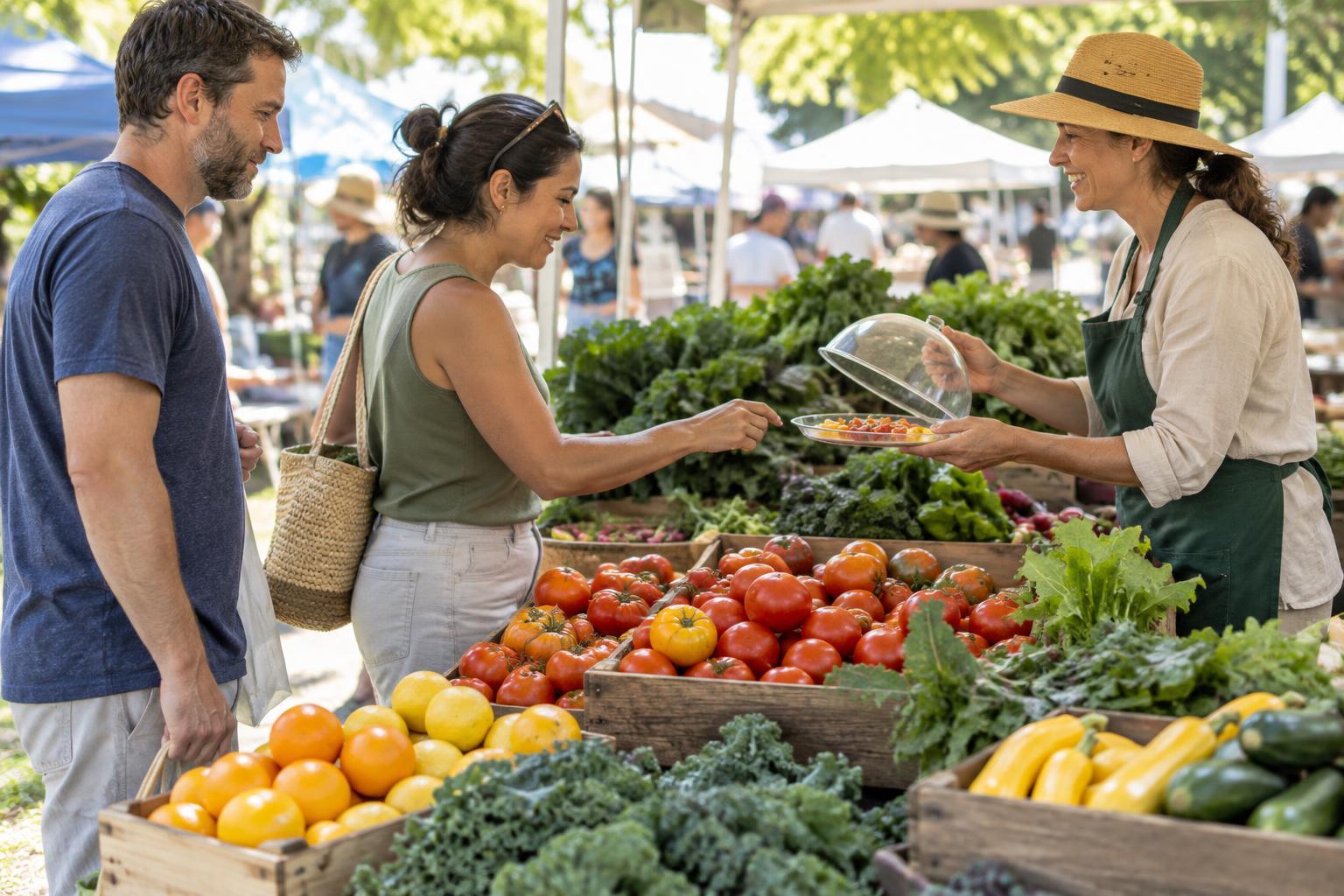
Handle displayed produce with care and follow any signs asking shoppers not to touch. Ask before sampling or taking photos of a person or stall. Prices, bunch sizes and ripeness can differ, so compare the amount you will actually use rather than looking only at the price on a sign.
Buy a manageable amount
A tempting display can make it easy to overbuy. For a first trip, choose a few ingredients you already know how to use, then add one new-to-you item if you have a plan for it. Think about your refrigerator space and the meals you can realistically cook. If a bunch or bag is larger than you need, ask whether a smaller quantity is available rather than assuming it can be split.
Pack as you shop: put firm items low in your bag, keep leafy greens and soft fruit near the top, and separate anything that could leak. If you buy foods that need to stay chilled, place them in your insulated bag promptly and head home without unnecessary delays. Follow the seller’s storage guidance when offered, especially for an unfamiliar product.
Turn the visit into an easy routine
Once home, unpack before you forget what you bought. Set aside produce that is ripe enough to use first, and make a simple meal around it. Check each item’s condition before storing it; different fruits, vegetables and herbs keep best in different places, and extra moisture can shorten the life of some greens. Save any vendor notes about varieties or preparation so you can use them next time.
Your first visit does not have to produce a perfect basket. Notice which bag was useful, whether you needed more time, and how much food you cooked before it lost quality. Those small observations will shape a better list for your next market trip—and make it easier to enjoy whatever is on the tables.