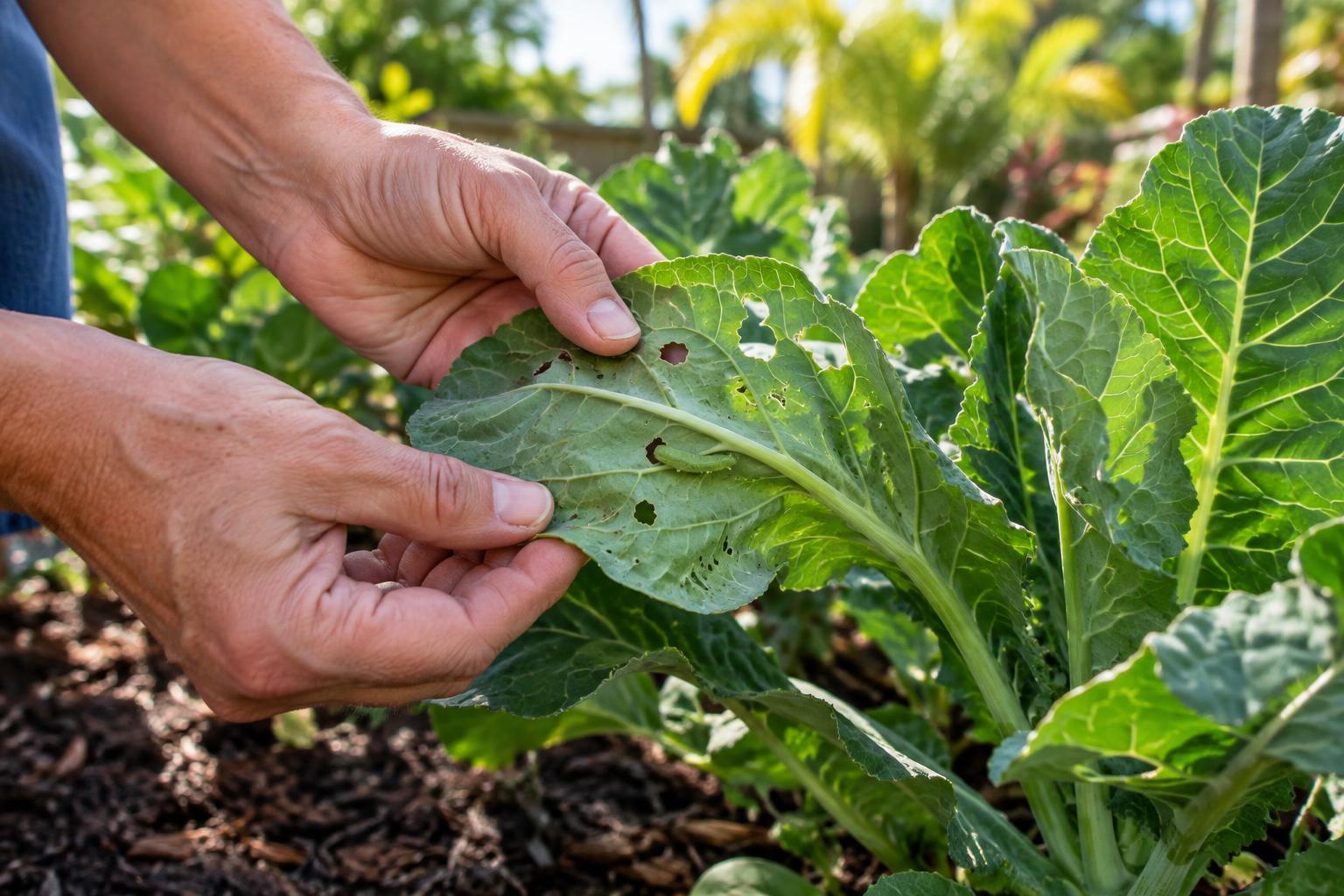
Start with a close look, not a treatment
A ragged leaf can make a gardener reach for a spray, but damage alone rarely tells the whole story. A hole may be the work of a caterpillar that has moved on, while a yellowing leaf may reflect watering, roots or heat rather than an insect. Before choosing a control, identify which plants are affected, whether the problem is spreading and which parts of the plant show symptoms. A few damaged leaves on an otherwise productive plant may not call for action at all.
Walk the garden regularly, preferably when you can see both the tops and undersides of leaves. Look at tender new growth, stems near the soil and the area around the plant. A hand lens can help reveal tiny insects or eggs. Take a photo and note where you found the damage; comparing it with the plant a few days later is often more useful than judging a single leaf in isolation.
Read the pattern of damage
Missing tissue is a clue, but its shape matters. Large, uneven holes or partly eaten leaves can point toward chewing pests such as caterpillars. Small holes in many leaves suggest a different feeding pattern. Seedlings cut or damaged near the soil line deserve a search around the stem and just under nearby soil or mulch. Check for droppings, eggs or an insect on the plant before deciding what made the marks.
Other symptoms call for another kind of inspection. Curled new growth, sticky residue or clusters of small insects may indicate sap-feeding pests. Fine webbing and pale speckling on leaves can be clues to mites, though dust and natural leaf markings can confuse the picture. A trail across a damp bed may help explain damage that appeared overnight. No single sign is a perfect diagnosis: look for several clues that fit together.
Rule out problems that are not pests
Florida growing conditions can change quickly between a wet spell, a dry stretch and a hot afternoon. Wilting, brown edges and yellow patches may result from uneven moisture, poor drainage, strong sun or plant disease. If several different crops look stressed at once, check soil moisture and recent conditions before assuming an insect outbreak. If symptoms began soon after transplanting or pruning, consider whether the plant is responding to that disturbance.
Location can narrow the possibilities. Damage limited to the lowest leaves may have a different cause from distortion confined to fresh tips. Spots that enlarge without missing leaf tissue may warrant a closer look for disease rather than a search for chewing insects. Remove a badly affected leaf if needed to examine both sides, but avoid stripping a plant just to make it look tidy; healthy foliage helps it keep growing.
Match the response to the problem
Once you have found a likely culprit, start with the smallest useful intervention. You might remove a few caterpillars by hand, rinse a small cluster of soft-bodied insects from a sturdy plant with water or protect vulnerable seedlings with a suitable barrier. Thin crowded growth where appropriate so leaves are easier to inspect, and clear heavily infested plant debris from the bed. These steps are most useful when they address a pest you have actually observed.
Not every insect in a garden is causing harm. Some visit flowers; others feed on pests. Broad treatments can affect organisms you hoped to keep, so avoid treating an entire bed because one leaf looks imperfect. If you consider a pest-control product, identify the pest and plant first, then follow the product label, including its directions for edible crops. A product suited to one problem may do nothing for another.
Check again and keep learning
After taking action, return to the same plant and look for fresh damage rather than expecting old holes to disappear. New leaves and growing tips can show whether the problem is continuing. Keep brief notes on the crop, symptoms, insects found and what you tried. Over time, that record can help you recognize recurring trouble in your own garden without assuming every season will be identical.
The goal is not a garden with flawless leaves. It is a garden you can observe closely enough to protect a harvest without unnecessary work. When the evidence remains unclear, pause before treating and seek help identifying the plant and symptoms through a local gardening resource. A careful diagnosis gives you a better starting point than a guess.