When to look for Florida muscadines
Muscadines are a warm-climate grape and a distinctive part of Florida’s late-summer produce season. At a local market, you’re most likely to encounter them from late July or August into September. Some varieties and growing areas may yield fruit earlier or continue into October. Weather and the grower’s harvest schedule can shift the timing, so it’s worth asking a vendor when their next picking is expected.
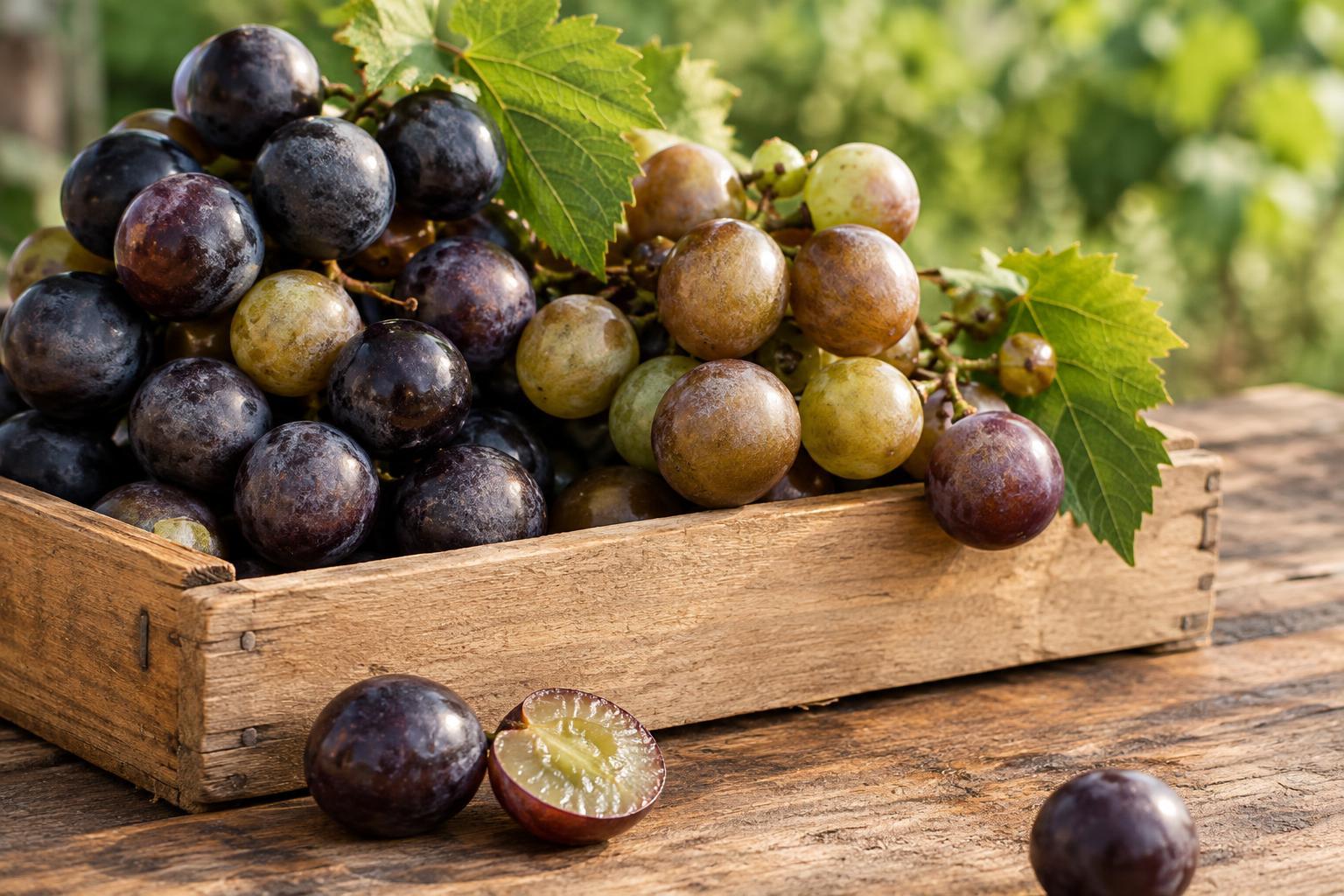
Unlike the tight, uniform bunches of many supermarket grapes, muscadines may be sold loose or in small containers. Their colors range from bronze or greenish gold to reddish purple and nearly black, depending on the variety. Scuppernong is a name often used for bronze muscadines, but not every muscadine is a scuppernong. Color alone won’t tell you which one will taste best: variety and ripeness both matter.
Why the skins feel different
The first bite can surprise someone accustomed to thin-skinned table grapes. A muscadine’s skin is usually thicker and firmer, with a noticeable snap or chew. The juicy flesh can separate from the skin when the grape is squeezed or bitten, a trait often called a “slip skin.” Muscadines also commonly have noticeable seeds, so eating one whole is a different experience from popping a seedless table grape into your mouth.
The skin has its own flavor. Depending on the variety and the individual fruit, it can taste pleasantly tangy or somewhat astringent alongside the sweet, aromatic flesh. Some people eat the skin and seeds; others bite a small opening in the skin, squeeze the flesh into their mouth, and set the skin and seeds aside. Neither approach is the correct one. If muscadines are new to you, try a small bite of skin before deciding how you like them.
That sturdy exterior also changes how the fruit works in the kitchen. In a quick fruit salad, muscadine skins remain more conspicuous than the skins of ordinary table grapes. For a smoother sauce or topping, you can separate the flesh, cook the fruit until softened, and strain out the seeds and skins. If you enjoy their texture and tart edge, leave some chopped skin in the finished dish instead.
Choosing ripe fruit at the market
Look for fruit that appears full and sound rather than shriveled, leaking, or visibly moldy. A few surface marks need not ruin a grape, but wet spots and an off smell are good reasons to pass on a container. Muscadines can vary considerably in size and color, so a mixed-looking display is not necessarily a problem. If the grower offers a taste, it’s the simplest way to learn whether a particular variety suits you; otherwise, ask whether the fruit is best for eating fresh or for cooking.
Handle the grapes gently on the way home. Their skins may be sturdy, but ripe fruit can still split or bruise under a heavy bag of groceries. Refrigerate them in a container that allows some airflow, and wash them just before eating or preparing them rather than putting them away wet. Sort through a container soon after purchase and remove any fruit that has begun to spoil.
Simple ways to enjoy the harvest
Fresh muscadines make an easy afternoon snack when you have time to work around their seeds. Serve a small bowl with another late-summer market purchase, such as mild cheese, and let their sweet-tart flavor provide the contrast. For a chilled drink, simmer the grapes with a little water, mash them gently, strain carefully, and sweeten the liquid to taste. Let it cool before serving.
They can also become a spoonable topping for yogurt, pancakes, or a simple cake. Cook the fruit over moderate heat until it releases its juice, then strain it if you want to remove the skins and seeds. Taste before adding sugar: varieties differ, and the tang from the skins can be part of what makes the result interesting. Whether you eat them fresh or cook them down, buying a modest amount first gives you room to discover the texture you prefer.