A fall fruit with two very different textures
Persimmons are a welcome change from Florida’s familiar citrus and tropical fruit. They generally appear in fall, though the timing and length of the harvest vary with the variety, weather and growing location. At a market, you might find locally grown Asian persimmons, smaller native American persimmons or fruit brought in from elsewhere. If local origin matters to you, ask the seller rather than assuming every persimmon on the table was grown nearby.
The first question to ask is not simply whether the fruit is ripe. It is whether that particular kind is meant to be eaten firm or must become very soft. A firm-eating persimmon can be sliced much like an apple. An astringent persimmon may look richly colored and ready, yet still need time on the counter before it tastes pleasant.
Know the types you may encounter
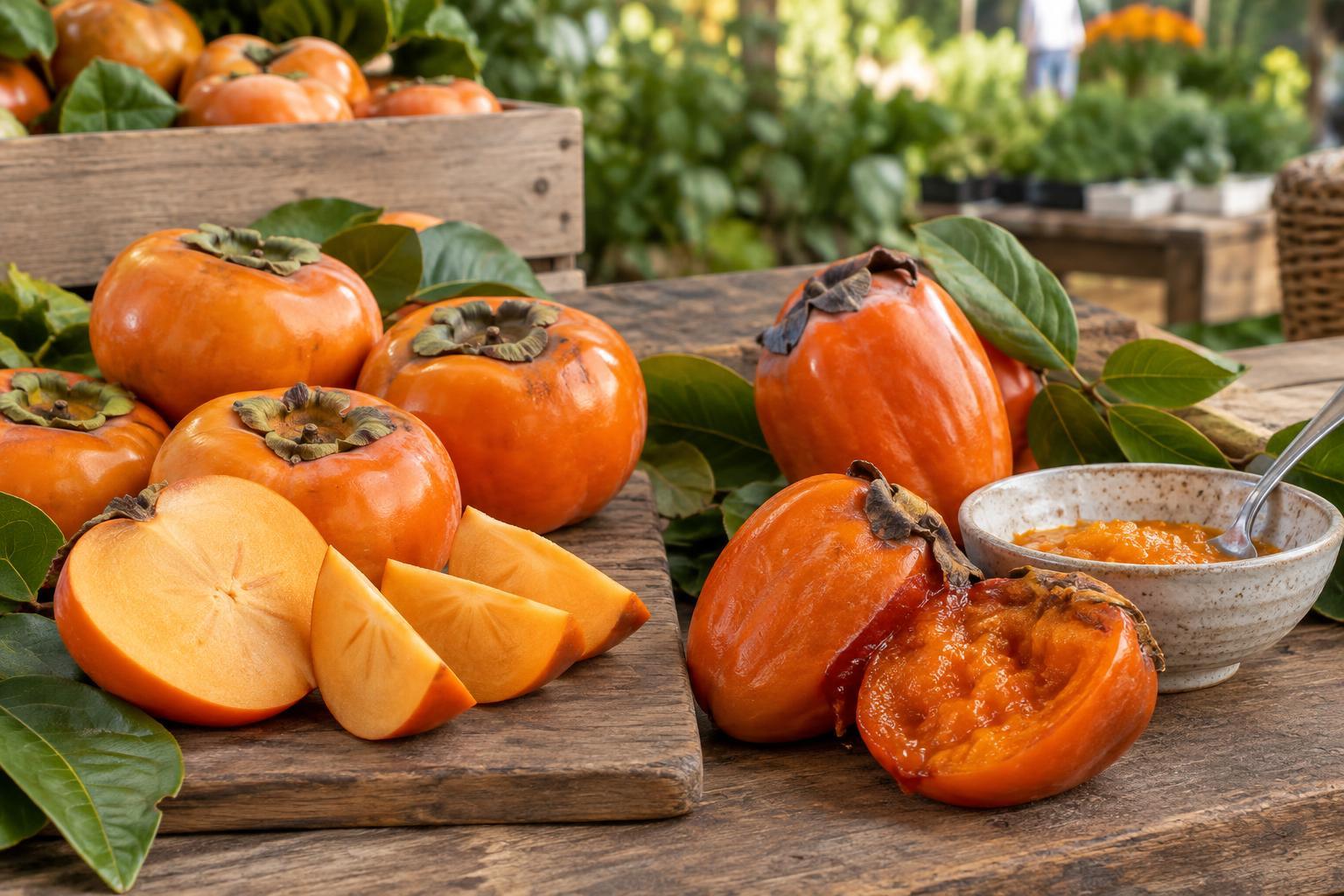
Fuyu is a familiar example of a nonastringent Asian persimmon. Often squat and somewhat flattened, it can be eaten while firm, although it becomes softer and sweeter as it ripens. Slice it for salads, tuck it into a lunchbox or eat it out of hand. Its shape is a useful clue, but a seller’s variety label is more dependable than appearance alone.
Hachiya is an example of an astringent Asian persimmon. It often has a more elongated, acorn-like shape and needs to become extremely soft before eating. At that point, its flesh is closer to a thick purée than a crisp fruit. Native American persimmons are generally smaller and also typically need to soften thoroughly. Because varieties and individual fruit can differ, ask what you are buying and how the grower recommends eating it.
The astringency mistake: trusting color or firmness
The classic persimmon mistake is biting into an astringent type while it is still firm. Its tannins can leave a strong drying, puckering sensation in the mouth. Orange color alone does not mean an astringent fruit is ready. Nor does the fact that a nonastringent Fuyu tastes good while firm mean every persimmon will.
For astringent types, wait until the fruit gives easily all over and feels almost fragile. A fully ripe Hachiya may look too soft by the standards you would use for other fruit. Keep firm fruit at room temperature and check it regularly. A paper bag with an apple or banana may help speed softening, but use the fruit’s texture—not a set number of days—as your guide. Do not count on cooking a firm, astringent persimmon to make it pleasant; start with properly ripe fruit.
How to shop and bring persimmons home
At the market, ask for the variety name and whether the fruit should be eaten firm or soft. For firm-eating persimmons, choose fruit that feels sound and has no large soft or damaged areas. For astringent types, a firm fruit is fine if you can wait for it to ripen. If you want to eat one soon, ask the seller to help select a soft, ready-to-use fruit.
Carry very soft persimmons where they will not be crushed. Let firm fruit ripen on the counter, away from direct sun, and inspect it often. Once a persimmon is fully soft, refrigerate it and use it promptly. If several ripen at once, you can scoop out the ripe flesh and freeze it for later cooking. As with any produce, discard fruit that shows mold or signs of spoilage.
Simple ways to use each kind
A firm-eating persimmon brings color and gentle sweetness to a salad with bitter greens, nuts and a sharp dressing. Thin slices also work alongside cheese or in a sandwich. Taste a piece before adding extra sugar to a recipe; sweetness varies from fruit to fruit.
For a fully soft astringent persimmon, remove the leafy cap and scoop out the flesh. Stir it into yogurt, blend it into a smoothie or use it in a baked pudding or quick bread. If working with small native persimmons, expect more seeds and a little more preparation to separate the pulp. Whatever the variety, the most useful market habit is simple: learn its name, ask how it should feel when ready and let that answer guide the first bite.