A flower is the beginning, not a promise
A squash vine can be covered in blossoms and still leave a gardener waiting for squash. Fruit set begins when a flower is successfully pollinated, but it also depends on the plant having enough water, nutrients and suitable growing conditions to support developing fruit. In a Florida garden, heavy rain, dry spells and prolonged heat can complicate that process. The first step is to learn what your crop’s flowers need rather than assuming every blossom works the same way.
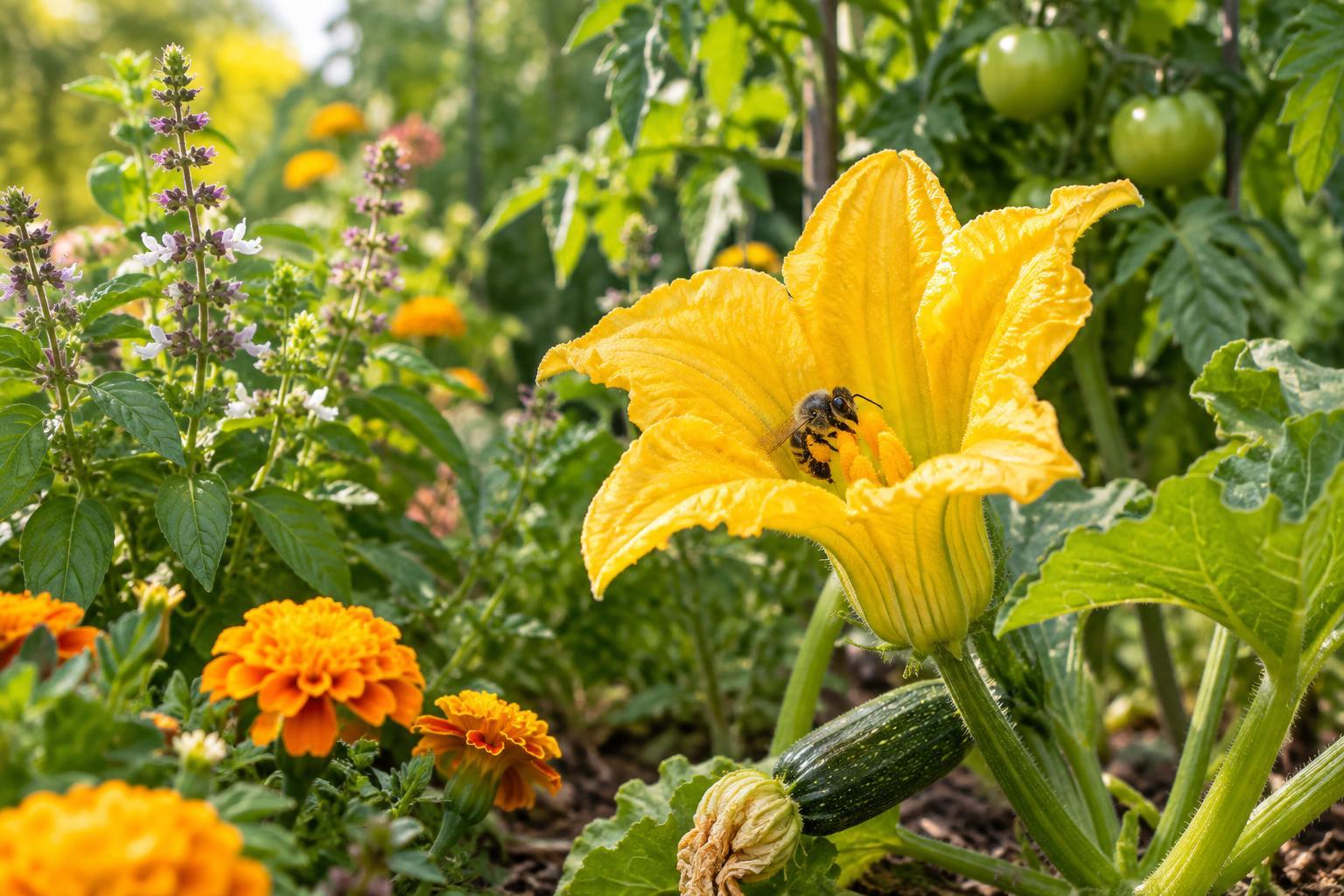
Squash, pumpkins and many cucumbers produce separate male and female flowers. Pollen must reach a female flower, often with help from bees. A female squash flower has a small, immature fruit at its base; a male flower sits on a narrower stem. Male flowers commonly appear before female ones, so early blossoms that fall without fruit are not necessarily a sign of trouble. Tomatoes and peppers, by contrast, have flowers that can usually pollinate themselves. Insects and gentle movement may help release their pollen, but adding more bee visits will not solve every tomato-setting problem.
Keep something in bloom near the food crops
A pollinator-friendly garden offers flowers beyond the brief bloom of a vegetable crop. Tuck flowering plants along bed edges or among containers, leaving the food plants enough space, light and airflow. Choose a mix that blooms at different times, including periods when the vegetables are not flowering. In Florida, planting seasons vary substantially by region, so use local growing guidance and observe which flowers hold up in your site’s sun, soil and rainfall.
Locally suitable native flowers can be a useful part of that mix. Depending on the site, options to explore include blanketflower, spotted beebalm and native coreopsis species. Herbs such as basil can also attract visitors when some stems are allowed to flower. You do not need a large meadow: a few healthy, accessible patches can offer food to bees and other flower-visiting insects. If space is tight, let flowers share a sunny border rather than crowding vegetable roots.
Make the garden welcoming between blooms
Flowers supply nectar and pollen, but pollinators also need places to live. Many native bees nest in the ground or in hollow plant stems rather than in hives. Leaving a small area of undisturbed, well-drained soil and postponing a thorough cleanup of every dry stem can provide potential nesting space. Keep paths and work areas tidy as needed; the goal is simply to avoid making the entire garden bare and uniform.
Use pest controls carefully. First identify the problem and consider whether removing affected leaves or using a physical barrier will work. If a pesticide is necessary, follow its label, avoid applying it directly to open flowers when possible, and take precautions to reduce contact with visiting insects. Even products described as natural can harm pollinators when used in the wrong place or manner. A shallow water source can be helpful in hot weather if it is kept clean and refreshed so it does not become a place for mosquitoes to breed.
Troubleshoot fruit set one crop at a time
When a plant flowers without producing fruit, look closely before changing the whole garden. On squash, check whether male and female flowers are open at the same time and whether insects visit them in the morning. If visits seem scarce, hand-pollinating an open female flower with pollen from a freshly opened male flower is an option. It may help with that blossom, but it does not replace good growing conditions or a longer-term supply of pollinators.
For tomatoes and peppers, check the plant’s overall health and the conditions around flowering. Prolonged heat or other stress may contribute to blossom drop even where pollinators are present. Maintain consistent moisture without keeping roots waterlogged, and avoid assuming that more fertilizer will fix the issue; excessive leafy growth can come at the expense of flowers and fruit. If one crop struggles while others set normally, its particular flowering needs, variety and planting season may offer better clues than the number of bees in the garden.
Build a garden that works through the season
The most useful pollinator plan is a steady one: grow flowers suited to your part of Florida, provide some nesting habitat, limit unnecessary pesticide use and watch how each food crop flowers. Notice which plants draw visitors and which bloom during gaps in the garden. That observation can guide next season’s planting more reliably than adding flowers only after fruit set slows. A lively border will not guarantee a harvest, but it gives pollinators a reason to stay—and gives the gardener a better chance to see what the crops need.