Why airflow matters
A Florida vegetable garden can feel lush one week and crowded the next. Warmth, frequent rain and humid air often keep leaves damp, especially where plants overlap. Many fungi do well in those conditions. Giving plants room to grow will not prevent every disease, but it can help foliage dry sooner and make problems easier to spot before they spread.
Think of airflow as a garden-wide habit rather than a single measurement. A breeze needs a path through the planting, and sunlight needs a chance to reach more than the top leaves. The goal is not a bare-looking bed. It is a bed where mature plants have space around their stems and where leaves are not pressed together for long stretches.
Plan for the plant you will have, not the seedling you see
Small transplants make it tempting to fill every gap. Before planting, check the mature size and spacing guidance on the seed packet or plant label. Bush beans, peppers, tomatoes and vining cucumbers do not occupy space in the same way. A compact variety may fit comfortably where a vigorous vine would soon cover its neighbors. If you are unsure how large a variety will get in your conditions, leave a little extra room and take notes for next time.
Allow room between rows or containers for harvesting and inspecting plants without brushing against every leaf. Avoid planting directly beneath an overhanging shrub or against a solid wall if that spot stays still and shaded for much of the day. In a raised bed, consider whether plants at the edges can spread outward without blocking a path or crowding another crop.
Containers need breathing room, too. Several pots packed tightly together can form the same damp thicket as an overcrowded bed. Move them apart as plants fill out, while keeping each crop in a location with suitable light. Make sure pots drain freely; airflow above the soil cannot compensate for roots sitting in waterlogged mix.
Guide growth upward and prune with a light hand
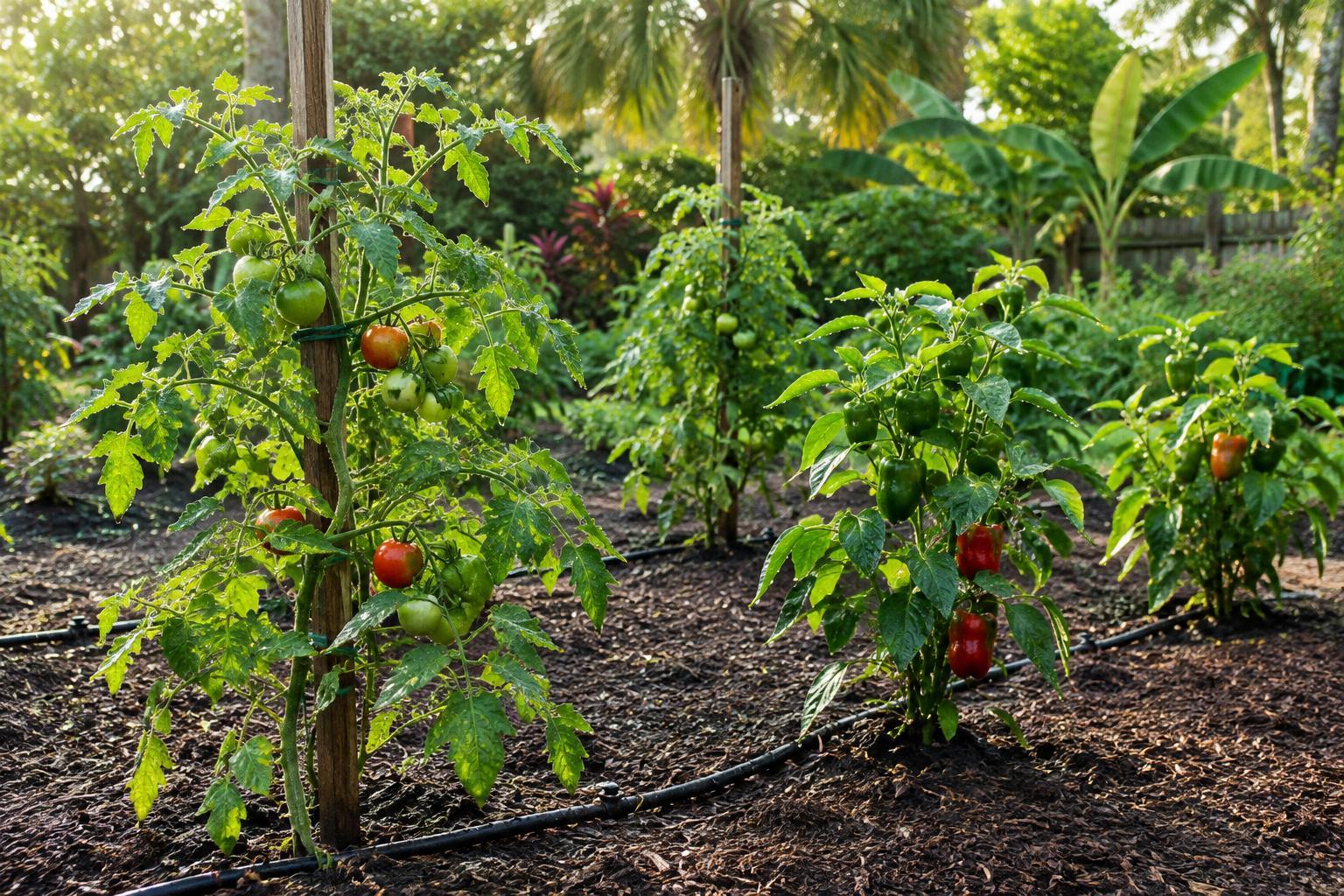
Trellises, stakes and cages can lift growth off the ground and keep neighboring plants from tangling. Install supports early, when roots and stems are less likely to be disturbed. Tie stems loosely with a soft material and check ties as plants grow. For climbing crops, guide new shoots onto the support before they run across the bed. Keep the support itself accessible so you can look through the foliage and harvest without breaking branches.
Selective pruning can open a crowded plant. Remove leaves that are touching the soil, badly damaged growth and stems that are making a dense knot. Use clean tools and avoid stripping a plant of large amounts of healthy foliage at once: leaves fuel growth and shade developing fruit. Different crops respond differently to pruning, so start conservatively rather than applying a tomato-pruning routine to every vegetable.
Water in ways that let leaves dry
Spacing works best alongside careful watering. Apply water to the soil near the roots when possible, using drip irrigation, a soaker hose or a watering can directed beneath the foliage. If you water from above, doing so early in the day generally gives leaves more time to dry. Water according to the soil’s moisture and the crop’s needs rather than following a fixed daily schedule, especially after rain.
A layer of mulch can reduce soil splash onto lower leaves and help moderate soil moisture. Keep it a little back from stems instead of piling it against them. After heavy rain, look for sagging branches, fallen vines or weeds that have closed the gaps between crops. Restoring those gaps may do more for airflow than removing healthy leaves.
Make inspection part of the routine
Walk through the garden regularly and look beneath leaves as well as across their tops. Spots, patches of fuzzy growth and yellowing can have different causes; appearance alone may not tell you exactly what is wrong. If a problem persists or spreads, seek crop-specific identification before choosing a treatment.
Remove fallen plant debris and dispose of visibly affected material rather than leaving it under healthy foliage. Try not to handle plants while leaves are wet, when moisture can be carried from plant to plant on hands or tools. At the end of a crop’s run, clear its remains and reassess the layout. If you had to squeeze sideways to pick a pepper or could not see through a cucumber vine, that is useful guidance for the next planting.