Start with citrus you enjoy eating
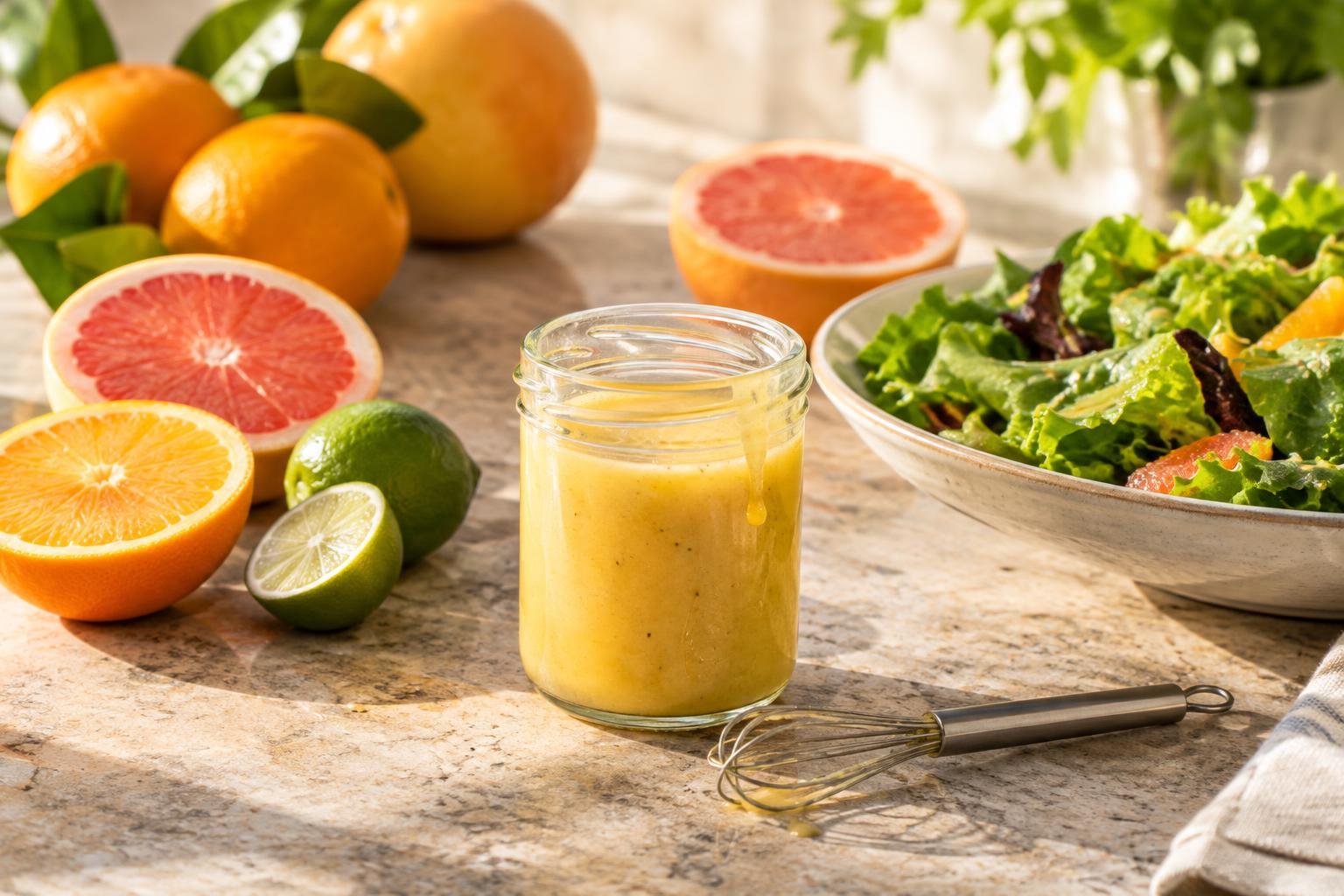
A citrus vinaigrette can change character with the fruit you choose. Orange makes a mellow, lightly sweet dressing; grapefruit brings a pleasant bitter edge; and lemon or lime gives it a sharper finish. Use one fruit or combine them. Because sweetness and acidity vary, taste the juice before adding anything else. If it tastes especially sweet, a little vinegar can give the finished dressing more lift.
For a small batch, gather 2 tablespoons freshly squeezed citrus juice, 1 teaspoon vinegar if needed, 1 teaspoon Dijon mustard, 6 tablespoons olive oil or another oil you like, and about 1/4 teaspoon salt. A teaspoon of honey is optional, particularly with tart grapefruit or lemon. For more citrus aroma without adding more liquid, grate a little zest from a washed fruit, taking only the colorful outer layer and not the bitter white pith.
Why vinaigrette separates—and what helps
Citrus juice is mostly water, and water and oil do not naturally stay mixed. Whisking breaks the oil into small droplets suspended in the juice, creating an emulsion. Given enough time, a basic vinaigrette will separate again. The goal at home is not necessarily a dressing that never separates, but one that stays evenly mixed while you dress and serve the food.
Mustard helps those droplets remain dispersed and gives the dressing a little body. Honey can contribute body too, though you do not need it if the fruit is sweet enough. How you add the oil matters just as much: pouring it in gradually while whisking makes smaller droplets than adding it all at once. A blender can make an even finer emulsion, but a bowl and whisk are enough for a good everyday dressing.
Whisk in the right order
In a medium bowl, whisk the citrus juice, vinegar if using, mustard, salt, and honey if using until smooth. While whisking continuously, add the oil a few drops at a time at first. Once the mixture looks slightly thick and uniform, pour the remaining oil in a thin, steady stream. Stir in the zest last, then taste. The dressing should feel bright but rounded, with neither the oil nor the acid overwhelming the citrus.
If you prefer a blender, combine everything except the oil, start blending, and stream the oil in slowly. For a jar method, use a jar with room above the ingredients and shake vigorously just before serving. Shaking is convenient, but that dressing may separate sooner than a carefully whisked or blended one. In every case, taste the dressing on a leaf of lettuce or a piece of the food you plan to serve; flavors can seem different once they coat an ingredient.
Adjust the flavor without losing the texture
Think of six parts oil to about two parts citrus juice as a starting point, not a rule. If the vinaigrette tastes flat, try a small splash of vinegar or a pinch more salt before adding extra juice. If it tastes too sharp, whisk in a little more oil; if the citrus is tart, a touch of honey may help. Make changes a little at a time so the dressing remains balanced.
If the dressing separates while you adjust it, whisk a small dab of mustard with a spoonful of the separated liquid in a clean bowl. Slowly whisk the rest of the dressing into that base. This is also a useful rescue if you poured in the oil too quickly. The texture may not be identical to the first batch, but it should be smooth enough to coat greens evenly.
Serve it fresh and store it simply
This vinaigrette suits tender greens, shaved fennel, sliced avocado, roasted vegetables, or a bowl of cooked grains. For delicate greens, add just enough dressing to give them a light sheen, then toss and serve. On heartier ingredients, the citrus can bring contrast to richer flavors without needing a long list of seasonings.
For the best citrus flavor and texture, make the dressing close to serving time. If preparing it ahead, keep it covered in the refrigerator and use it within a few days. Olive oil may thicken when chilled, and some separation is normal: let the dressing warm slightly, then whisk or shake it again. Even a well-made emulsion benefits from one last stir before it reaches the table.