Start with mango that will hold its shape
Mango salsa works best when the fruit is sweet enough to contrast with savory fish but firm enough to stay in small pieces. A ripe mango should give slightly when pressed gently. If it feels very soft, it may turn into a dressing as you mix; if it is hard, its tartness may call for less lime. At a Florida produce stand or grocery store, choose by feel and condition rather than relying only on skin color, which varies among mangoes.
For four to six tacos, start with one large mango, diced into pieces roughly the size of a small bean. Cutting the mango, onion, and any other additions to a similar size helps each spoonful contain a little of everything. If the fruit is especially juicy, let the diced pieces drain briefly before mixing so the salsa sits on the taco rather than running through it.
Build a simple salsa, then taste
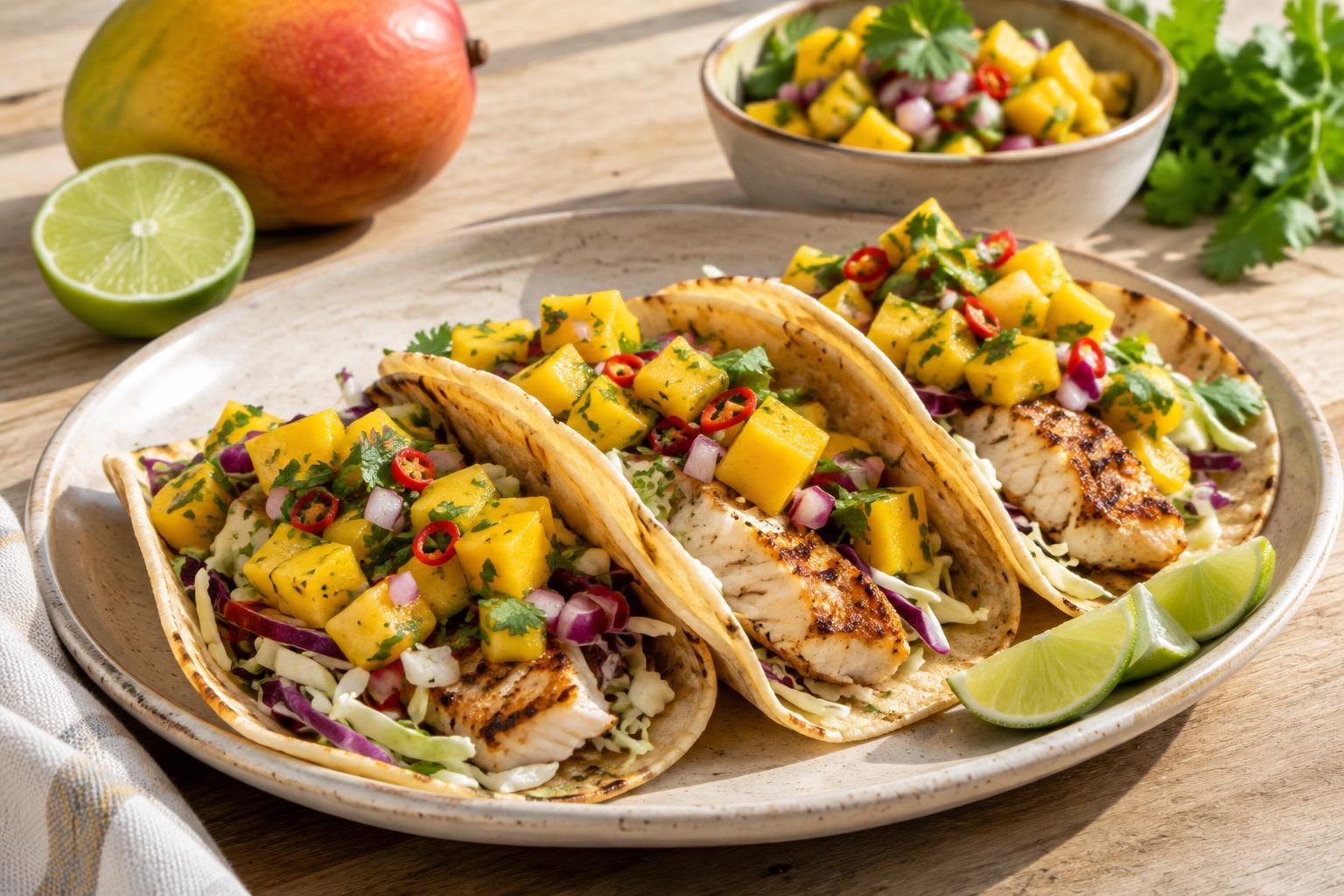
Combine the diced mango with two tablespoons of finely chopped red onion, one small seeded jalapeño or another chile you enjoy, two tablespoons of chopped cilantro, the juice of half a lime, and a small pinch of salt. Stir gently and taste with a clean spoon. This is a starting point, not a fixed formula: mangoes differ in sweetness and acidity, and chiles vary in heat.
Add the remaining lime juice a little at a time if the salsa tastes flat or overly sweet. If the lime is taking over, fold in more mango rather than trying to hide the sourness with extra salt. For more heat, add a few finely minced pieces of chile, tasting as you go. The aim is for the first bite to taste like mango, followed by brightness and a comfortable amount of heat. Salt should bring those flavors forward without making the salsa taste salty.
Give sweetness something crisp and savory to meet
Mango, lime, and chile make a lively base, but a little crunch keeps the salsa interesting against soft fish and tortillas. Finely diced cucumber is mild and refreshing; diced bell pepper adds a firmer bite. Use a few tablespoons rather than enough to bury the mango. For a sharper onion flavor, use the red onion as written. For a gentler result, rinse the chopped onion in cool water and drain it well before mixing.
Cilantro adds a leafy note, but the salsa can still work if you leave it out. Thinly sliced scallion or a small amount of chopped mint will change the character of the dish without losing its fresh feel. Avoid adding every possible extra at once. A restrained mix is easier to balance, especially when the taco will also contain cabbage, sauce, or seasoned fish.
Match the salsa to the fish taco
The way you cook and season the fish can guide your final adjustment. With simply grilled or pan-seared fish, a brighter squeeze of lime in the salsa can supply contrast. With spiced fish, keep the salsa’s chile modest until you have tasted the whole taco. With crisp-coated fish, drain the salsa well and spoon it on just before serving so its juices do not soften the coating.
Try assembling one taco before setting everything on the table. Warm a tortilla, add the cooked fish, then a modest spoonful of salsa. Taste before adding more lime, sauce, or salt. A little shredded cabbage can provide crunch without competing with the mango. If you use a creamy topping, keep it light enough that the salsa’s sweet-tart flavor still comes through.
Prepare ahead without losing freshness
You can dice the mango and vegetables ahead of the meal and keep them covered in the refrigerator. For the freshest texture, stir in the lime, salt, and herbs closer to serving time. Salt draws moisture from the ingredients, so salsa that sits for a while may collect juice at the bottom of the bowl. Give it a gentle stir, then use a slotted spoon if it looks too wet for tacos.
Serve the salsa chilled or let it lose some of its refrigerator chill while the fish cooks. Keep it separate from the fish until you assemble the tacos. That small step preserves the contrast that makes this combination appealing: warm, savory fish; a soft tortilla; and cool mango salsa with sweetness, heat, and acid in balance.