Start with a garden that can drain
In a Florida edible garden, heavy rain can be as troublesome as strong wind. Water that lingers around roots reduces the air available in the soil, while runoff can wash away mulch and expose shallow roots. Before planting, watch where rainwater collects and where it flows. A low spot that stays wet may be better suited to a path than to a bed of herbs or vegetables.
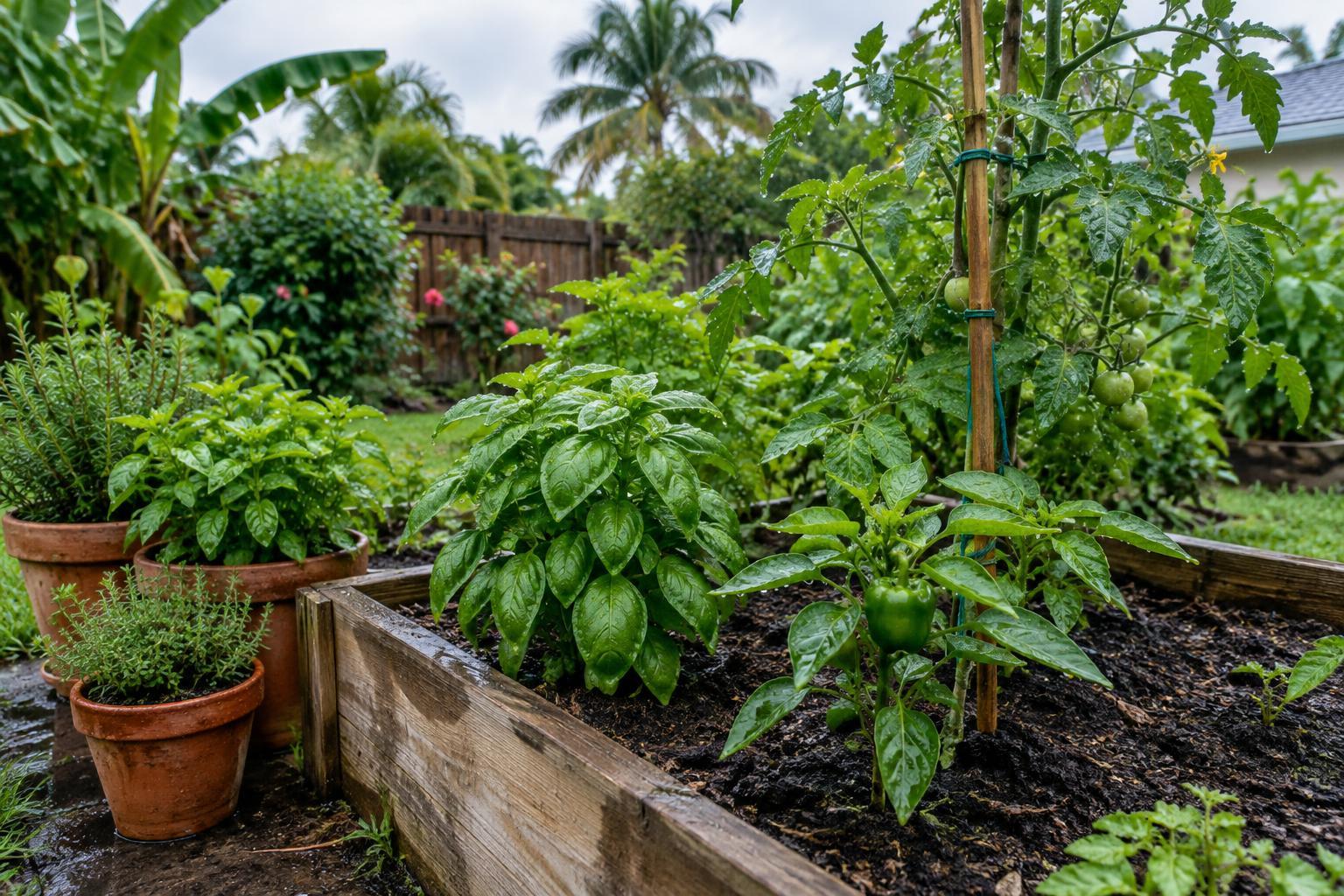
For in-ground beds, add compost to improve soil structure over time rather than trying to fix drainage with a layer of gravel beneath the soil. Where the site remains soggy, a raised bed may give roots more room above saturated ground. Containers need unobstructed drainage holes and a place for excess water to escape; empty saucers after rain. Keep soil below the rim so a downpour does not immediately wash it out. These steps will not make a garden storm-proof, but they can make routine wet weather easier on plants.
Give stems support without tying them too tightly
Tall or top-heavy edibles are more likely to lean, snap or pull at their roots when wet foliage meets a gust. Put stakes, cages or a sturdy trellis in place while plants are small, before roots and branches make installation difficult. Tomatoes, climbing beans and other vining crops benefit from supports that are firmly anchored, not merely pushed into loose surface soil.
Use soft ties with enough slack for stems to grow and move slightly. Check them as the plant fills out: a tie that fit last week can become constricting. Prune only as needed to remove damaged growth or reduce a crowded tangle; stripping too many healthy leaves at once can stress an edible plant. For a movable container garden, a sheltered spot near a sound wall may reduce wind exposure, provided the plants still receive suitable light when normal weather returns.
Make a simple plan before rough weather
The easiest pots to protect are the ones you can move before wind and rain arrive. Group small containers in a sheltered location where they cannot roll, fall from a ledge or block a doorway. Move hanging baskets down and secure lightweight empty pots, trays and tools. Large containers that cannot be moved should stand on stable, level ground; avoid placing them where water routinely pools.
Harvest ripe produce when practical, and check that trellises and stakes are secure. A temporary cover may help delicate seedlings during an ordinary downpour, but it must be firmly fastened and arranged so water runs off rather than collecting on top. Remove covers promptly when conditions improve to restore airflow and light. Do not go outside to adjust plants during dangerous wind or lightning. If severe weather is approaching, follow local safety guidance and put personal safety ahead of garden work.
Help plants recover after the rain
Once it is safe to go out, look first for hazards such as fallen branches or damaged structures. Then inspect the garden without walking through waterlogged beds, which can compact wet soil. Set upright plants that have tipped gently, firm loose soil around their roots and resecure supports. Remove broken stems with clean tools rather than leaving ragged damage attached to the plant.
Resist the urge to water or fertilize immediately. Check the soil below the surface and give it time to drain. Clear debris from container drainage holes, replace displaced mulch with a thin layer kept away from stems, and watch for leaves that remain wet or crowded. If a plant has been submerged or shows persistent decline, it may not recover. For produce touched by floodwater of uncertain cleanliness, err on the side of caution rather than assuming it is safe to eat.
Build resilience into the next planting
After a storm, note which beds drained quickly, which pots fell and which supports held. Those observations are more useful than a one-size-fits-all fix. You might shift a container to a steadier position, widen a path that channels runoff or space the next planting to allow better airflow. Leave access to the back of beds so you can inspect supports without stepping on growing soil.
Planting a mix of low-growing crops, herbs and supported climbers can also spread the risk: one gust is less likely to affect every plant in the same way. Keep spare ties, stakes and mulch on hand for small repairs. Florida’s rain and wind cannot be controlled, but a garden designed to drain, supported before plants grow heavy and checked carefully afterward is better prepared for the next wet spell.