Start with tomatoes that suit the salad
Tomatoes release juice as soon as they are cut. The goal is not to make them dry; it is to keep that juice from thinning the dressing and collecting at the bottom of the serving bowl. A few small choices before you mix the salad make more difference than trying to fix it afterward.
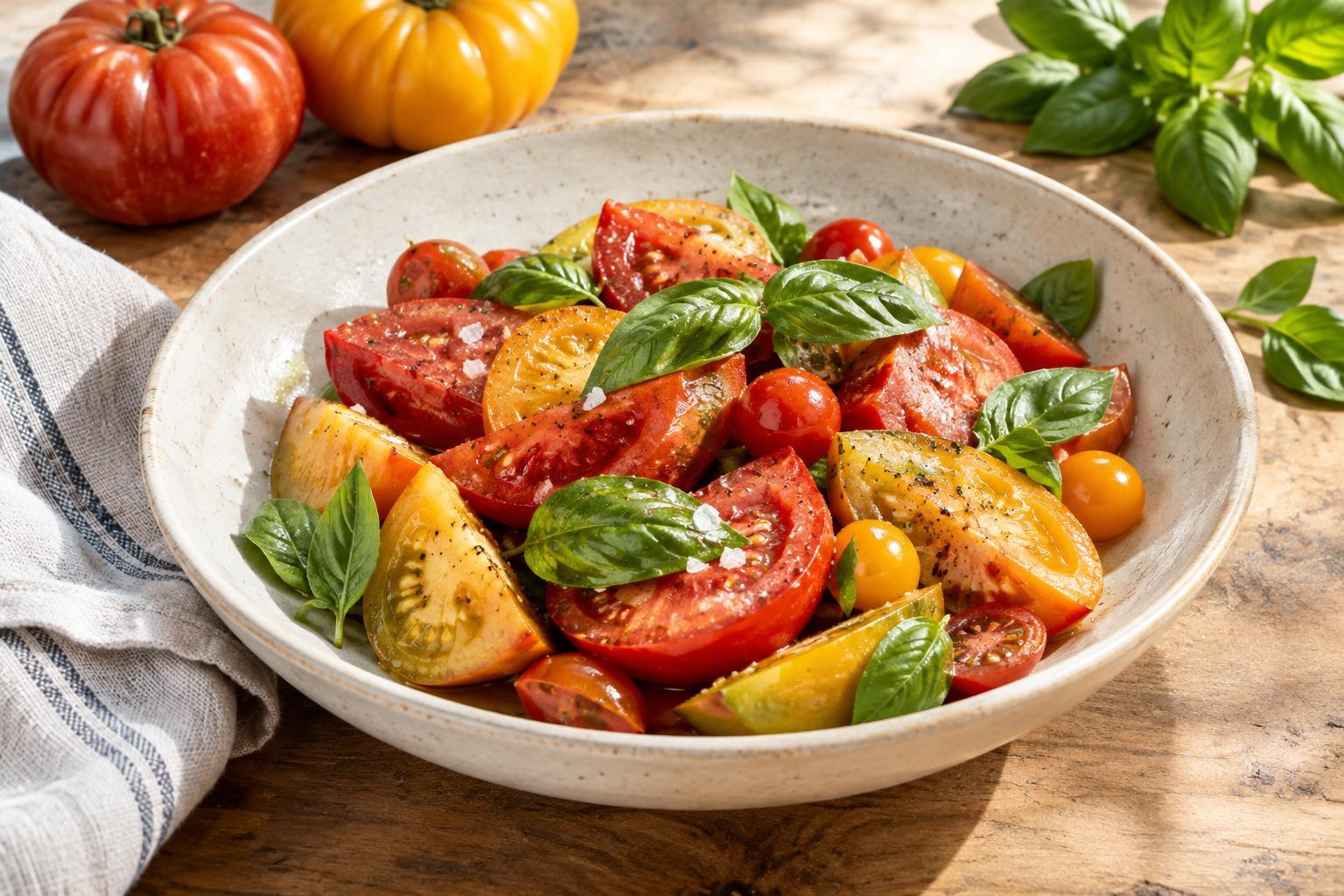
Choose ripe tomatoes that feel substantial and still hold their shape. Very soft tomatoes can taste wonderful, but they tend to break down quickly when tossed. Save those for a sauce or serve them in thick slices with little handling. For a mixed salad, firm-ripe slicing tomatoes, smaller tomatoes or a combination give you pieces that are easier to coat without crushing. At a Florida market, you may find tomatoes in different sizes and colors; choose by ripeness and texture rather than assuming one variety will always behave the same way.
Keep tomatoes at room temperature when you can serve them soon after buying. If they become so ripe that they need refrigeration to last, let them lose some of their chill before making the salad. Cold tomatoes can mute the flavor you want to highlight.
Cut for flavor, then manage the juice
Use a sharp knife and a cutting board with a groove or a rimmed tray to catch juice. A dull blade can press into a ripe tomato and make a mess before it reaches the bowl. Cut large tomatoes into generous wedges or thick pieces; very small dice create more cut surfaces and a softer salad. Halve small tomatoes, or leave the smallest ones whole if they are pleasant to eat that way.
For an everyday salad, spread the cut tomatoes in a colander set over a bowl and sprinkle lightly with salt. Let them stand for about 10 to 15 minutes, then gently shake the colander. Salt draws out some of the liquid that would otherwise dilute the dressing. Taste a piece before adding more salt later. There is no need to squeeze the tomatoes or press them dry; doing so sacrifices their texture along with the excess juice.
If the tomatoes are especially seedy and juicy, you can remove some seeds and gel from large pieces with a spoon. Do this selectively, not automatically: that gel carries flavor, and a salad made from thoroughly hollowed-out tomatoes may taste flat. The drained tomato juice is useful in a vinaigrette or another dish, so it need not go to waste.
Dress lightly and close to serving time
For a simple bowl serving about four people, start with roughly 1½ pounds of tomatoes, a small handful of basil leaves, 1 to 2 tablespoons of olive oil and a little vinegar or lemon juice. These are starting points, not a fixed formula: the tomatoes’ sweetness and acidity will determine what tastes balanced. If you salted the tomatoes to drain them, begin with no additional salt.
Put the drained tomatoes in a clean serving bowl and add the oil first, tossing gently to coat the pieces. Add acid a little at a time, then taste. Too much vinegar or lemon juice can overwhelm ripe tomatoes, while too much dressing makes even well-drained tomatoes seem wet. A wide, shallow bowl also helps: the pieces are less likely to be crushed under their own weight, and any dressing is easier to distribute.
Dress the salad shortly before eating. Tomatoes continue to release liquid as they sit, especially once salted, so a salad assembled far in advance will have a different texture. If you need to prepare ahead, cut and drain the tomatoes, keep the dressing separate, and combine them near serving time.
Give basil the last word
Basil bruises easily and looks tired when it spends too long in a wet, acidic dressing. Wash the leaves if needed, dry them thoroughly and tear larger leaves just before they go into the salad. Fold them in after dressing the tomatoes, using only a few gentle turns. You can also scatter some over the top at the table for a fresh aroma.
If you want a more substantial salad, add fresh mozzarella just before serving. Pat it dry first so it does not contribute extra moisture. Bread alongside the salad is another good choice: it can catch the flavorful juices without requiring you to thicken or over-dress the tomatoes.
Make the bowl work for you
A little liquid at the bottom is normal and often delicious. The salad has turned watery when the dressing no longer clings to the tomatoes or the basil is floating in diluted juice. If that happens, lift the tomato pieces into a fresh bowl with a slotted spoon, add a small drizzle of oil and finish with new basil. Taste before adding any more salt or acid.
For the best texture, make only as much as you expect to serve at that meal. The dependable method is simple: use tomatoes that hold their shape, cut them with care, drain them briefly if they are juicy, and wait to add dressing and basil. You will still get the pleasure of ripe tomato juice—just not a salad that feels washed out.