Start with the soil, not the fertilizer bag
Vegetable plants need nutrients, but adding more fertilizer is not always the answer to slow growth. Watering problems, pests, crowded roots and unsuitable temperatures can look like nutrient trouble. Before planting a new bed, consider a soil test through a local extension service or another reputable lab. Its results can help you decide what your soil needs instead of relying on a one-size-fits-all schedule.
Florida gardens vary. A yard may have sandy soil that drains quickly, while a raised bed may contain purchased soil and compost. Containers behave differently again: their limited volume can dry out quickly, and watering may carry nutrients away. Knowing what your vegetables are growing in makes fertilizer choices easier.
Learn what the label is telling you
The three numbers on a fertilizer label describe its proportions of nitrogen, phosphorus and potassium, often called N-P-K. Nitrogen supports leafy growth; phosphorus plays a role in root development and flowering; and potassium supports a range of plant functions. Vegetables need other nutrients too. A soil test can flag a concern that a general-purpose fertilizer label will not reveal.
A balanced vegetable fertilizer can be a straightforward starting point when you do not have a specific recommendation. Follow the product’s directions for edible crops and for your growing method. Organic and conventional products can both supply nutrients; what matters is using an appropriate product at the labeled rate. Compost can improve the feel and water-holding ability of some soils, but it is not a precise substitute for a fertilizer recommendation.
Feed a little at the right time
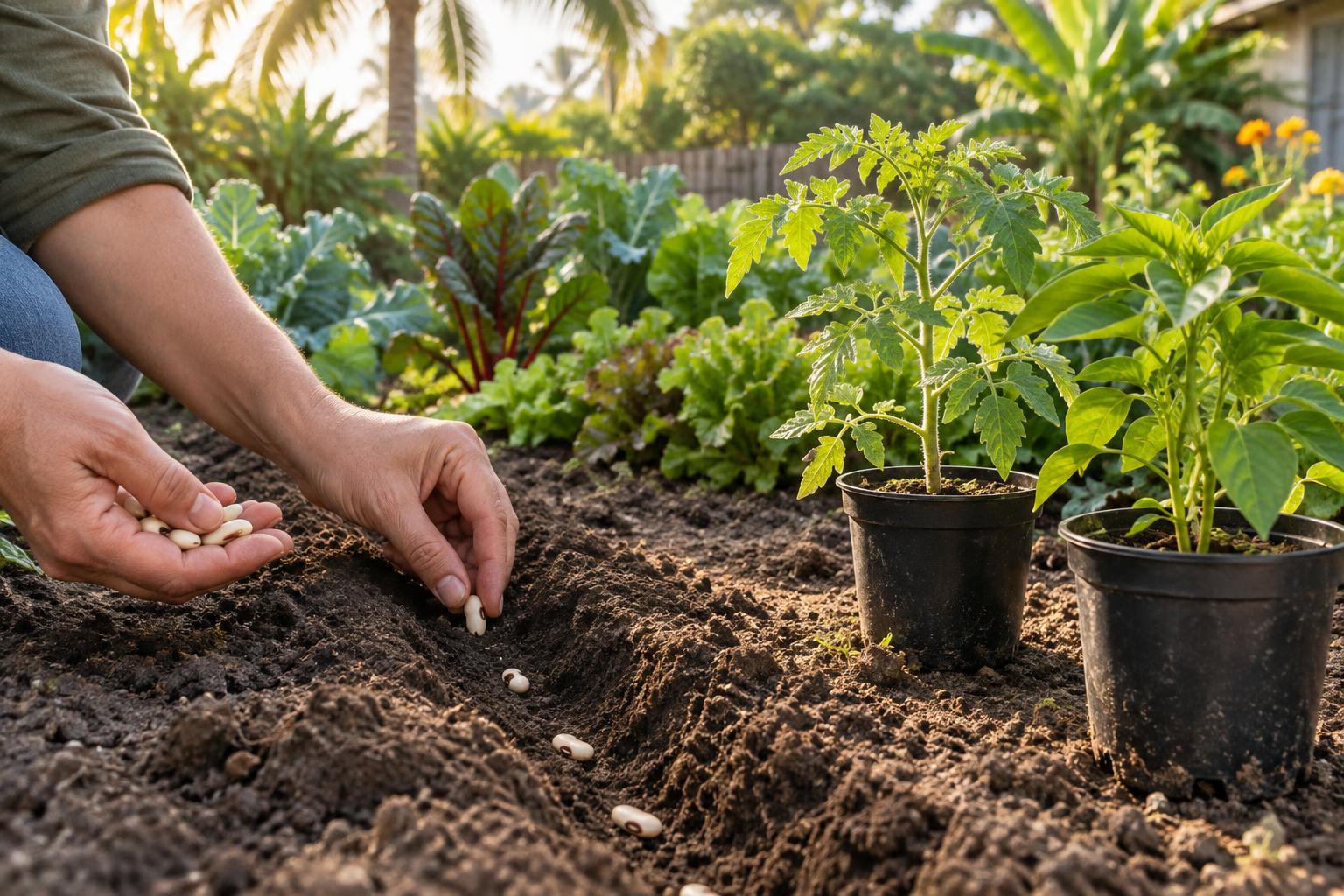
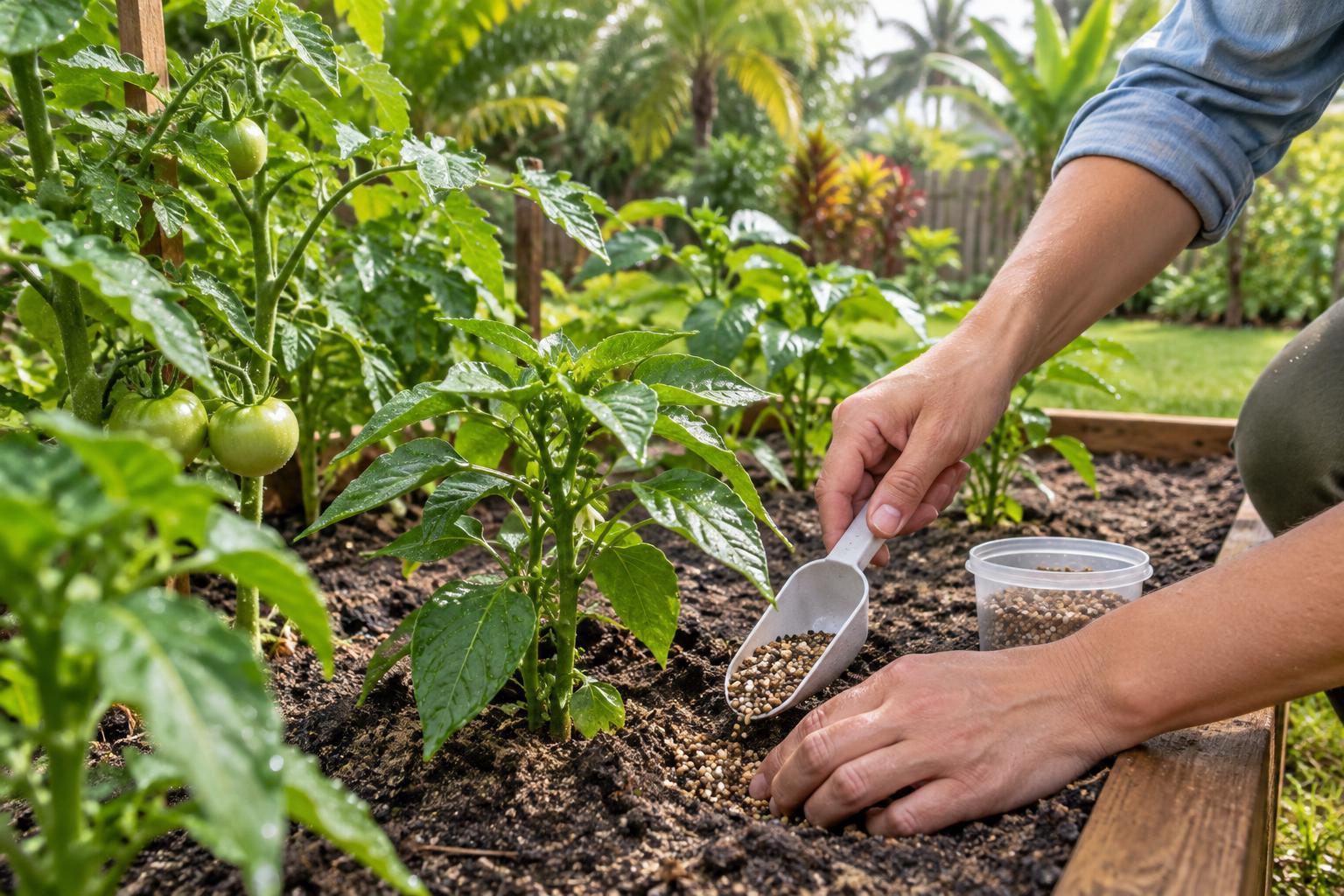
Work any recommended preplant fertilizer into the soil as directed before sowing seeds or setting out transplants. Once plants are established and growing, they may benefit from additional feeding. Many gardeners find it easier to apply measured amounts in stages than to put down a large amount at once, especially where rain or frequent watering can move nutrients through sandy soil.
Different crops have different appetites. Leafy greens grow for their leaves and may respond visibly to nitrogen, while tomatoes, peppers and other fruiting crops need steady, balanced nutrition through flowering and harvest. Too much nitrogen can encourage lush foliage without solving poor fruit production. Seedlings are particularly easy to overfeed, so use a product and rate suitable for young plants rather than treating them like mature crops.
Adjust for beds, pots and Florida rain
For in-ground beds, spread fertilizer where roots can reach it, keeping it off stems and leaves unless the label specifically calls for foliar use. Water it in according to the directions. In containers, use the rate given for pot size or potting mix; do not assume that a bed recommendation translates to a pot. If you use a potting mix that already contains fertilizer, check its packaging before adding more.
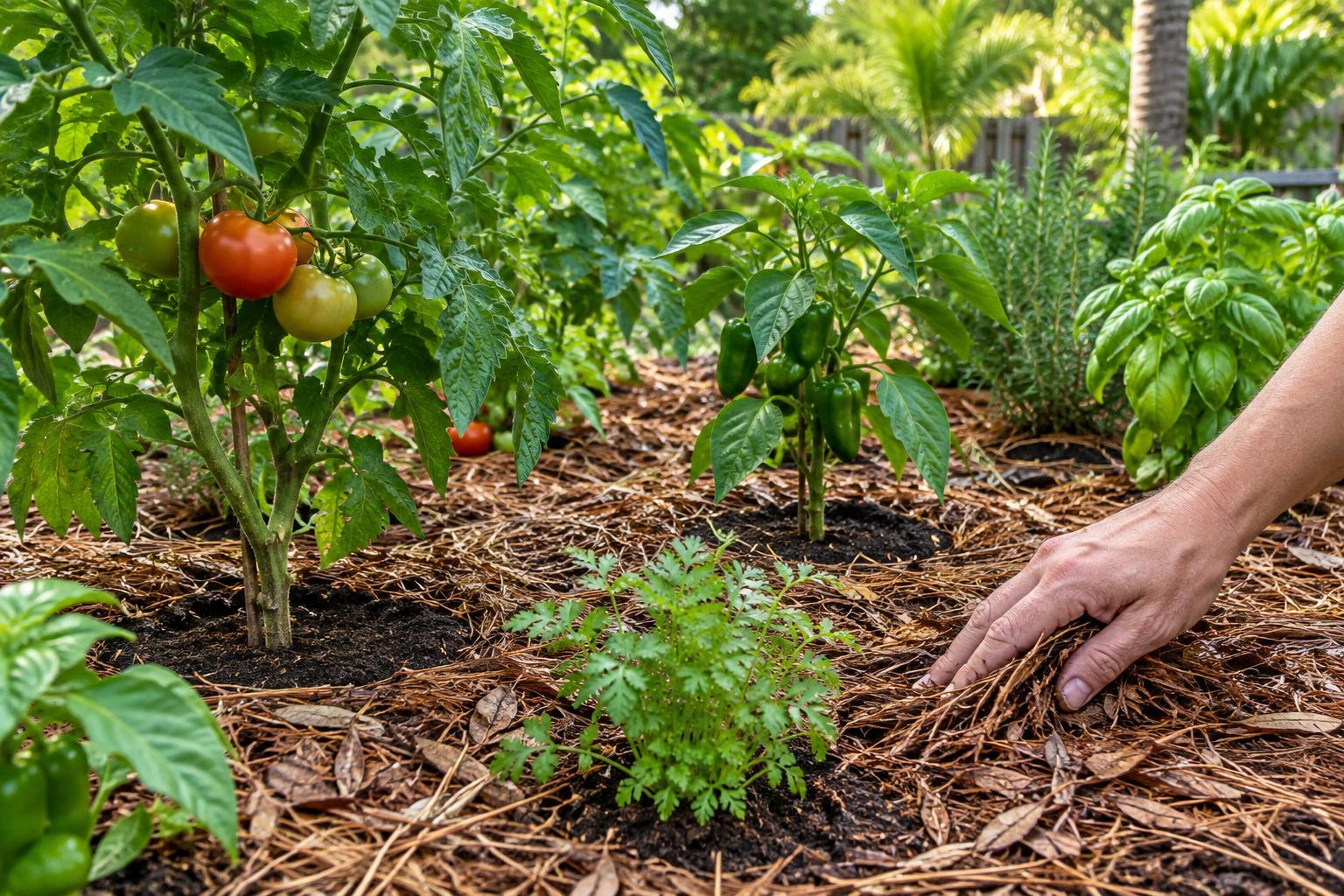
Avoid fertilizing just before heavy rain, when nutrients may wash away instead of staying near roots. Sweep granules off paving and back into the garden, and keep fertilizer away from drains and waterways. Mulch and consistent watering can help plants use the nutrients you apply, though neither replaces checking whether the soil needs them.
Watch the plants, then change one thing at a time
Pale leaves, weak growth or disappointing harvests can be useful clues, but they do not identify a nutrient deficiency by themselves. Check soil moisture, drainage and the undersides of leaves for pests before adding fertilizer. If a problem persists, a soil test or advice from a local gardening extension office can help narrow it down.
Keep a simple record of what you plant, which fertilizer you use and when you apply it. Over a few growing cycles, those notes can help you make modest adjustments for your particular beds or containers. The goal is not to feed on a rigid calendar. It is to give each crop enough nutrition to grow well without wasting fertilizer or sending it beyond the garden.