What mulch does in a Florida garden
Florida gardeners ask a lot of their soil. Sun can dry an exposed bed quickly, while a hard rain can splash soil onto leaves and wash fine particles away. A layer of organic mulch helps soften both extremes. It shades the soil, slows evaporation, reduces splashing, and makes it harder for many weeds to take hold. As it breaks down, it also adds organic material to the surface.
Mulch is not a substitute for good drainage or thoughtful watering. If a bed stays soggy, covering it more thickly may make the problem less visible without solving it. Before mulching, check how water moves through the bed and whether the soil below the surface feels dry, comfortably moist, or saturated. Those observations matter more than following a fixed watering schedule.
Choose a material that suits the crop
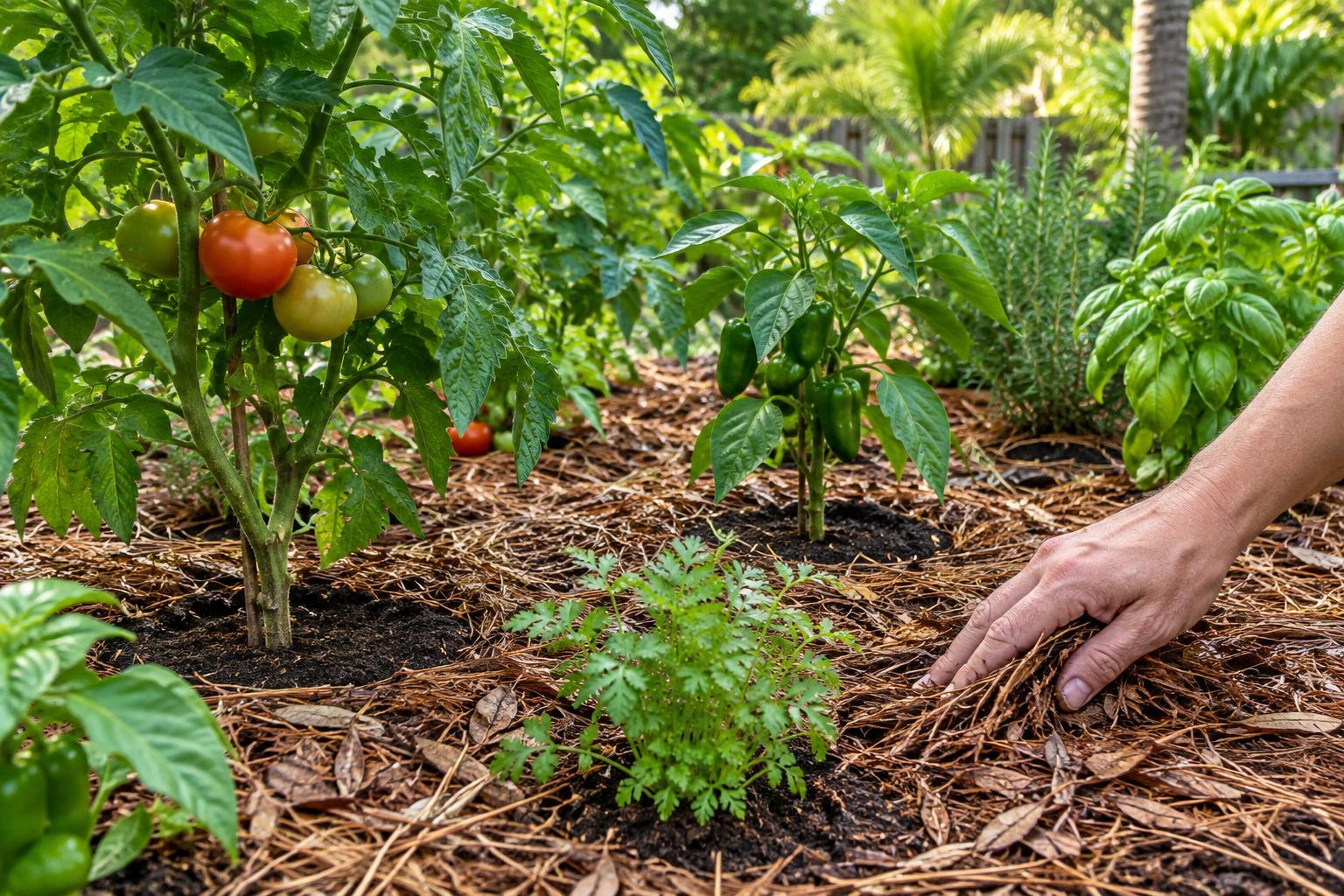
Shredded, dry leaves are a useful choice for vegetable beds, especially when spread loosely rather than packed into a mat. Clean straw can also work around established vegetables. Because its source may be unclear, look it over for weed seeds or herbicide-treated plant material before bringing it into a food garden. Pine straw is another option where available; its open texture can let rain through, but it may shift in windy or exposed spots.
Untreated wood chips are often better suited to paths, around established fruiting shrubs, or on top of perennial beds than right against small seedlings. They break down slowly and are easier to move aside when planting. Keep fresh chips on the soil surface rather than mixing large amounts into a vegetable bed. Grass clippings can be used sparingly if they are free of weed seed and lawn-chemical residues; thin layers are less likely to clump and turn slimy.
Use materials you can identify and handle comfortably. Avoid mulch containing trash, painted or treated wood, or plant debris from a source you do not trust. If you are bringing in leaves or other garden waste, check for obvious disease or heavy pest activity first. A simple, locally available material that you can replenish as needed is often more useful than a decorative product that is difficult to maintain.
How deep to spread mulch
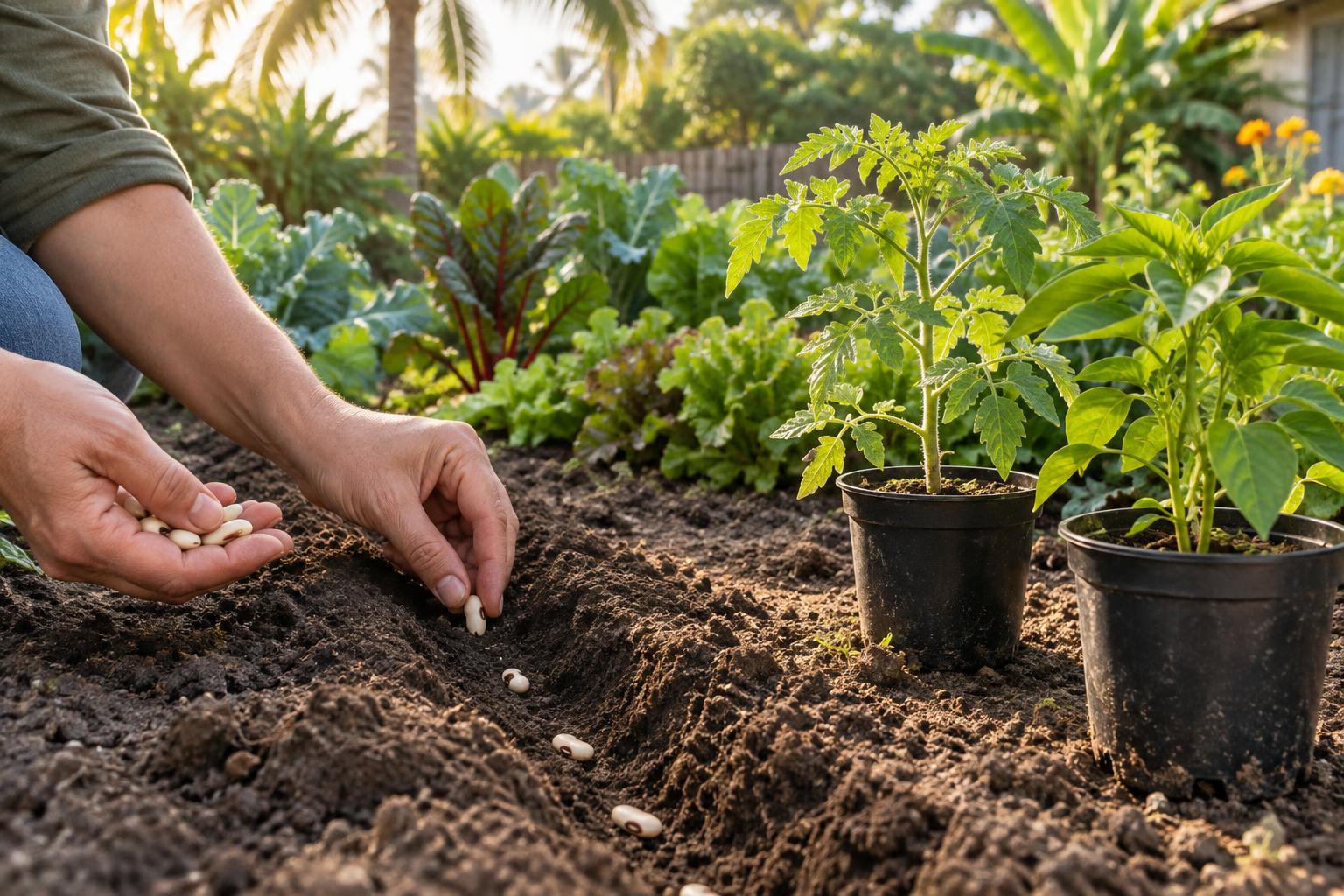
For most established vegetable plants, start with a loose layer about 2 to 3 inches deep after it settles. Fine material that packs down may need a thinner application; coarse material can remain more open at the same depth. Around newly sown rows or tiny transplants, use little or no mulch until the plants have room to grow. Leave the seed row clear so emerging shoots can reach the light.
Keep mulch a few inches away from stems, plant crowns, and the base of edible shrubs or fruit trees. The goal is to cover bare soil, not to pile material against living tissue. At the end of a rain or watering cycle, lift an edge of the mulch and feel the soil underneath. If it is dry, water needs to reach the soil more effectively. If it remains persistently wet, pull back or thin the mulch and consider whether drainage needs attention.
Adjust as the garden changes
Fast-growing crops can quickly shade their own soil, while a newly planted bed has more exposed ground. You may need more coverage between young plants than beneath a dense, mature canopy. During rainy stretches, watch for mulch that has matted down or collected against stems. During dry stretches, check beneath it before assuming the bed needs water: the surface can look dry while the root zone remains moist.
Organic mulch settles and decomposes, so top it up when bare soil begins to show rather than repeatedly adding a full new layer. Pull weeds before they set seed, then replace the mulch you disturbed. When you replant a bed, rake mulch aside first, prepare the planting area, and return the material only after seeds have sprouted or transplants are established.
Common mistakes to avoid
The most common error is treating more mulch as always better. A deep, compacted layer can shed water, hide overly wet soil, or give slugs and other pests a sheltered place close to tender plants. Another mistake is making a mound around a stem or trunk, which holds moisture where air circulation is needed. Spread mulch outward like a blanket, leaving a clear ring around the plant.
Finally, do not rely on mulch to fix a bed that puddles after rain or a crop that is being watered too often. Mulch works best as part of a routine: start with well-prepared soil, apply a modest layer, check moisture underneath, and adjust as plants and weather change. That approach keeps the garden covered without losing sight of what is happening at soil level.