Start with the crop, not the seed rack
Growing vegetables from seed can be inexpensive and gives you a wider choice of varieties. Buying transplants saves time and lets you see the young plants before committing garden space. Neither method is best for every vegetable. A useful first question is whether the crop grows well after its roots are disturbed.
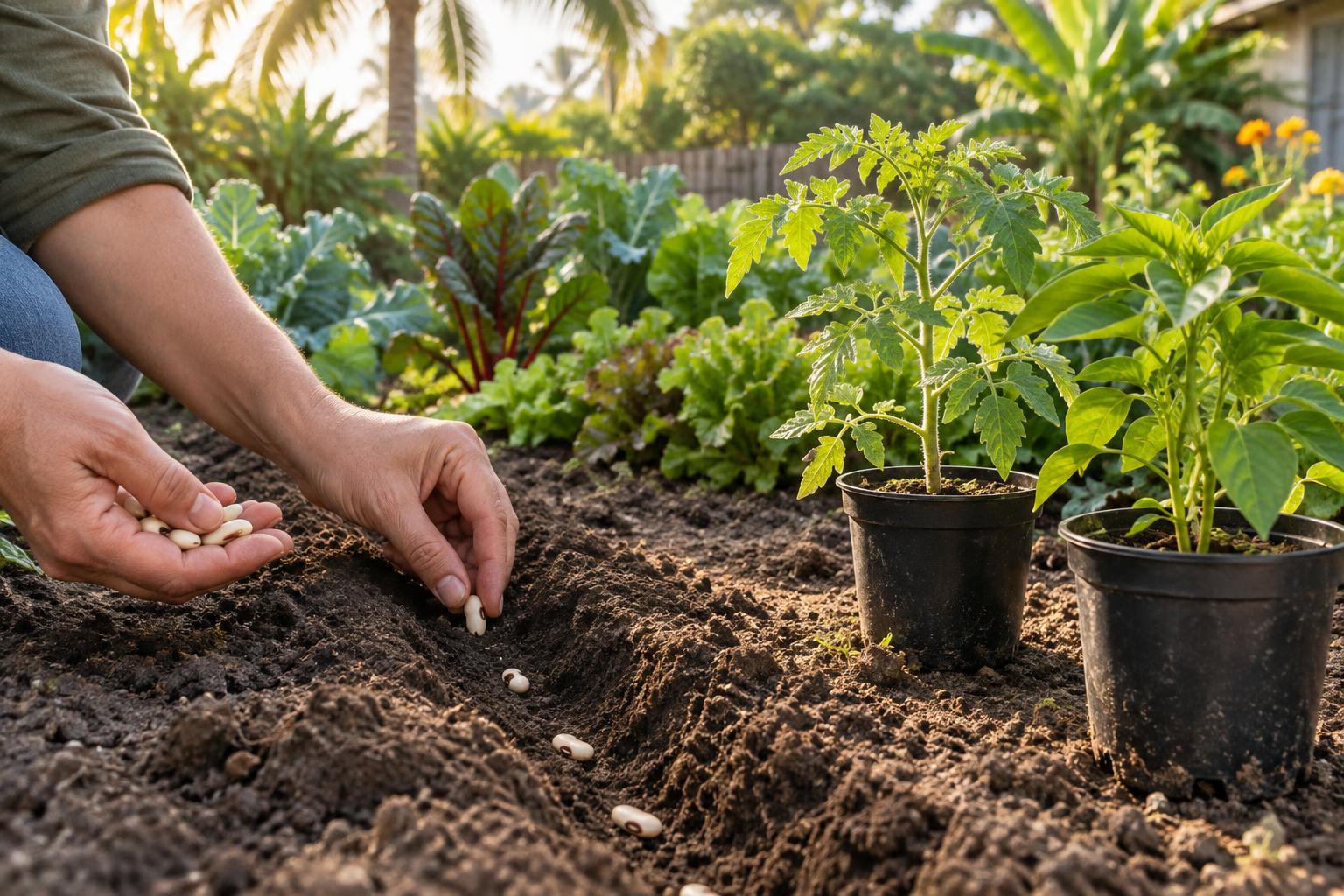
Beans, peas, carrots, radishes and many other root crops are generally better sown where they will grow. Their seeds are straightforward to plant, while moving established roots can slow growth or leave you with misshapen harvests. Cucumbers and squash also grow quickly from seed; if you buy them as transplants, choose small plants and handle their roots gently.
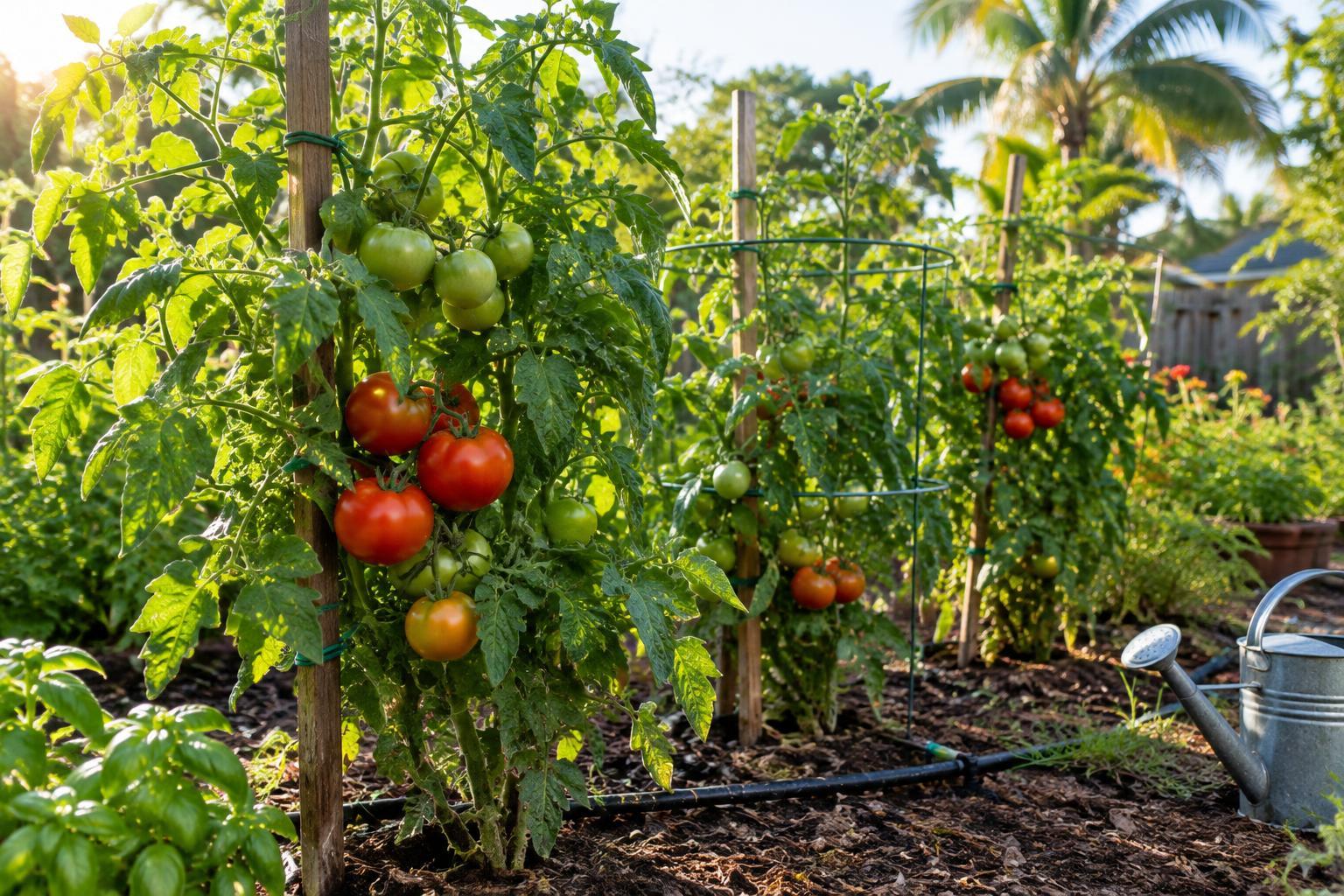
Tomatoes, peppers and eggplants are often good candidates for transplants. They take longer to reach a useful size, so a healthy young plant can help you make use of a suitable growing window. Leafy greens offer more flexibility: you can sow them directly, start them in small containers or buy transplants, depending on the variety and how soon you want to harvest.
Let Florida's seasons guide the decision
Florida's growing conditions change considerably from north to south. A planting opportunity that suits a coastal South Florida garden may be too early for an inland North Florida garden. Temperature, heavy rain and the length of the comfortable growing period matter more than a single statewide planting date. Check guidance for your part of the state and the needs listed on the seed packet or plant label.
Cool-season crops such as many lettuces and radishes generally benefit from Florida's milder months. Heat-loving crops, including beans, peppers and eggplants, need warmth, but a tender transplant can still struggle if it goes straight from a protected nursery into intense sun. If a season is likely to become too hot or too cool before a slow-growing crop matures, a transplant may offer a useful head start. If conditions are already favorable and the crop grows quickly, direct sowing may be simpler.
Rain deserves a place in the plan, too. A downpour can wash shallow seeds out of place, while persistently wet soil can trouble seeds and new roots. You can sow into a well-drained bed when conditions settle, or start a few seeds in containers under shelter and move them out while they are still small.
What to consider when starting seeds
For seeds started indoors or in a sheltered outdoor spot, use clean containers with drainage holes and a seed-starting mix rather than heavy garden soil. Follow the packet's planting-depth guidance, keep the mix evenly moist rather than soaked, and provide enough light once seedlings appear. Label each variety so you know what you have and can compare how it performs.
Start only as many seedlings as you can give adequate light and space. Crowded, stretched plants are harder to establish than compact ones. Before planting them outside, gradually expose them to outdoor sun and wind over several days. This adjustment, often called hardening off, matters even in a warm climate: a bright windowsill or covered patio does not reproduce the conditions of an open garden bed.
How to choose and plant transplants
Look for sturdy plants with healthy leaves and a size that fits their container. Pass over plants with obvious damage, wilting that does not appear temporary, or roots densely circling the pot. A large plant is not automatically a better buy; a smaller one with room for its roots to grow may establish more easily. Read the variety label for mature size and growing needs, and leave enough space between plants for air movement as they develop.
Plant during a mild part of the day if possible. Water the container before removing the plant, keep the root ball intact and water again after planting. Give new transplants consistent moisture while they settle in, without leaving the bed waterlogged. If they have been grown in shade or under cover, introduce them to full sun gradually rather than assuming a nursery plant is already acclimated.
A practical approach for a small garden
You do not have to choose one method for the whole season. Try direct-sowing a short row of beans or radishes while planting a tomato or pepper transplant nearby. In containers, match each plant's mature size to the pot and make sure excess water can drain. Keep a simple note of what you planted, how you started it and whether it established well.
That record will be more useful than a rigid rule. Your available light, soil, watering routine and local weather all affect the outcome. Begin with a few crops you enjoy eating, choose seeds where moving roots is a disadvantage, and use transplants when a head start is worth the cost. Then adjust your approach as you learn how your particular Florida growing space behaves.