More Than Fish in a Fryer
A fish fry can mean a family supper after a day on the water, a neighborhood gathering or a plate served at a community fundraiser. The setting changes, but the appeal is familiar: hot fish, generous sides and time to sit with other people. In Florida, where coastal and inland communities have different relationships with the water, there is no single fish-fry menu or method that represents the whole state.
The meal often begins well before anyone eats. Someone chooses and prepares the fish, someone mixes a coating, and others set out drinks, sides and places to sit. Guests may bring a dish or help serve. That shared work is part of what makes a fish fry a tradition rather than simply a recipe.
What Goes on the Plate
The fish depends on the cook, the place and what is available. A gathering might feature a locally caught fish, a purchase from a seafood counter or a mix of choices intended to feed a crowd. Freshwater and saltwater fish can both have a place at Florida tables. If you are buying seafood for a fish fry, ask what species it is, where it came from and how it was handled rather than assuming that every fish sold in Florida was caught nearby.
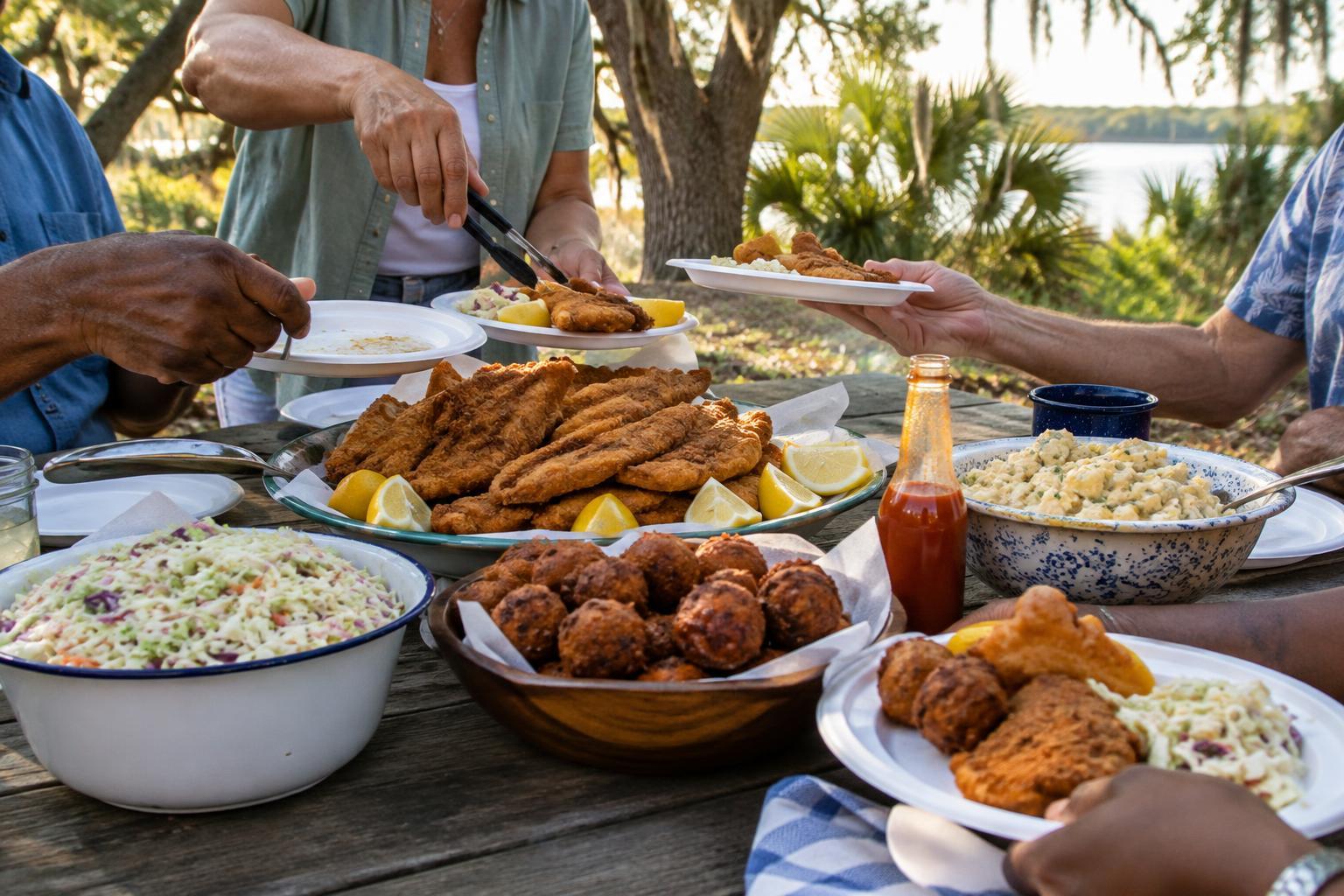
Coatings vary just as much. Some cooks favor a light dusting of seasoned flour; others use cornmeal for a more textured crust. Fish may be cut into fillets or smaller pieces that are easy to share. The goal is usually straightforward: a crisp outside that leaves the fish itself tender. Lemon, hot sauce or a simple dipping sauce can go on the table so each person can finish a plate to taste.
The Sides Tell Their Own Story
A fish-fry plate is rarely only fish. Coleslaw offers a cool, crunchy contrast, while hush puppies, fries or another starch help turn a serving into a meal. Beans, greens, sliced tomatoes or a potluck dish may appear alongside them. These combinations reflect household preferences, available ingredients and the habits of the group hosting the meal, not a fixed statewide rule.
Sides also give more people a way to contribute. One person can make slaw ahead of time; another can bring something from a garden or market. For a host, dishes that can be prepared before the fish goes into the oil make serving easier. The fish tastes best soon after cooking, so a ready table lets everyone spend less time waiting and more time eating together.
Why the Gathering Matters
Fish fries can create an easy reason to gather. Families may use them to welcome visitors or mark an occasion. Community groups may serve plates to raise money or bring neighbors into the same room. In each case, the meal works because it is approachable: people can help with a small task, bring a side or simply pull up a chair.
That hospitality does not require a large crowd. A few people sharing a freshly cooked meal can carry the same spirit as a busy public event. It helps to notice who is doing the cooking, serving and cleanup, and to share those jobs where possible. Traditions endure not only because people remember the food, but because they remember feeling included.
Taking Part With Care
If you are invited to a fish fry, follow the host’s lead. Ask whether a side dish or a hand with setup would be useful, and do not assume there is only one proper way to season or serve the fish. At a public gathering, a patient place in line and a thank-you to volunteers go a long way. If you have food allergies or other dietary needs, ask about ingredients and shared cooking equipment before taking a plate.
For your own gathering, start with seafood from a source you trust, plan sides that can wait while the fish cooks, and leave room for people to lend a hand. Keep raw seafood cold until cooking and handle hot oil with care. The most memorable fish fry need not be elaborate: good food, a welcoming table and work shared among friends are enough to give the meal its meaning.