A food culture carried and shared
Puerto Rican cooking has a meaningful place in Central Florida, especially in the everyday life of communities around Orlando and Kissimmee. Families, home cooks, restaurants, and small food businesses carry familiar flavors into new kitchens while adapting to the ingredients and schedules available here. No single menu can stand for everyone: recipes vary by household, and people may prepare the same dish differently for a weeknight meal, a celebration, or a visit with relatives.
Food can offer a welcome point of connection, but it is more than a collection of dishes to discover. A pot of rice, a batch of pasteles, or a shared lunch may hold memories of particular people and places. Approaching these traditions with curiosity means asking how a dish is made rather than assuming there is one definitive version.
The flavors that begin a meal
Many savory dishes start with sofrito, an aromatic blend that often includes peppers, onions, garlic, and herbs. Ingredients and proportions differ from cook to cook; some versions feature recao, also called culantro, and ají dulce, a small pepper valued for flavor rather than strong heat. Sofrito can form the base of beans, stews, and rice dishes, building depth before the main ingredients go into the pot.
These ingredients offer a useful bridge between Puerto Rican cooking and market shopping in Florida. At a produce stand or grocery, look for fresh, firm peppers and lively herbs, but ask before substituting one green for another: culantro and cilantro have distinct flavors. Availability changes, and a home cook may turn to a frozen sofrito, a different pepper, or a family-approved shortcut. Adaptation is part of real cooking, not a failure to follow a tradition.
Dishes for everyday tables and gatherings
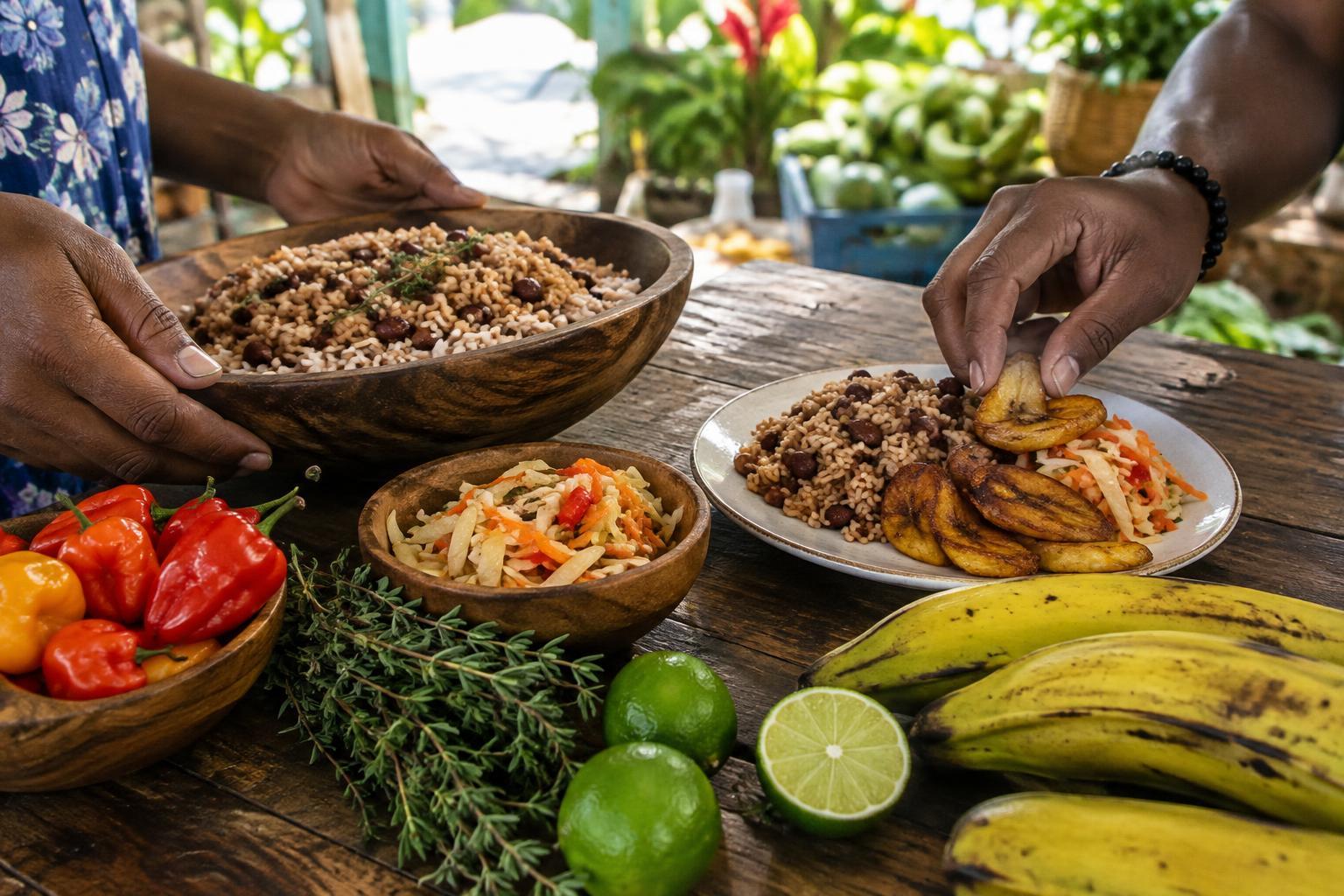
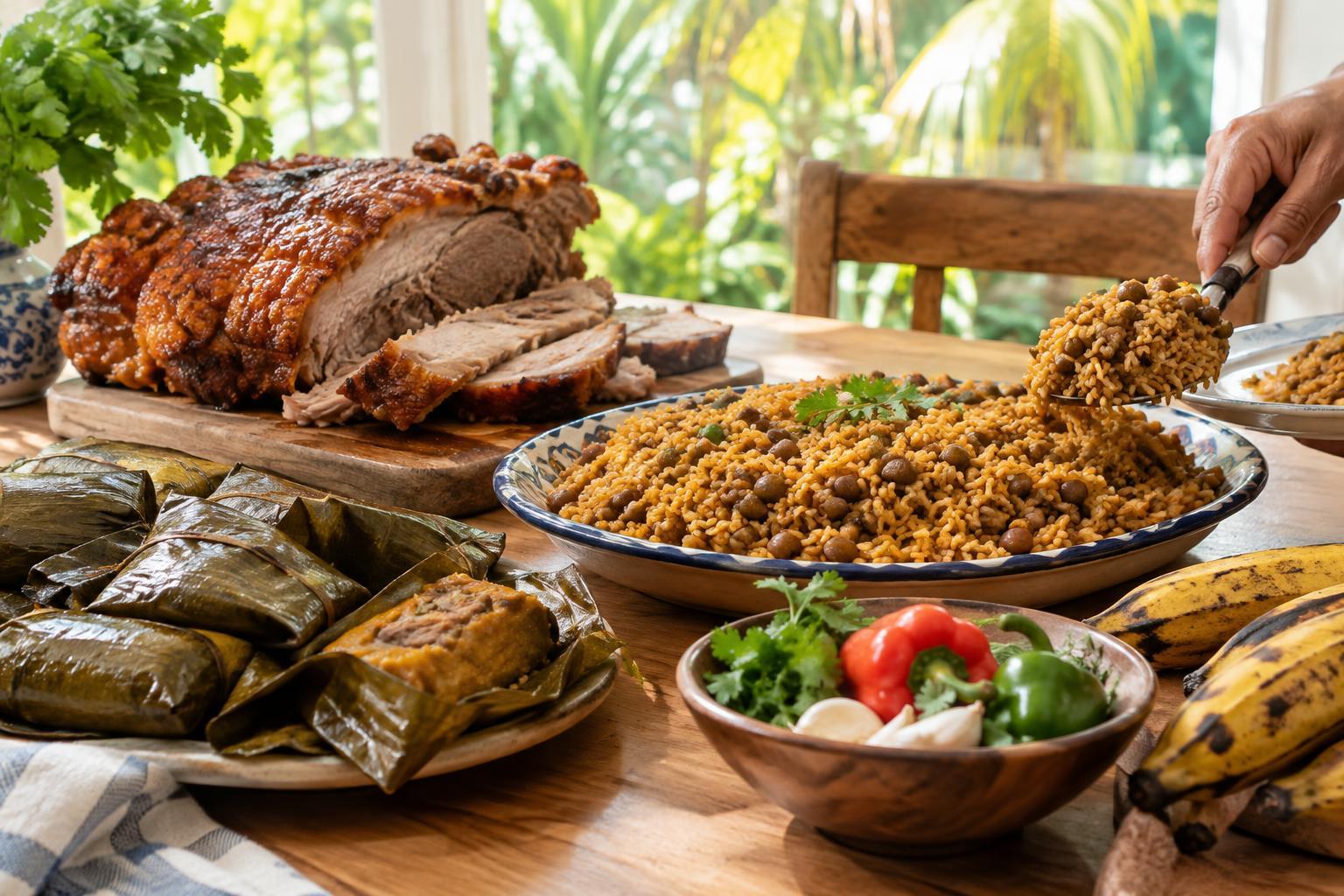
Arroz con gandules pairs rice with pigeon peas and seasonings; it is closely associated with gatherings, though it need not be saved for a special occasion. Pernil, seasoned and slow-roasted pork, is another dish often made when there are people to feed. On a more casual table, plantains might appear as tostones—green plantain slices fried, flattened, and fried again—or as sweet maduros made from ripe plantains.
Mofongo typically brings together mashed fried green plantains, garlic, and other savory additions, with many ways to serve it. Pasteles are a different kind of undertaking: a seasoned filling is enclosed in a grated root-vegetable or plantain-based mixture, wrapped, and cooked. Making them can be a group effort, and recipes differ substantially. Seeing these dishes together helps show the range of textures and occasions in Puerto Rican cooking, rather than reducing it to one signature plate.
What changes—and what travels—between kitchens
In Central Florida, a recipe may be shaped by what a nearby shop stocks, what grows in a garden, or who has time to help prepare it. A relative’s preferred seasoning can travel with a family; a new neighbor may introduce another approach. These choices do not make a dish less personal. They show how food traditions stay active when people move, share meals, and teach younger cooks.
Puerto Rican food is also part of a wider Caribbean conversation without being interchangeable with every other Caribbean cuisine. Ingredients such as plantains, beans, rice, and root vegetables appear across the region, but methods, names, and meanings vary. When a menu or seller identifies a dish as Puerto Rican, let that description guide your questions instead of assuming its story from a familiar ingredient alone.
Shopping and learning with respect
If you are shopping for a Puerto Rican dish, begin with a short ingredient list and ask sellers about produce by name. Find out whether a plantain is green or ripe before choosing it: the stage of ripeness changes how it cooks and tastes. For herbs or peppers you do not recognize, ask how they are commonly used and buy a small amount to try. Sellers can speak to what they carry, while a family cook or recipe author may offer more context for a particular preparation.
When buying prepared food, pay attention to how the maker describes it, including any family variation they choose to share. Buying from a small business, learning the names of ingredients, and giving credit to the people whose recipes teach you are simple ways to engage beyond a single meal. The most rewarding approach is neither to treat a dish as a novelty nor to insist on a rigid idea of authenticity, but to make room for the people and stories behind it.