Begin with living communities, not a single Florida food story
Florida’s food history cannot be told without Indigenous people. Yet there is no single “Indigenous Florida cuisine.” The Seminole Tribe of Florida and the Miccosukee Tribe of Indians of Florida are distinct sovereign tribal nations. Their members have their own histories, families and ways of sharing knowledge. A respectful introduction names the community being discussed rather than treating every practice as interchangeable.
Foodways encompass more than dishes. They can include how people gather, grow, prepare, serve and share food; how knowledge passes between generations; and how relationships with land and water shape everyday choices. Those practices also change. Describing them only as remnants of the past overlooks the people who sustain and adapt them today.
Let tribal voices guide your learning
Start with public material produced or presented by the tribe whose traditions you want to learn about. Tribal museums, cultural programs, publications and official communications can show what a community has chosen to explain to visitors. When reading an article, watching a demonstration or attending a public event, notice who is speaking and whether they have identified their tribal connection. A general description written by an outsider is not a substitute for a community’s own account.
Public access to one story does not make every detail available for reuse. Some knowledge may be shared within families or for particular occasions, while a demonstration may be intended to teach a specific point rather than provide an all-purpose recipe. If you want to photograph someone, record a presentation, publish a recipe or repeat a story, ask about permission and attribution first. Follow any guidance about areas or activities that are not open to visitors.
It is also fine to learn without asking someone to teach you personally. A market vendor or event participant may be working, spending time with family or simply enjoying the day. Read the information a community has made available before posing questions, and accept a declined question without pressing for an explanation.
Connect food to place without making assumptions
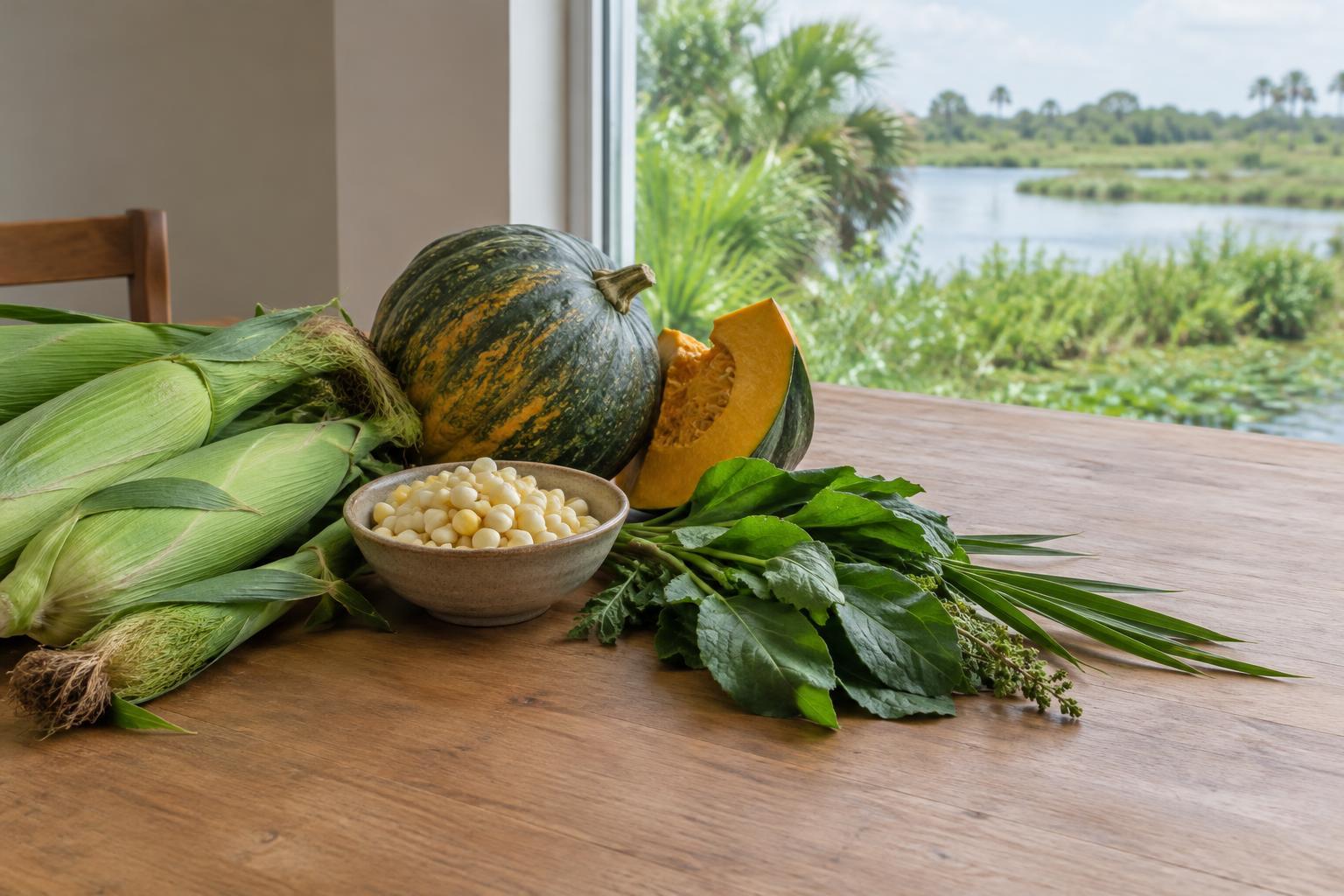
Florida’s wetlands, waterways, forests and growing conditions have shaped many food traditions. Fish, cultivated crops and gathered plants may appear in discussions of Seminole or Miccosukee foodways, but a familiar ingredient alone cannot tell you who used it, how it was prepared or what it meant. Even practices that look similar from the outside may have different histories. Look for context tied to a named community and, where possible, to the person sharing it.
Be especially cautious with foraging. A plant described in a cultural account is not an invitation to harvest it. Land access, conservation concerns, safe identification and community protocols all matter. Learning a plant’s name and its relationship to a place can be valuable without collecting it. On a visit to tribal land or a cultural event, treat the host’s posted rules and directions as the starting point.
Bring curiosity to the market and the kitchen
A farmers market can prompt useful questions about seasonality, but it is not automatically a source of Indigenous tradition. Buying corn, squash or local fish does not make a meal Seminole or Miccosukee. If a vendor describes a product or preparation as connected to a tribe, ask how they want that connection represented and credit them accurately. Do not assign a tribal identity to a dish based on its ingredients.
At home, you can cook with Florida produce while keeping the distinction clear. You might make a seasonal meal inspired by what is available at your market, then separately read a tribal account of how food connects to local land and water. If you follow a recipe shared publicly by a tribal cook or organization, retain its attribution and any context they provide. If you substantially change it, describe what you made as your adaptation rather than an authoritative version of a traditional dish.
Make respect an ongoing practice
Good learning rarely ends with one article, meal or visit. Seek out opportunities the tribes themselves present for the public, support Indigenous makers when you can, and check information with its source before sharing it. Tribal programs and visitor guidance can change, so confirm details through official channels before making plans.
The most useful question is not “How can I reproduce this tradition?” but “What has this community chosen to share, and how can I respond responsibly?” That shift leaves room for both appreciation and boundaries. It also makes for a fuller understanding of Florida food culture: one grounded in living people, specific places and the care required to tell their stories well.