Start with good greens
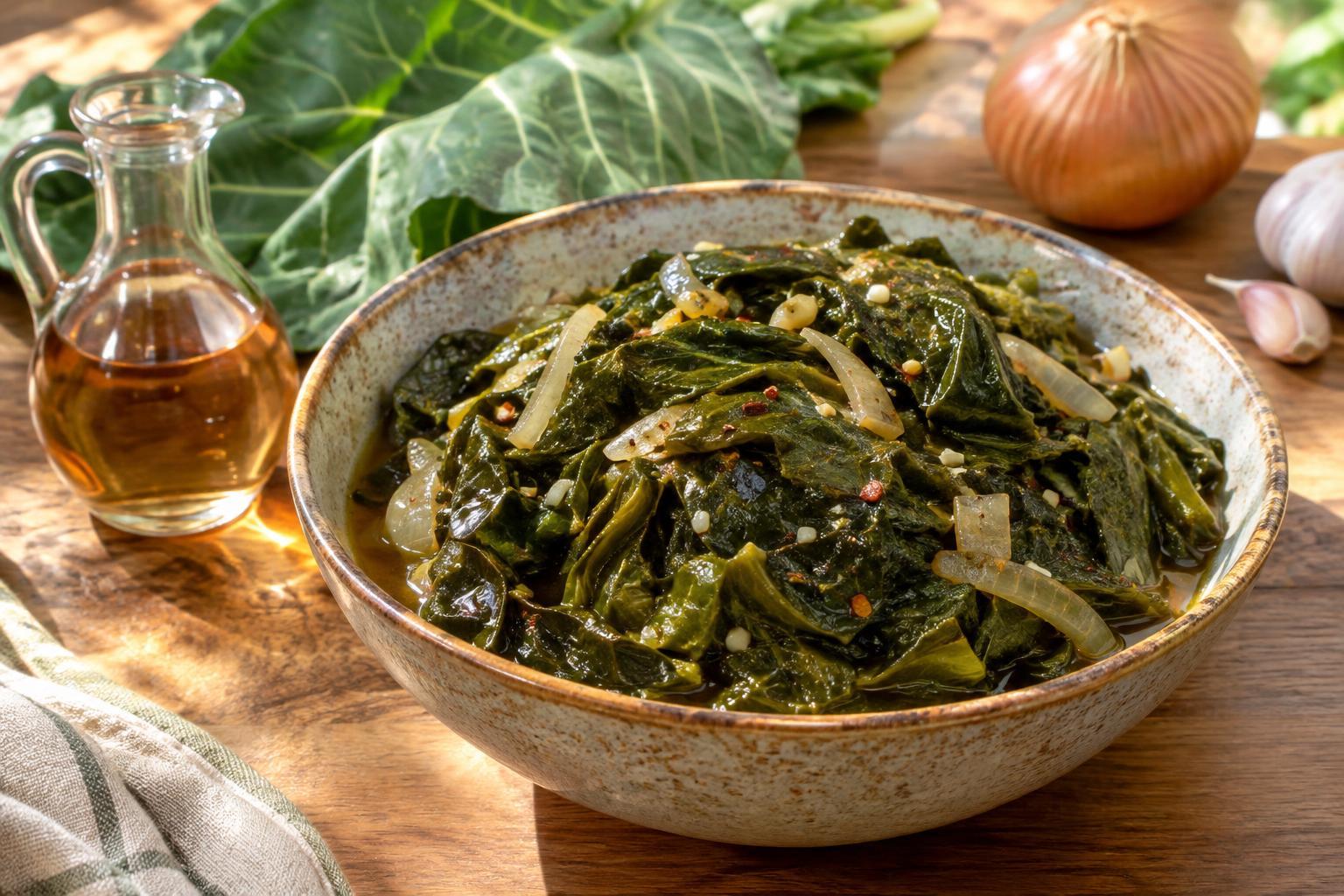
Collard greens can be the main event in a pot, not just a side dish flavored by meat. Their sturdy leaves stand up to slow cooking, while their slightly bitter, earthy taste gives aromatics something to work with. For a meatless braise, the goal is to build flavor in layers: soften vegetables in oil, wake up spices, simmer the greens in a savory liquid and adjust the finished pot with acid.
Look for leaves that feel firm rather than limp, with no extensive yellowing or slimy spots. A large bunch, roughly 1 to 1½ pounds before trimming, makes about four side servings. Wash the leaves thoroughly, especially where grit can collect along the stems. Strip away the thick central ribs, then stack and slice the leaves into ribbons. Tender portions of the stems can be chopped finely and cooked with the onion; discard any parts that seem particularly tough.
Build a savory base
For one large bunch of collards, start with 2 tablespoons of olive oil in a wide, heavy pot over medium heat. Add one diced onion and a pinch of salt. Cook, stirring now and then, until the onion is soft and beginning to turn golden, about 8 to 10 minutes. This unhurried step gives the broth a rounded sweetness. If you are using chopped collard stems, add them with the onion so they have time to soften.
Add 3 or 4 minced garlic cloves and cook for about a minute, just until fragrant. For gentle heat and depth, stir in ½ teaspoon of crushed red pepper or smoked paprika. Either works; using both is fine if you keep the amounts modest. A spoonful of tomato paste is another option: cook it briefly until it darkens slightly. None of these additions needs to imitate meat. They simply give the greens a more complex backdrop.
Braise until the texture suits you
Add the sliced collards a handful at a time, tossing each addition in the seasoned oil as it wilts. Pour in 1½ to 2 cups of vegetable broth or water, enough to create a shallow pool rather than submerge the leaves. If using broth, taste it before adding much more salt; some broths are already well seasoned. Bring the liquid to a simmer, cover the pot and reduce the heat to low.
Cook for 25 to 45 minutes, stirring occasionally and adding a splash of water if the pot gets dry. Younger, thin leaves may become tender sooner, while larger, thicker leaves can take longer. Taste a ribbon rather than relying only on the clock. The greens should be pleasant to chew, whether you prefer them with a little bite or very soft. For a more concentrated cooking liquid, uncover the pot for the last few minutes and let some of it evaporate.
Finish with brightness, not just salt
Once the collards are tender, stir in 1 to 2 teaspoons of apple cider vinegar or lemon juice. Taste, then add more a little at a time if the pot still seems flat. Acid sharpens the greens and balances the sweetness of the onion. A small drizzle of olive oil at the end adds richness, while freshly ground black pepper brings a different kind of warmth from chile flakes.
If the greens taste bitter, give them a few more minutes to cook before changing the seasoning. Then check the balance of salt and acid. Avoid adding a large amount of vinegar all at once; it is easy to add more but difficult to take away. Spoon some of the flavorful cooking liquid over each serving. It is part of the dish, not something to drain off.
Make the pot your own
Serve these collards alongside cornbread, rice or beans, or pile them onto a baked sweet potato for a simple meal. White beans can also be stirred into the pot near the end of cooking; give them a few minutes to warm through and absorb some of the broth. For a different aromatic base, replace part of the onion with sliced scallions or add a diced bell pepper at the start.
The method is more important than any single seasoning. Begin with patient cooking in oil, use just enough liquid to braise, and make the final adjustment after the leaves are tender. That approach leaves room for the character of the collards themselves, whether they came from a market stall or a backyard garden.