Start with beans that will cook evenly
A good green bean skillet begins before the pan gets hot. Choose beans that feel firm and snap when bent, rather than ones that seem limp or heavily wrinkled. Thin beans tend to cook quickly; thicker ones need a little more time. If you are shopping at a market, picking beans of roughly similar thickness will make it easier to finish them all at once.
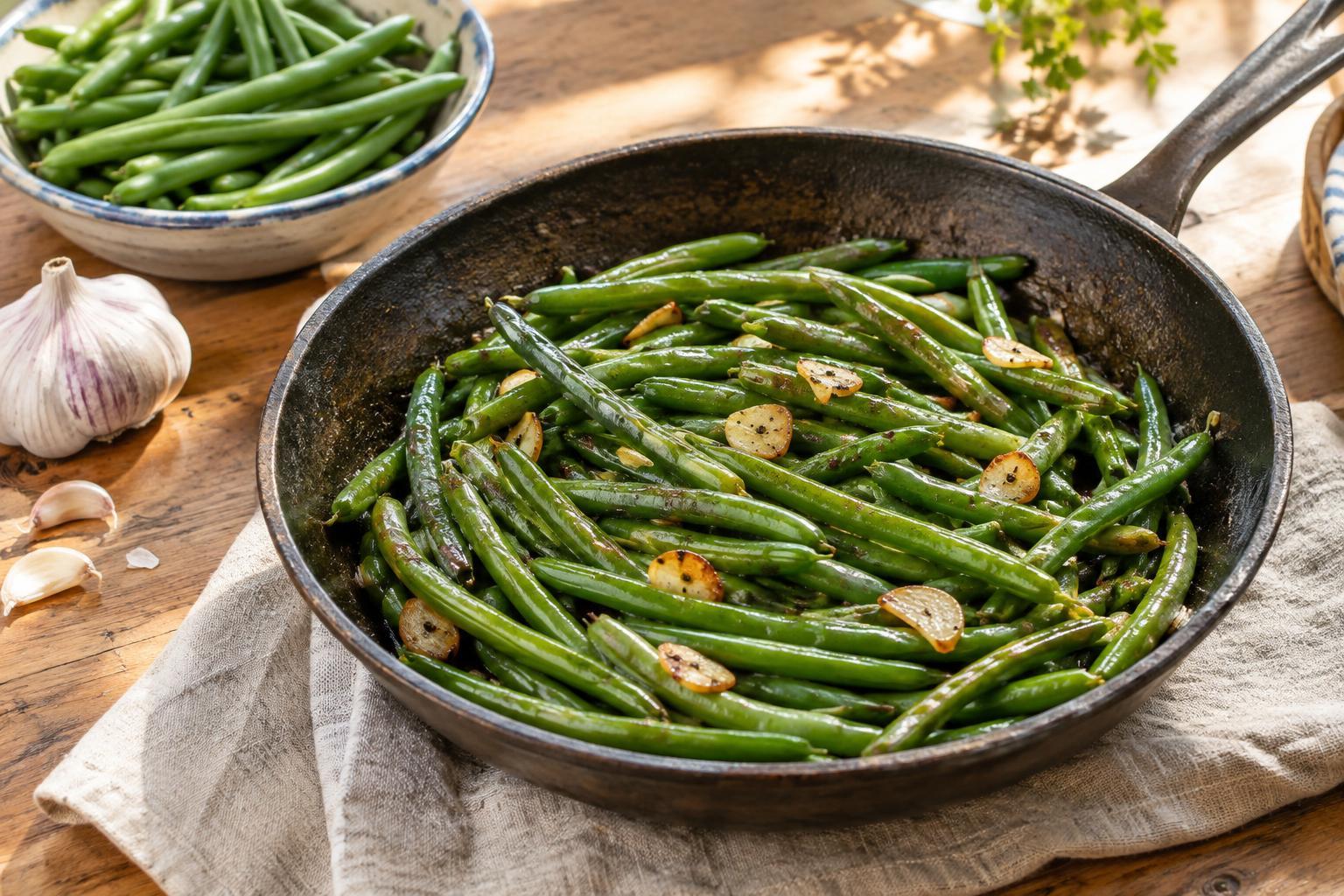
For about four side-dish servings, use 1 pound of fresh green beans, 2 to 3 garlic cloves, 1 to 2 tablespoons of olive oil, salt, and black pepper. A small squeeze of lemon is optional. Rinse the beans, trim the stem ends, and dry them well. Moisture left on the surface can make the oil sputter and encourage the beans to steam before they have a chance to take on a little color. Slice or finely chop the garlic, but keep it separate from the beans for now.
Use the skillet in two stages
Set a large skillet over medium-high heat and add the oil. When it is warm and shimmers, add the beans. Spread them out as much as the pan allows; if they are piled high, cook them in two batches or expect more steaming than browning. Let the beans sit briefly between stirs so a few sides develop light brown spots. Cook for about 4 to 6 minutes, stirring occasionally.
Next, add 2 to 3 tablespoons of water and cover the skillet. The short burst of steam helps the centers soften without requiring a long stay in hot oil. After 2 to 3 minutes, uncover and stir. The beans should be bright green and close to the texture you want. If they are still too firm, add another spoonful of water and cover for another minute. Cooking times are guides, not guarantees: bean thickness, pan size, and burner strength all make a difference.
Once the water has evaporated, reduce the heat to medium and add the garlic. Stir for about 30 to 60 seconds, just until fragrant. Garlic added at the beginning can darken or burn while the beans are still cooking; adding it near the end keeps its flavor clear. If the pan looks dry, add a small drizzle of oil before the garlic. Season with salt and pepper, then take the skillet off the heat.
Judge tenderness by biting, not by the clock
Tender-crisp means the bean is pleasant to bite through but still has a little resistance. The easiest test is to taste one from the pan, letting it cool first. If it tastes raw or squeaks sharply against your teeth, give the beans another brief covered steam. If you prefer a softer side dish, cook them a little longer. Stop before they become dull, floppy, and difficult to pick up with a fork.
A crowded pan can make this judgment tricky because some beans may soften faster than others. Stir thoroughly after uncovering, and taste a thicker bean rather than the thinnest one. If the beans finish before the rest of dinner, remove them from the hot skillet and put them in a serving bowl. Residual heat in the pan can continue to soften them even after the burner is off.
Finish simply, then make it your own
A squeeze of lemon just before serving brightens the garlic and beans without changing the basic dish. For a different finish, try a small pinch of red pepper flakes, a few chopped toasted nuts, or a little grated hard cheese. Add delicate herbs after the pan comes off the heat so they stay fresh-tasting. Choose one or two additions rather than all of them; green beans have a mild flavor that is easy to cover up.
This skillet works alongside a wide range of meals, from rice and beans to grilled fish or a simple omelet. It is also a useful way to cook a market purchase while the beans are still fresh. If you have beans of very different sizes, sort the thickest ones into the pan first and add the thinnest a minute or two later. The goal is not an exact cooking time, but a repeatable sequence: dry beans, a hot uncrowded pan, a brief steam, and garlic at the end.