A flexible dinner for a market haul
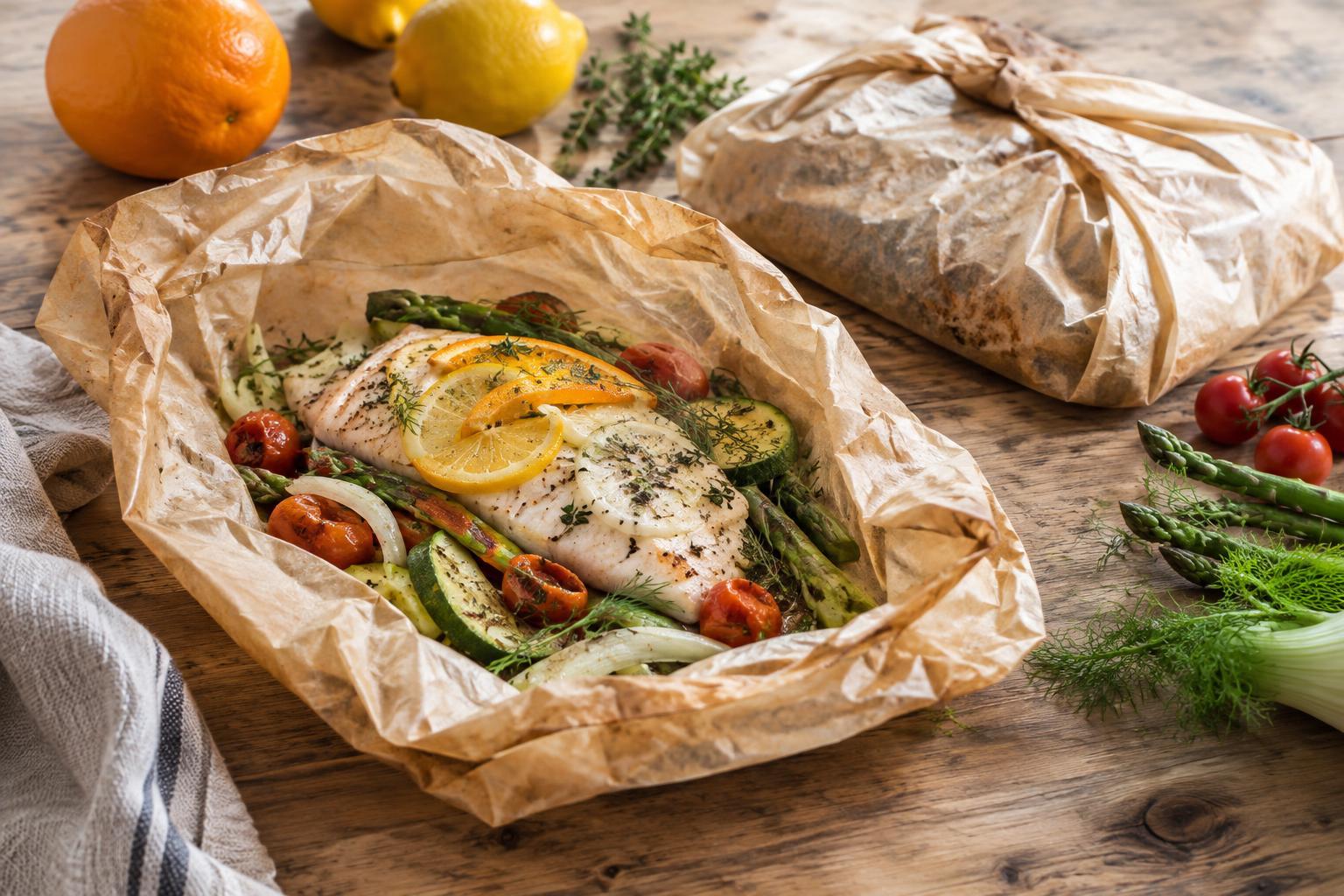
Fish packets make a satisfying dinner without demanding a long list of ingredients or much cleanup. Inside a folded sheet of parchment, sliced vegetables soften in the heat while citrus and olive oil season the fish. Each packet is its own serving, so it is easy to make one with more vegetables or adjust the seasoning for someone at the table.
This version uses zucchini, bell pepper and onion, but the better choice is often what looks fresh and appealing when you shop. Choose vegetables that will become tender in roughly the same time as a fish fillet: thinly sliced summer squash, asparagus or tender green beans can work well. Dense vegetables such as potatoes need to be cooked first rather than added raw. For the fish, look for four similarly sized, boneless fillets, about 5 to 6 ounces each, so the packets finish at about the same time.
Ingredients and preparation
For four servings, gather four mild white fish fillets, two small zucchini, one bell pepper, one small onion, one orange, one lemon, two tablespoons of olive oil, one minced garlic clove, about three-quarters of a teaspoon of kosher salt, black pepper and a small handful of chopped parsley. Snapper, cod or tilapia can all work; cooking time will depend more on the thickness of the fillets than on the name of the fish. You will also need four large sheets of oven-safe parchment paper and a baking sheet.
Heat the oven to 400°F. If the fish was frozen, thaw it fully before starting, then pat it dry. Slice the zucchini into thin half-moons, cut the pepper into narrow strips and slice the onion thinly. Cut the orange and lemon into thin rounds, removing any obvious seeds. Toss the vegetables with the olive oil, garlic, most of the salt and a few grinds of pepper. Reserve a little salt for the fish. Keeping the vegetables fairly thin is important: thick pieces may still be firm when the fish is ready.
Fold, bake and check
Place one parchment sheet on the counter and arrange a quarter of the vegetables just off center, leaving room around the edges to seal the packet. Set a fillet on top and season it lightly with the reserved salt. Add a lemon round and an orange round, then sprinkle with parsley. Fold the empty half of the parchment over the food. Starting at one end, make small overlapping folds along the open edge until the packet is closed. Repeat with the remaining ingredients and place the packets on the baking sheet.
Bake for about 16 to 22 minutes, checking early if the fillets are thin. Carefully open one packet away from your face; the escaping steam will be hot. The fish should reach 145°F in its thickest part when checked with a food thermometer. If it needs more time, fold the parchment back over and return the packet to the oven, checking again after a few minutes. The vegetables should be tender but need not be completely soft. Let the packets rest briefly before opening the rest.
Make the recipe your own
Use the vegetable mix as a guide, not a rule. Thin asparagus spears can replace the zucchini, while tender green beans can stand in for the pepper. If a vegetable seems especially sturdy, slice it more finely or give it a short head start in a skillet. Avoid piling the vegetables too high: a modest, even layer lets heat move through the packet and makes the fish easier to check.
Citrus changes the character of the dish without much extra work. Orange adds gentle sweetness, while lemon gives it a sharper finish. You can use only one if that is what you have. Fresh herbs such as dill or cilantro can take the place of parsley, and a small pinch of red pepper flakes adds heat. Keep additions light enough that the flavor of the fish and vegetables still comes through.
Serving the packets
Set each packet on a plate or carefully slide its contents into a shallow bowl, including the juices collected at the bottom. Rice, crusty bread or another simple side can catch those juices and round out the meal. A few fresh herb leaves added after baking bring a brighter flavor than herbs cooked inside the packet alone.
Packets are best eaten soon after baking, when the vegetables are warm and the fish is moist. If you have leftovers, move them to a covered container rather than storing them in the opened parchment, and refrigerate promptly. The next day, warm them gently so the fish does not dry out. That ease—from market selection to a nearly self-contained dinner—is what makes this a useful recipe to revisit with different vegetables throughout the year.