Why zucchini needs a little preparation
A pile of freshly grated zucchini looks ready for the frying pan, but it holds enough water to change a fritter as it cooks. That water can loosen the batter, cool the pan and steam the inside before the outside has a chance to brown. Removing some of it gives the eggs and flour a better chance to hold the shreds together while the edges turn crisp.
Choose zucchini that feels firm and has an unblemished skin. Small and medium ones tend to have less noticeable seeds; if you have a large zucchini, cut it lengthwise and scoop out any soft, seedy center before grating. There is no need to peel tender skin. Use the large holes of a box grater or a food processor’s shredding disk so the pieces retain some texture.
Salt, rest and squeeze
For a small batch, start with about two medium zucchini. Grate them, toss the shreds with 1/2 teaspoon of salt and set them in a colander over a bowl for 15 to 20 minutes. The salt draws liquid out of the cut surfaces. You will season the batter again only after tasting it, since some of this salt stays with the zucchini.
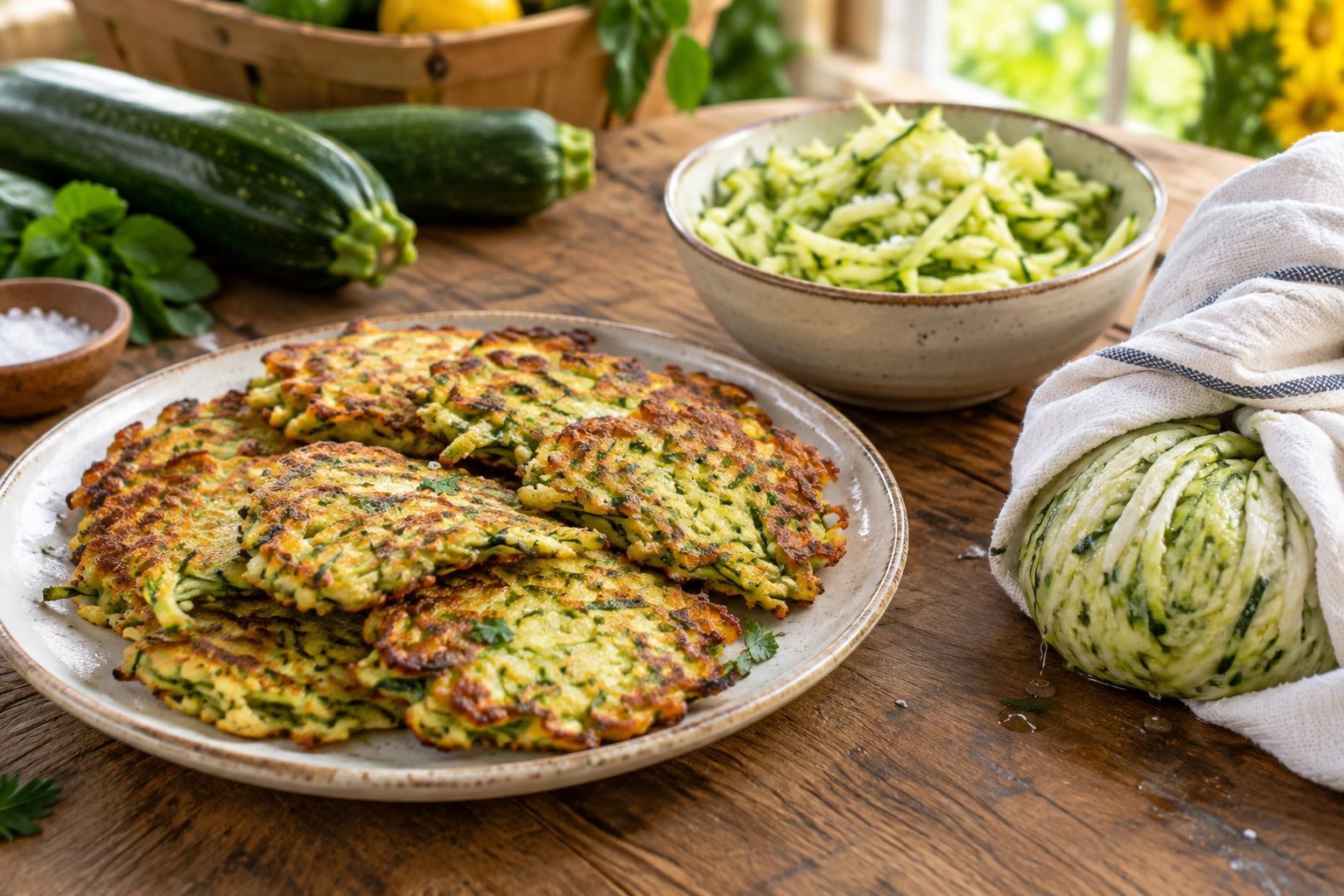
Next, move the shreds into a clean kitchen towel. Gather the corners, twist them closed and squeeze firmly over the sink or bowl. Open the towel, spread the zucchini out, then gather and squeeze once more if it still feels wet. A sturdy cheesecloth or several layers of paper towels can work, although a kitchen towel is easier to grip. The goal is not to make the zucchini brittle; it should feel damp, not dripping.
If you are short on time, squeezing without the salting rest still helps. Salted zucchini, though, usually releases liquid more readily. Once squeezed, mix the batter and cook it promptly. Leaving a seasoned batter on the counter gives the zucchini more time to release water.
Build a batter that supports the shreds
Put the squeezed zucchini in a bowl with one beaten egg, about 1/4 cup all-purpose flour and 2 tablespoons finely chopped scallions or onion. Add black pepper and, if you like, chopped parsley or dill. Stir just until the zucchini is coated. The mixture should clump when pressed against the side of the bowl without looking pourable. If it falls apart, add a spoonful of flour; if it looks pasty, stop adding flour and let the zucchini remain the main ingredient.
For extra crisp edges, replace a tablespoon or two of the flour with cornstarch. Cheese can add flavor, but a generous handful may make the fritters heavier, so start with a small amount of finely grated cheese. Avoid adding watery vegetables unless you drain those too. Before cooking the whole batch, fry one small test fritter. Taste it, then adjust the salt or seasoning in the remaining mixture.
Cook for crisp edges, not a crowded pan
Heat a thin layer of neutral cooking oil in a skillet over medium heat. Drop in a tiny bit of batter: it should sizzle steadily, not sit quietly or darken at once. Scoop portions of about two tablespoons into the pan and flatten them gently. Thin fritters shed steam and brown more easily than thick mounds. Leave space between them so you can turn each one without disturbing its neighbors.
Cook until the bottoms are golden and the fritters hold together when nudged, then flip and brown the other side. This often takes a few minutes per side, but follow what you see and hear rather than the clock. If the oil smokes or the outsides darken before the centers cook, lower the heat. If the fritters absorb oil without sizzling, let the pan heat a little more before adding the next batch.
Transfer finished fritters to a wire rack, or to paper towels if a rack is not available. A rack keeps steam from softening the undersides. Serve them while hot with a spoonful of yogurt, a squeeze of lemon or a simple herb sauce. Leftovers can be chilled promptly and reheated in a skillet or oven to bring back some of their crispness.