Know which foods need extra care
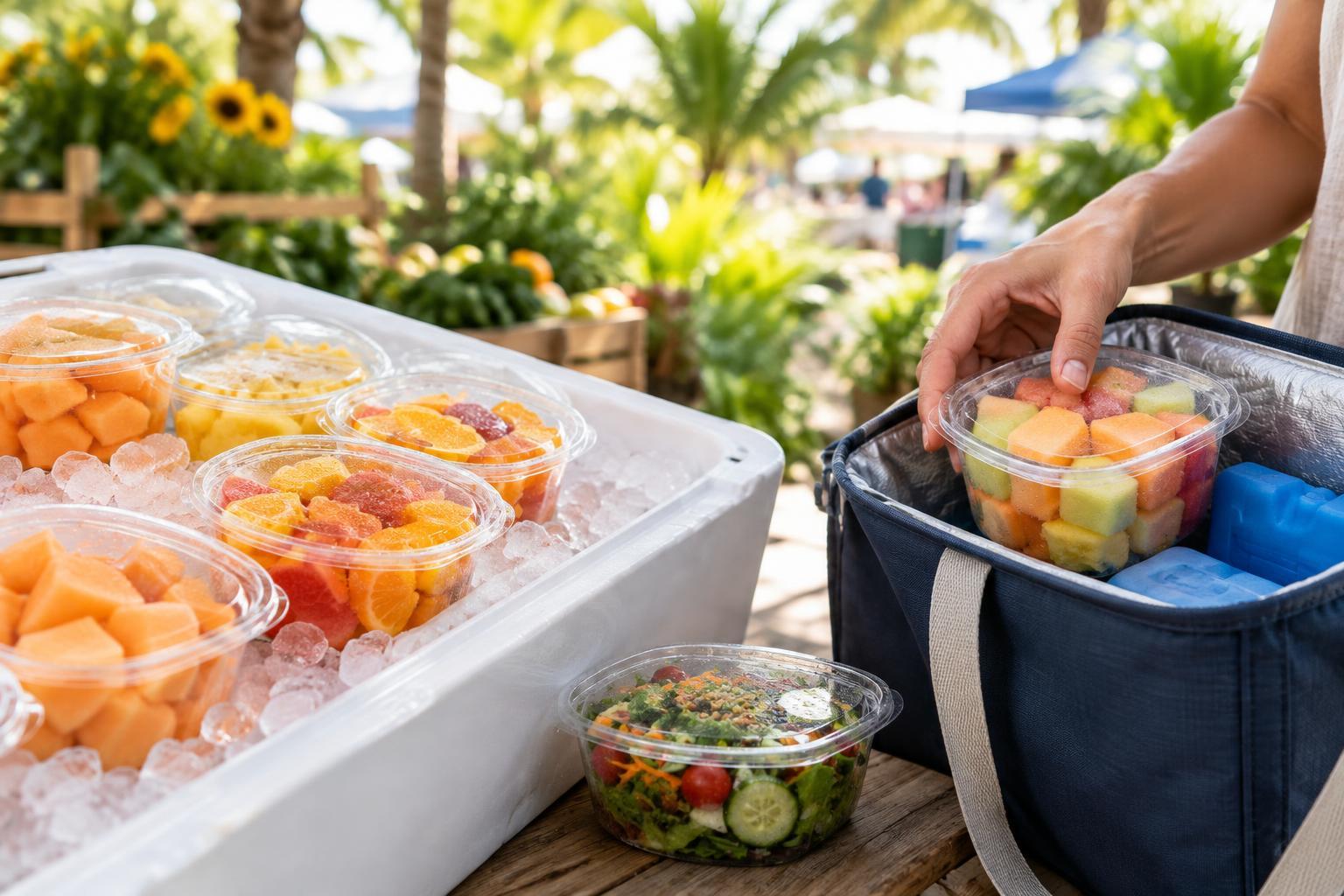
Whole, intact produce and a cup of sliced fruit may sit side by side at a Florida market, but they do not need the same handling. Once fruit or vegetables are cut, their exposed surfaces can pick up contamination more easily, and the pieces may need refrigeration. Treat cut melon, fruit cups, prepared salads and vegetable trays as perishable. Do the same with foods such as dips, soft cheeses, sandwiches and cooked dishes unless the seller can explain how a particular product is safely stored.
Plan your purchases around the trip home. If you expect to stroll for a while, buy shelf-stable items first and chilled foods last. Bring an insulated bag or cooler with frozen ice packs before you leave home, particularly if you have other stops planned. Shade helps with comfort, but it is not a substitute for cold storage.
Look at the display and ask simple questions
For chilled foods, look for a refrigerator, a cooler or a display that keeps the food cold throughout. A container resting above a little melted ice may not be staying cold. Food displayed on ice should be surrounded by enough ice to keep it chilled, with meltwater kept away from the food. If you cannot tell how a prepared item is being held, ask whether it needs refrigeration and how it has been stored during the market.
Check that ready-to-eat foods are covered or otherwise protected from hands, insects and splashes. Serving utensils should be clean and kept with the food they serve. If a vendor handles both payment and food, notice whether they take steps to avoid touching ready-to-eat items with the same hands. These observations cannot prove that food is safe, but visible lapses are a reasonable reason to choose something else.
Packaging matters, too. Choose containers that close securely, have no leaks and are not visibly damaged. Ask what is in a dish if ingredients or allergens are unclear, and check any available storage directions. Do not rely on appearance or smell alone: a food can look and smell normal even when it has not been kept at a safe temperature.
Keep the cold chain on the way home
Put chilled purchases into your cooler promptly, rather than carrying them through the rest of the market in the sun. Keep them at 40°F (4°C) or colder when possible; a cooler thermometer can help you check rather than guess. Close the lid between stops, and keep the cooler in the air-conditioned part of the vehicle instead of a hot trunk. At home, move the food straight to the refrigerator.
As a general food-safety rule, perishable food should not sit unrefrigerated for more than two hours, or more than one hour when the surrounding temperature is above 90°F (32°C). Count time spent at the stall, in your shopping bag and during the drive—not just time after you get home. If you do not know how long a perishable item has been warm, passing on it or discarding it is safer than trying to chill it again.
Keep ready-to-eat purchases separate from raw meat, poultry or seafood in your bags and cooler. Use sealed containers or separate compartments so juices cannot reach fruit, bread or prepared meals. Wash your hands before eating; if a market has limited handwashing facilities, pack what you need for a clean stop.
Give hot foods and leftovers a plan
A hot prepared meal is best eaten while it is still hot. If you are taking it home, avoid letting it sit in a warm car while you continue shopping. Ask the seller whether it is meant to be eaten promptly or chilled for later, and follow any storage instructions. If you cannot keep a hot food hot, get it into the refrigerator within the same time limits used for other perishable foods.
Divide a large leftover portion into shallow, covered containers so it can cool in the refrigerator more readily. Use clean utensils when serving it later, and reheat cooked leftovers thoroughly. Refrigeration slows spoilage, but it does not make food safe again after prolonged time in the heat.
Make the safest choice an easy one
A little preparation leaves more room to enjoy the market. Pack ice packs, leave space in the cooler and decide which foods you will eat right away. When a stall cannot answer a storage question, a chilled item feels warm, or a package is leaking, choose a different product. For a long day without reliable cooling, whole produce that you can wash before preparing at home may be a simpler choice than a cut-fruit cup or ready-made salad.