Pack for the weather before you leave
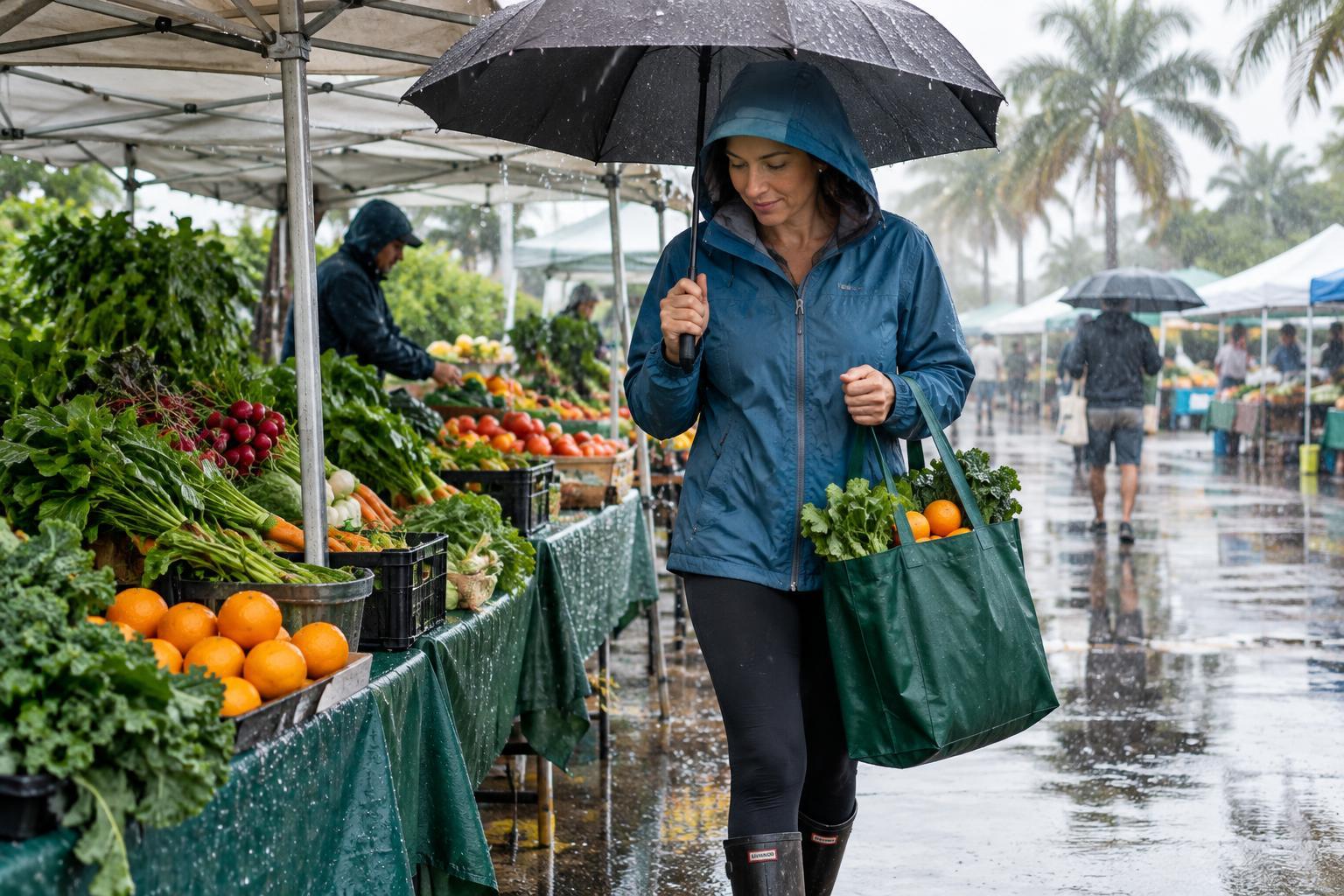
A shower does not have to end a market visit, but it changes what you need to carry. Start with a short shopping list so you can spend less time deciding while standing in a crowded, damp aisle. Wear shoes with good traction, and choose a rain jacket if an umbrella would make it difficult to pass other shoppers. If you do bring an umbrella, keep its edges clear of displays and other people.
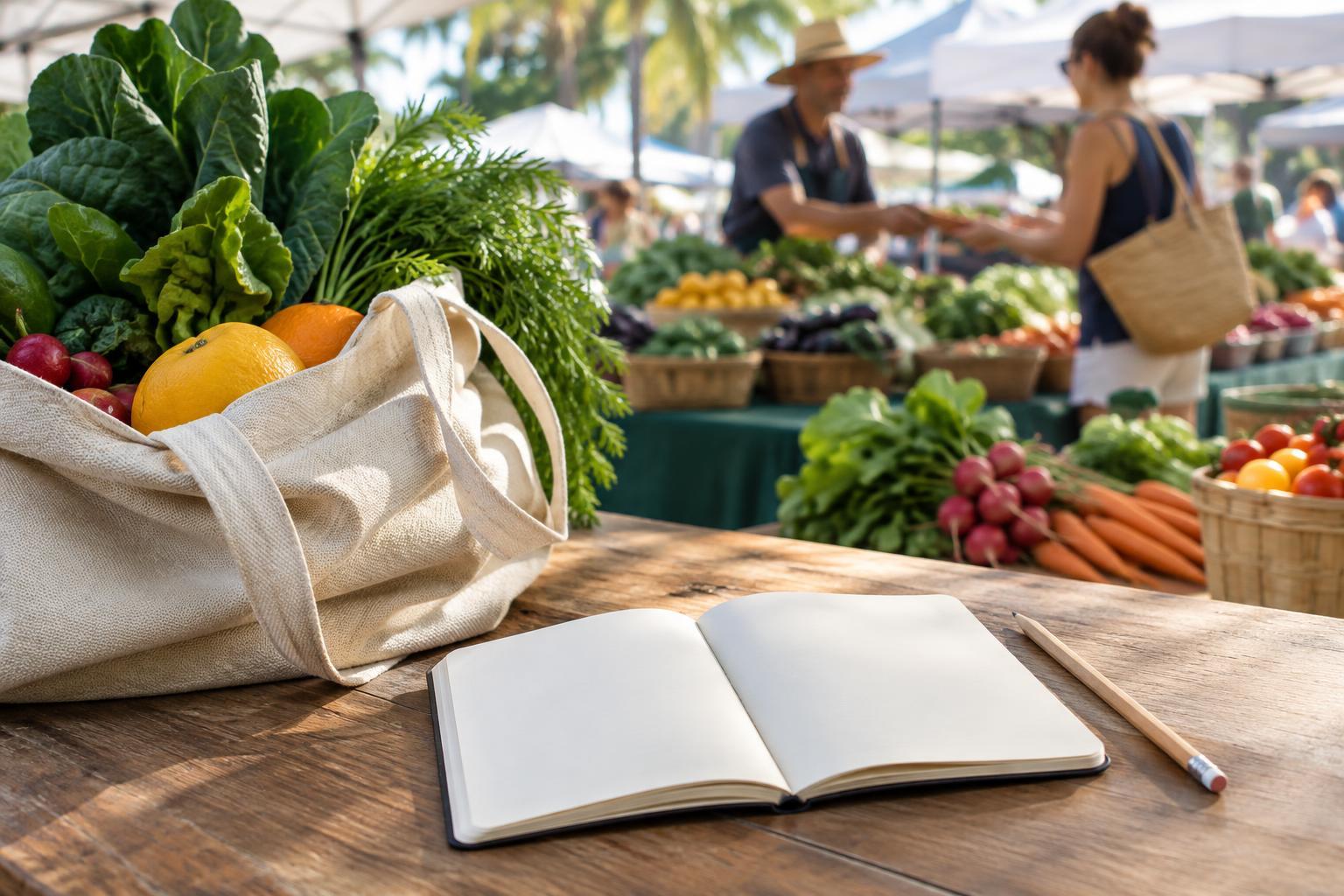
Bring bags that can handle moisture. A washable tote works well for sturdy items, while a smaller waterproof bag or lidded container can protect bread, paper-wrapped purchases, and anything you want to keep dry. Tuck a few clean, reusable produce bags inside your tote. Keep your phone, keys, and payment method in a pocket or pouch you can open without setting your belongings on a wet table.
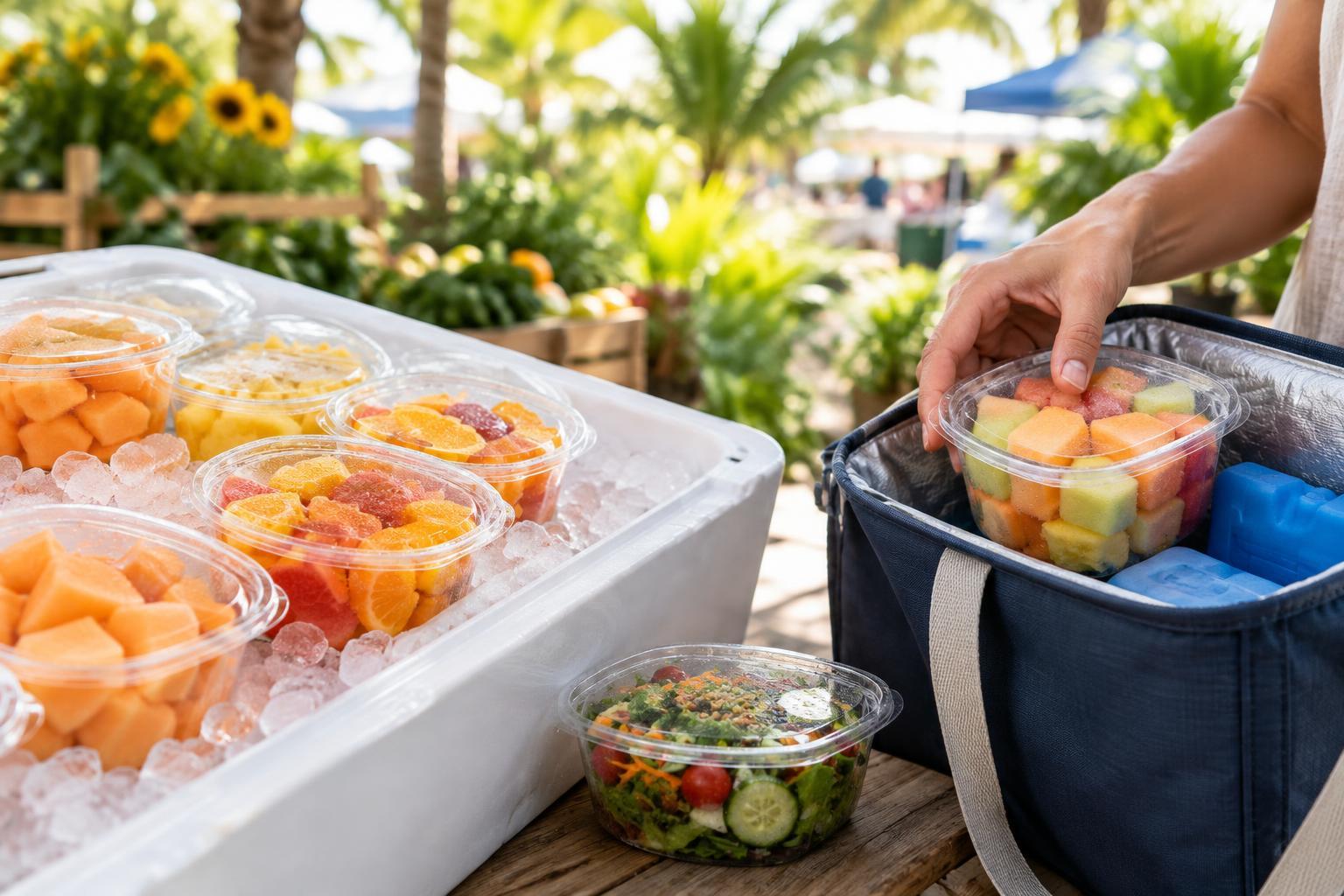
If you plan to buy foods that need to stay cold, bring an insulated bag with a cold pack and make those purchases near the end of your visit. Rain may cool the air, but it is not a substitute for keeping perishable food properly chilled.
Move carefully through wet stalls
At an outdoor market, rain can leave puddles on walkways and make mats, ramps, and painted surfaces slippery. Slow down, look where you step, and allow room for people carrying bags or pushing carts. Avoid standing where water is draining from a tent edge. If a stall has a narrow entrance, wait for another shopper to leave rather than squeezing past a display.
Give vendors room to protect their goods. Keep wet umbrellas, sleeves, and bags away from uncovered produce and baked goods. Ask before reaching under a tent flap or moving a cover to inspect an item; the vendor may be using it to keep stock dry. When you are ready to pay, have your payment method handy so the exchange can happen without leaving purchases in the rain.
Weather conditions can change quickly. If thunder is nearby or a market operator asks shoppers to clear an area, pause your shopping and follow their directions. A stall canopy is shelter from rain, not a place to wait out dangerous weather.
Choose and pack purchases with moisture in mind
Rain on the outside of a whole vegetable is different from water collecting inside its bag. Choose produce as you normally would, looking for sound items without obvious damage, then give it space to breathe. Shake excess water from your own reusable bag before filling it. If leafy greens are already wet, avoid sealing them tightly in plastic for the trip home; a loose bag helps prevent water from pooling around them.
Pack sturdy items such as squash or root vegetables below more delicate berries, tomatoes, and herbs. Keep anything wrapped in paper separate from wet produce. For baked goods, ask whether the vendor has a dry outer bag or place the package directly in the protected container you brought. Prepared foods and other perishables belong in your insulated bag, apart from muddy vegetables or dripping totes.
It is fine to adjust your list to the conditions. If a stall is exposed to heavy rain, you might buy a hardy ingredient there and save a more delicate purchase for another day. You can also ask the vendor which items will travel best in wet weather.
Unpack promptly when you get home
Once home, take everything out of damp totes rather than leaving bags closed until later. Check paper packages for moisture and transfer their contents to suitable storage if needed. Pat noticeably wet produce dry with a clean towel, or spread it out briefly so surface water can drain. Wash produce before preparing or eating it, following your usual kitchen routine.
Put foods that need refrigeration away promptly. Let reusable bags dry completely before folding them for the next trip, and clean any that picked up mud or food residue. A few minutes of unpacking protects your purchases and makes your next rainy market visit easier to manage.