Start with when you plan to eat it
Before reaching for the brightest fruit on a market table, decide whether you want it for lunch, tomorrow’s breakfast or later in the week. Fruit that is soft and fragrant may be perfect for eating today but less suited to a few days on the counter. Firmer fruit can be a better choice if it will travel home in a warm car or wait before you use it.
Ripeness also depends on the fruit. Peaches, mangoes and avocados can soften after harvest, though their flavor depends in part on how mature they were when picked. Strawberries, citrus and pineapple do not become substantially sweeter once harvested, so choose those for the eating quality they have now. If a variety is unfamiliar, ask the vendor how they judge it and how soon they would eat it.
Read color as a clue, not a verdict
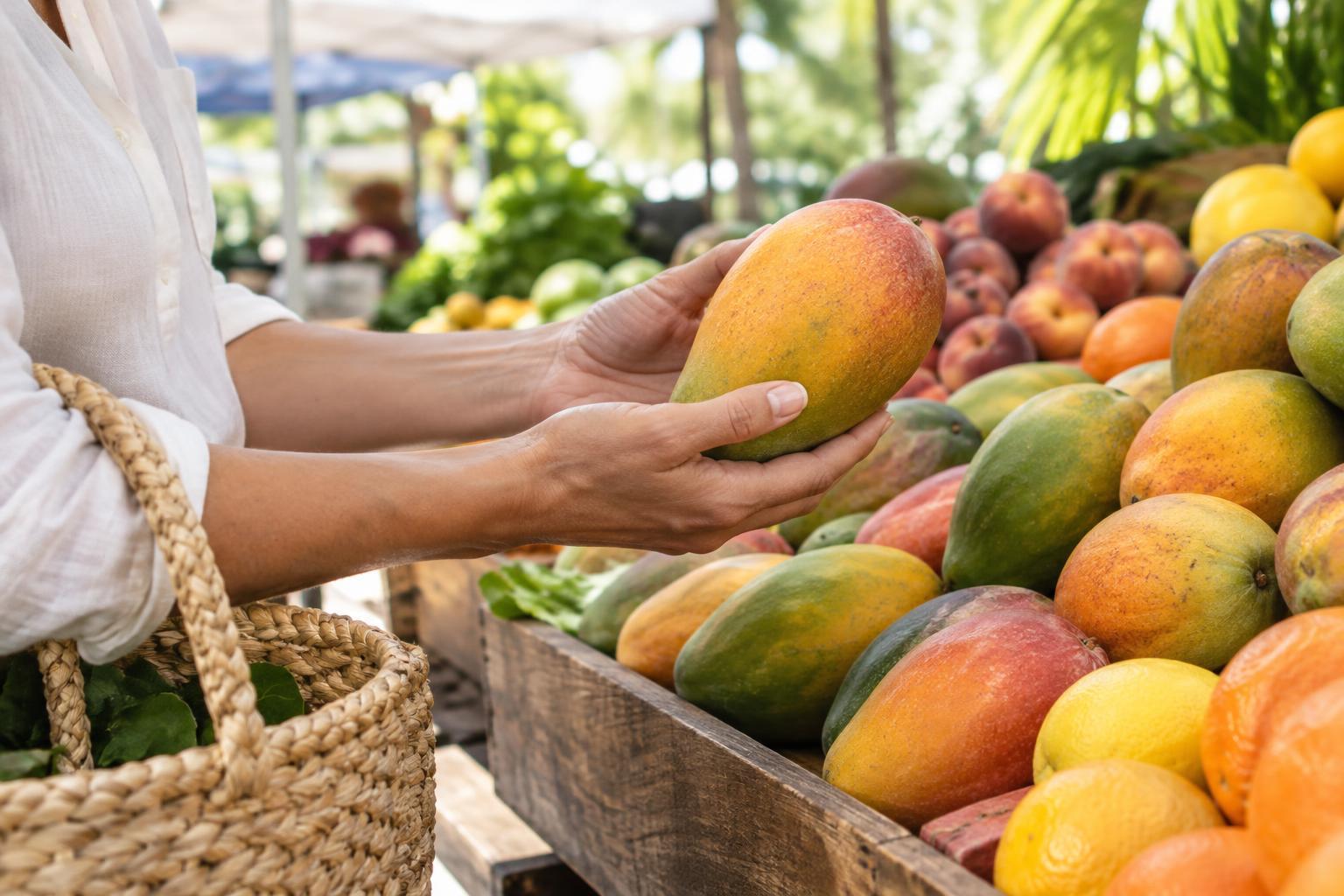
Color can help you spot uneven ripening or damage, but a single ideal shade rarely applies to every variety. A mango’s skin, for example, may stay largely green even when the fruit is ready to eat. Some oranges can have green on the peel and still be ripe inside. Look instead for color that seems typical of the fruit on that table, and ask about a variety you do not recognize.
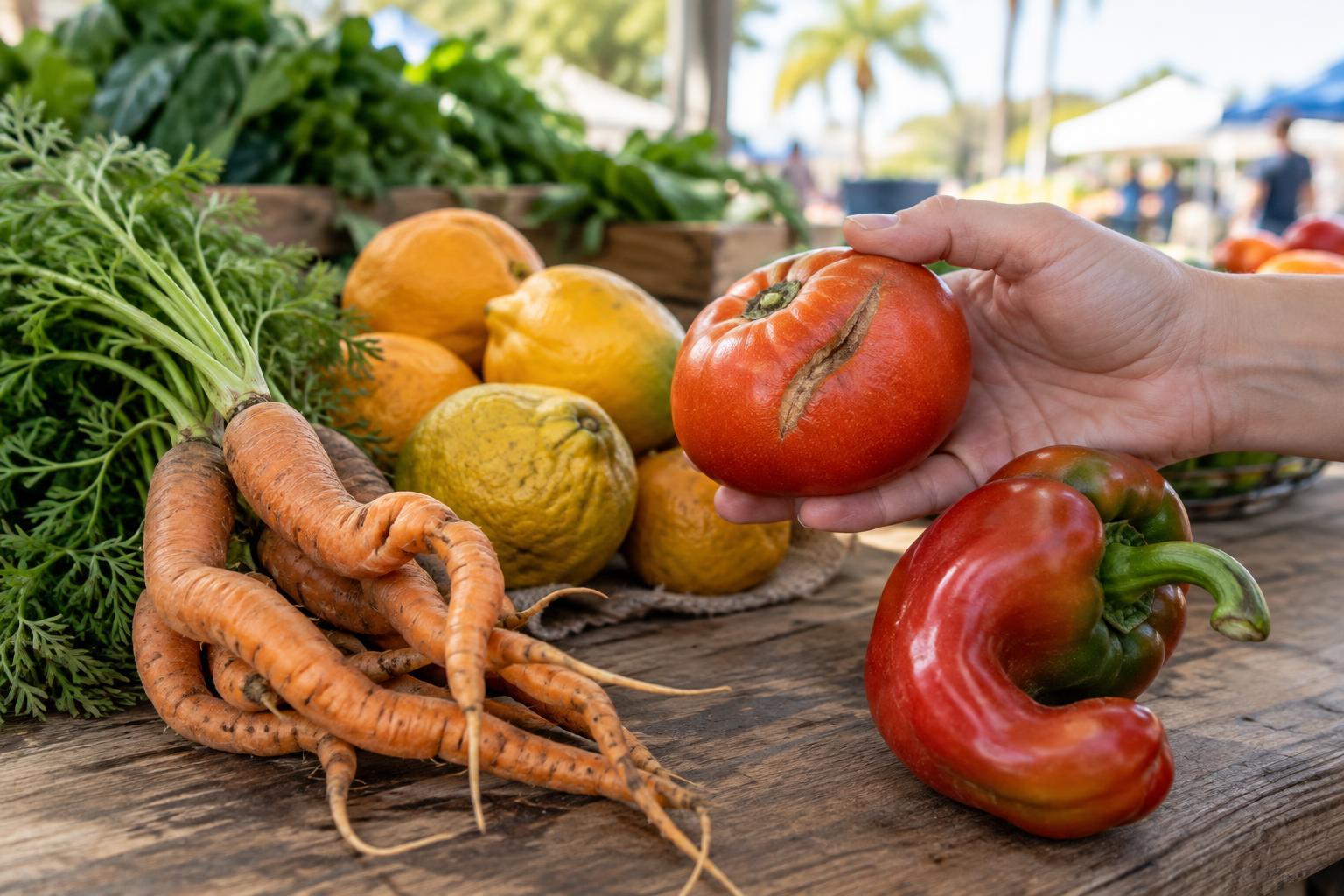
For strawberries, look for berries that are red across most of their surface, with fresh-looking green caps. Large pale or white areas are unlikely to gain much sweetness at home. With peaches, look past a rosy blush, which varies by variety, and notice the underlying color near the stem. Avoid fruit with spreading dark, wet or sunken patches; a small surface mark may be only cosmetic.
Let fragrance guide you gently
A pleasant, recognizable aroma often signals fruit that is ready to enjoy soon. A ripe peach may smell peachy near the stem, while a ripe pineapple may have a sweet scent near its base. Fragrance can be harder to detect in a breezy market, through packaging or on chilled fruit, so its absence is not proof that the fruit lacks flavor.
Be cautious when a fruit smells strongly fermented or sour, particularly if it also has leaking juice or very soft spots. That combination suggests it may be past its best. There is no need to press your nose against produce: hold an item at a comfortable distance if you are allowed to pick it up, or ask the vendor to help you select one.
Check firmness without bruising the fruit
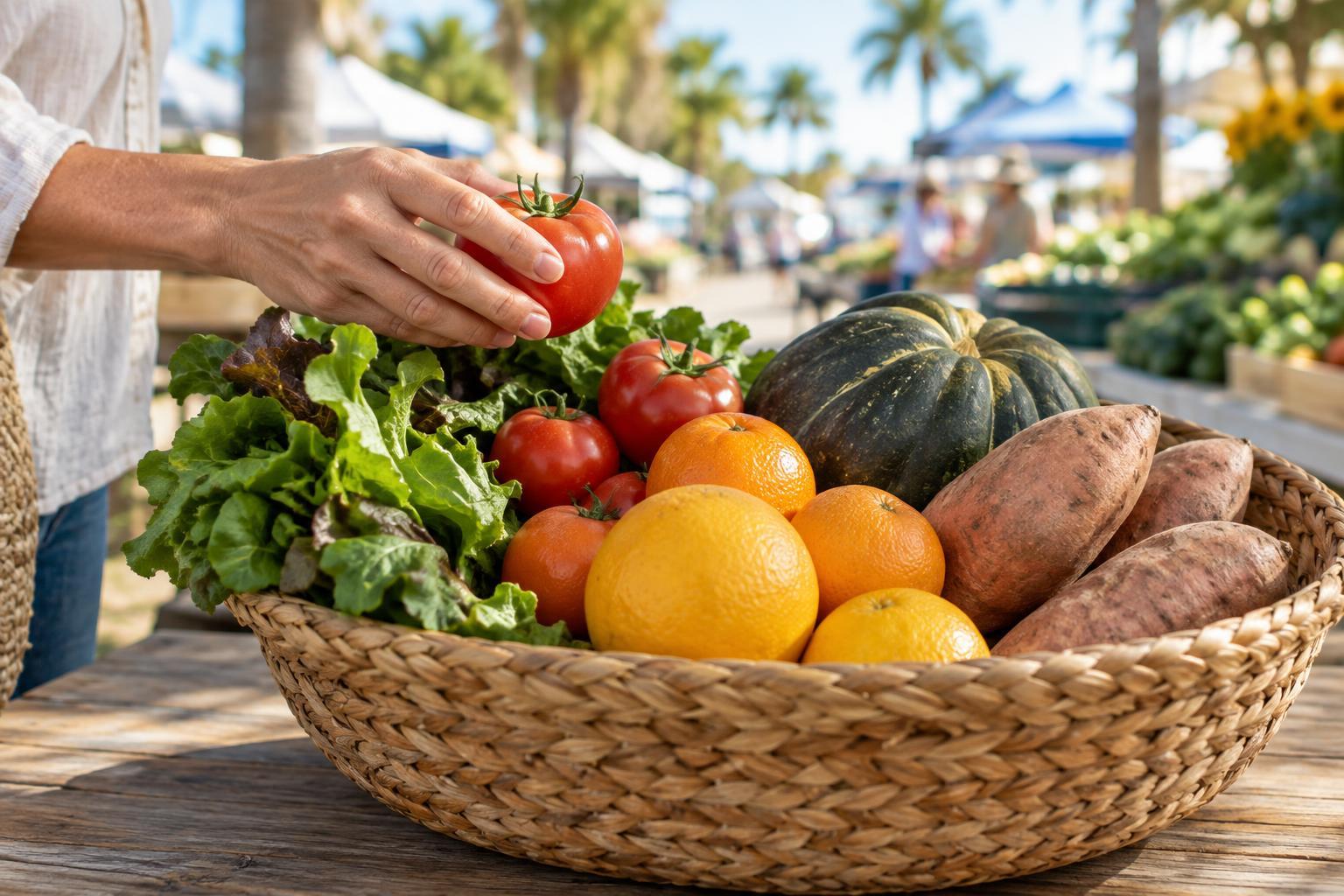
A light touch can tell you more than a hard squeeze. A peach intended for today may give slightly under gentle pressure, while one for later can feel firmer. A ripe avocado often yields a little in the palm of your hand; one that feels mushy or has collapsed spots may be overripe. Mangoes can also give slightly when ready, but the feel varies with the variety and the fruit’s temperature.
For citrus, choose fruit that feels reasonably heavy for its size and has no obvious soft, leaking areas. A melon’s firmness is less useful as a stand-alone test: a watermelon, for instance, should feel solid, and a creamy-colored field spot can be one helpful clue to maturity. None of these checks guarantees sweetness, so combine them rather than relying on one.
Shop kindly, then protect your purchase
At a busy stand, check whether shoppers are invited to select their own fruit. Handle only what you might buy, use clean hands and set items down rather than dropping them back into a pile. If delicate berries are packed in a container, inspect them through the sides and bottom for crushed or moldy fruit instead of rearranging the pack.
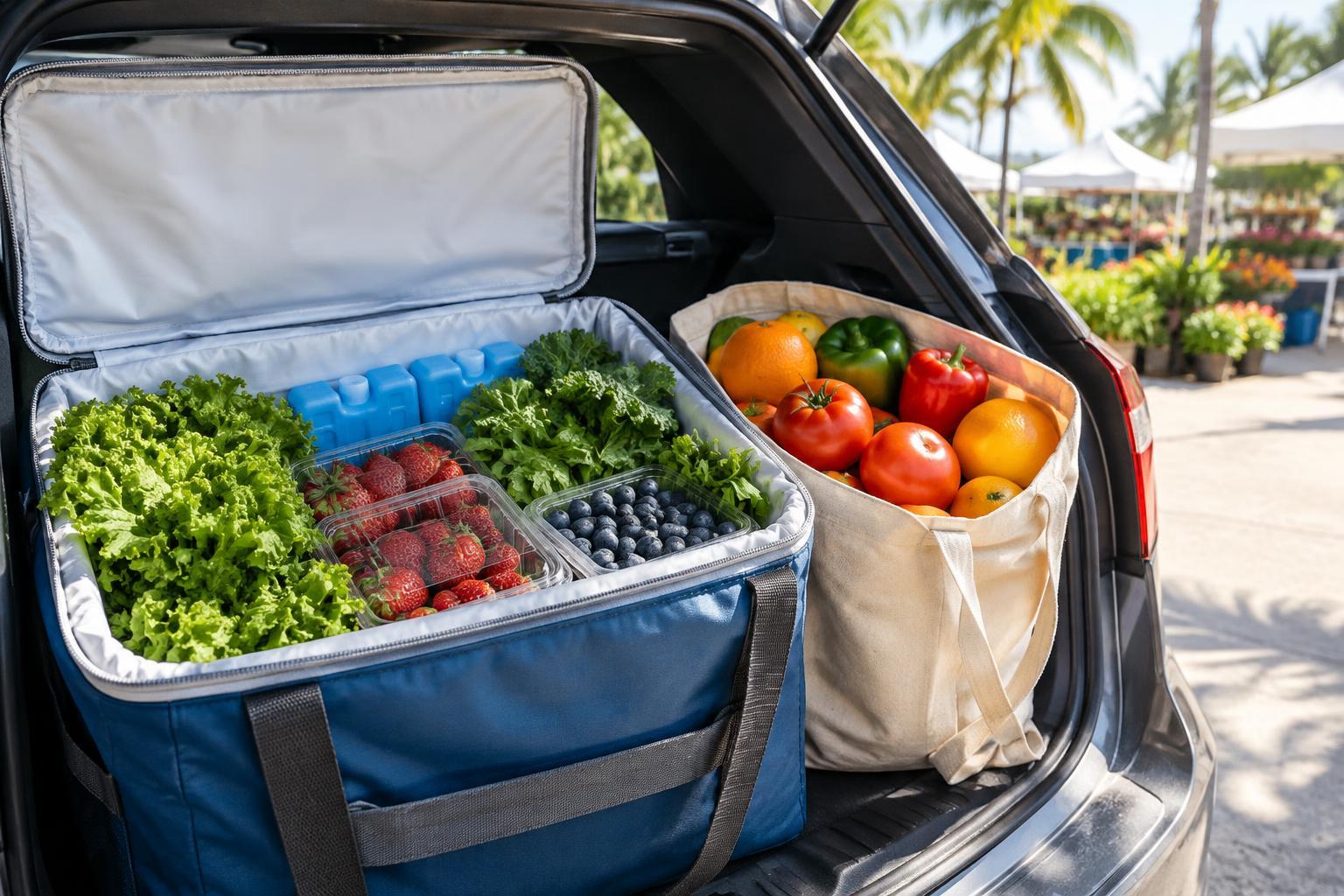
Ask practical questions: Which fruit is ready today? Which will hold for a couple of days? How should this variety feel when ripe? Once you have chosen, keep fragile fruit above heavier purchases and take it out of a hot car promptly. At home, check individual pieces as they ripen. The best market choice is not necessarily the softest or most colorful one; it is the fruit that will be ready when you are.