Plan the trip before you shop
A market visit can easily turn into a long outing: you browse, talk with growers and perhaps make another stop before heading home. In Florida heat, the time between buying food and putting it away matters, especially for cut fruit, tender greens and anything sold chilled. Think of the trip home as part of your shopping plan, not an afterthought.
If you have several errands, visit the market last. Park in the shade when possible, but remember that a parked car can heat up quickly even when the outside air feels manageable. Bring reusable bags for sturdy produce and a separate insulated bag or cooler for foods that need to stay cold. A short drive does not eliminate the need for a cooler if you expect delays.
Pack for the foods you expect to buy
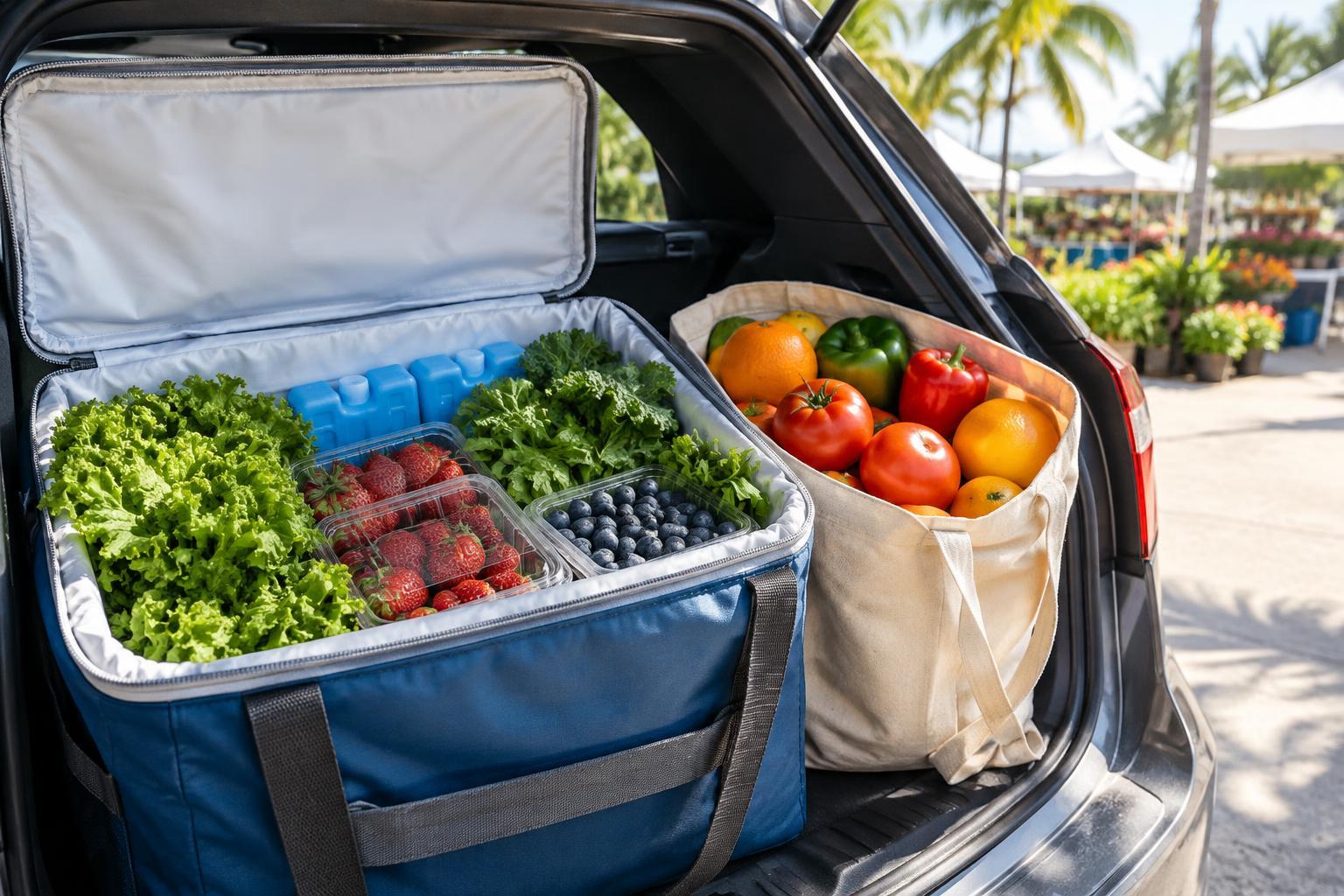
Start with a clean, pre-chilled cooler and enough frozen ice packs to surround chilled purchases. An insulated bag slows warming but does not cool food on its own. Keep the cooler closed while you browse, and place it in the air-conditioned passenger area rather than a hot trunk when practical. A cooler thermometer can help you check that perishable foods stay at 40°F or below.
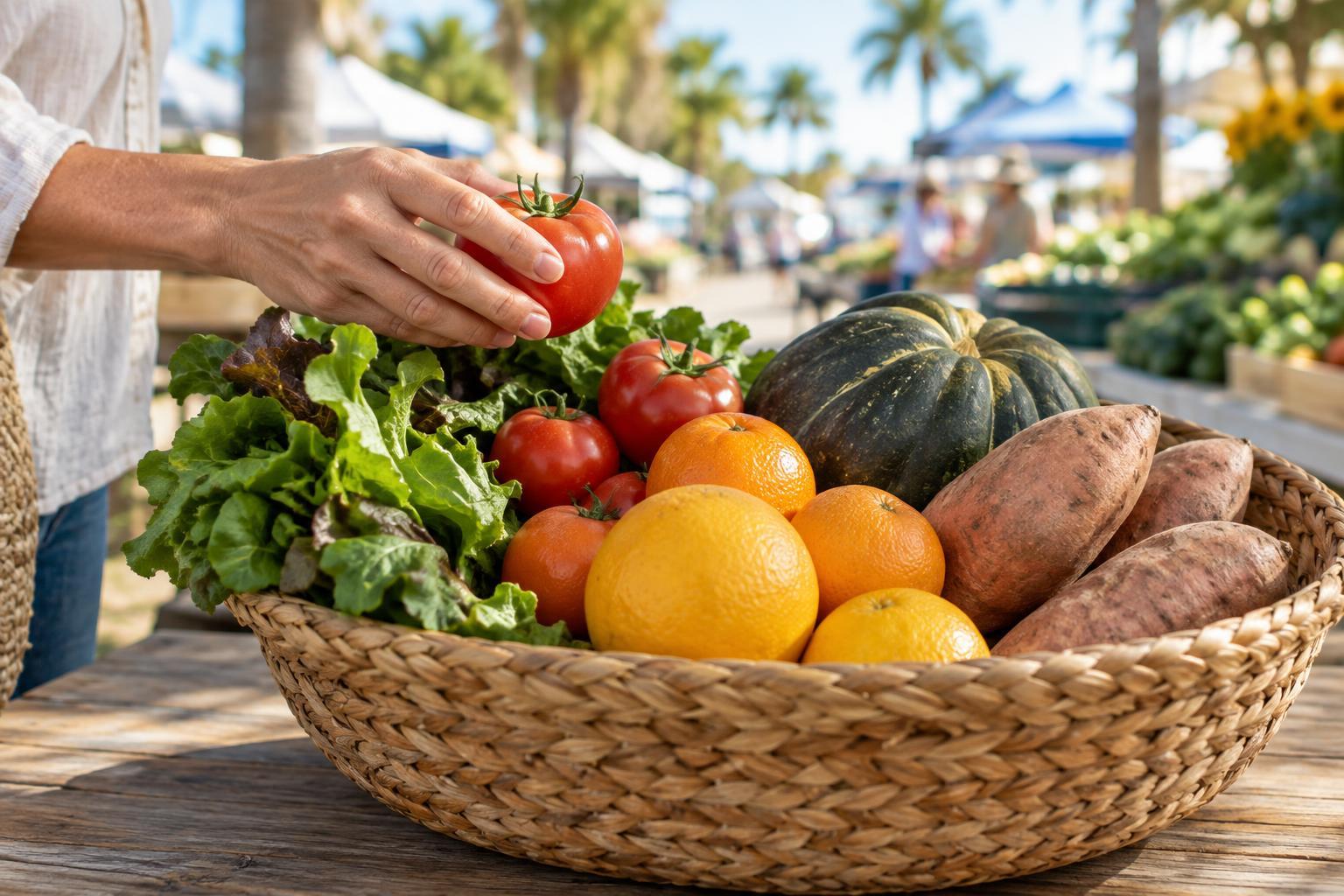
Not every vegetable needs the same treatment. Whole, firm produce such as sweet potatoes and winter squash can usually travel in a ventilated bag for a reasonable trip home. Leafy greens, berries and herbs are more vulnerable to heat and bruising; pack them loosely and keep them cool. Refrigerated items, cut produce and prepared foods belong in the cooler. If a vendor displays an item on ice or sells it chilled, keep it chilled after purchase.
Carry a few bags or containers to prevent heavy items from crushing delicate ones. If you also buy raw meat or seafood, seal it separately and keep it below or away from ready-to-eat foods so leaks cannot reach your produce.
Shop in an order that protects your haul
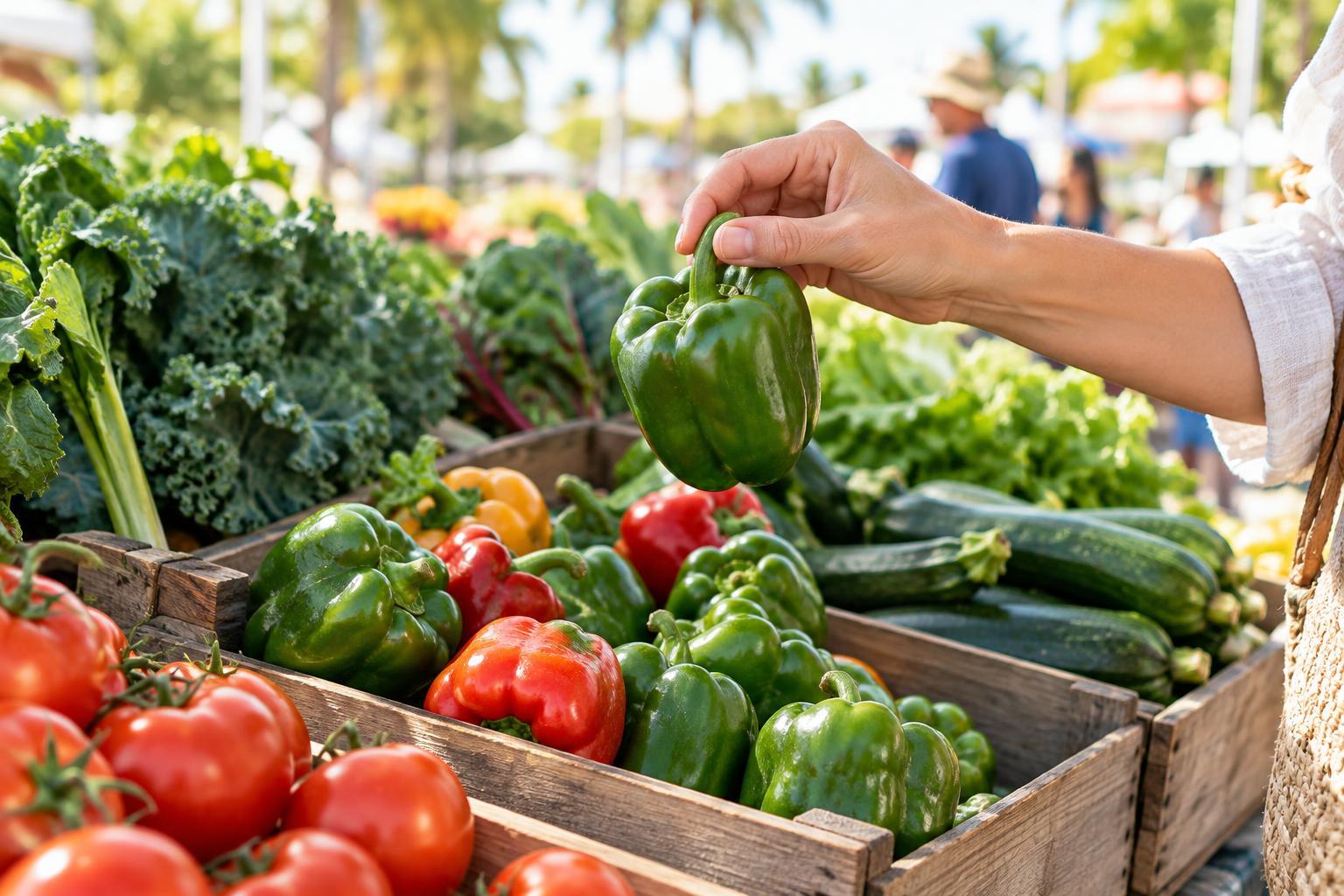
Browse first if you like, then buy heat-sensitive foods near the end of your visit. Put whole, sturdy items in your bag before delicate greens or berries, and move chilled purchases into your cooler promptly. Avoid leaving bags on sunlit pavement or in a parked car while you return for one more stall.
For perishable foods, a useful rule is to refrigerate them within two hours of purchase, or within one hour when the air temperature is above 90°F. A hot car may be much warmer than the surrounding air, so aim for less time rather than treating those limits as a target. If you cannot keep a chilled food cold during a long outing, consider buying it on another trip.
Put everything away when you arrive
Take the cooler inside first. Refrigerate cut fruit, leafy greens, berries, sprouts and other foods that require refrigeration. Check any storage guidance the vendor provides for less familiar produce. Keep whole items that are normally stored at room temperature, such as tomatoes, in a suitable spot away from direct sun; refrigerate them once cut.
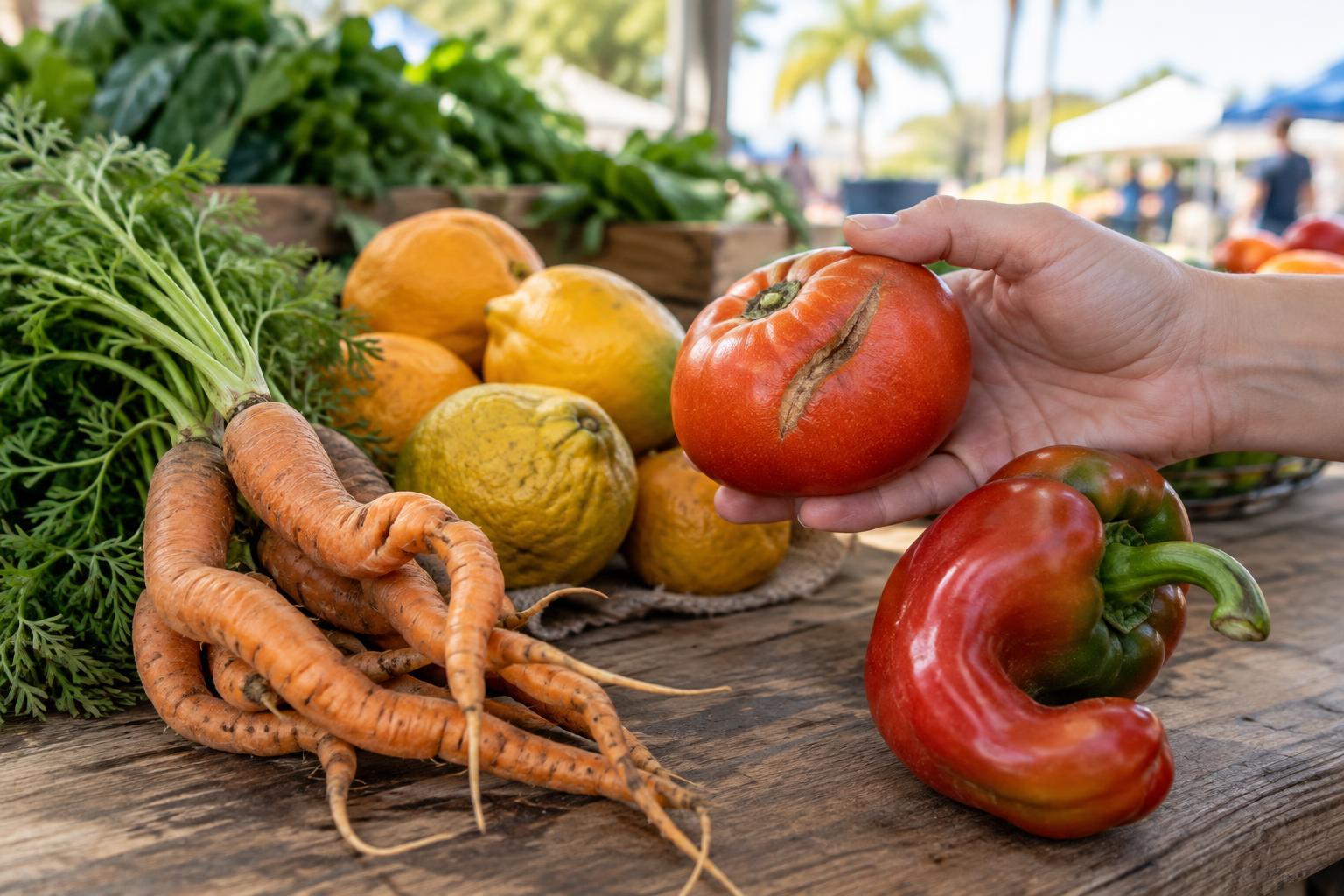
Sort out damaged produce as you unpack. Bruising does not always make a whole fruit or vegetable unsafe, but damaged areas can spoil faster. Use those items soon, and discard produce that is slimy, moldy or otherwise clearly spoiled. If a perishable food has spent too long warm, chilling it afterward does not undo the risk; when in doubt, leave it out.
Wash produce under running water before preparing or eating it, including items you plan to peel. Do not use soap or household cleaners on food. Dry washed produce with a clean towel, and keep cutting boards and utensils for raw meat separate from those used for ready-to-eat produce.
Make the routine easy to repeat
A simple market kit can live near your reusable bags: a clean cooler, ice packs, a few lightweight containers and a small list of items to refrigerate first. Freeze the ice packs ahead of shopping day and clean the cooler after spills. The goal is not to make every market visit complicated. It is to give your produce a cool, orderly trip home so it is ready to enjoy.