Let the weather set the planting calendar
In Florida, leafy greens often have an easier time during the cooler part of the year than in summer’s heat. Mild days can support steady leaf growth, while shorter days may slow it. The right planting date depends on where you garden: north Florida cools earlier and has a greater chance of frost, while south Florida generally stays warm longer. Central Florida falls between the two, with conditions that can vary from one garden to the next.
Rather than planting everything on one date, watch for a stretch of milder weather and start with a small bed or a few containers. In north Florida, that opportunity often arrives in fall; gardeners there may also plant again as winter gives way to spring. Farther south, waiting until fall heat eases can help tender greens get established. Check the expected mature size and temperature guidance on seed packets, then adjust based on how plants respond in your garden.
Choose greens for the leaves you like to eat
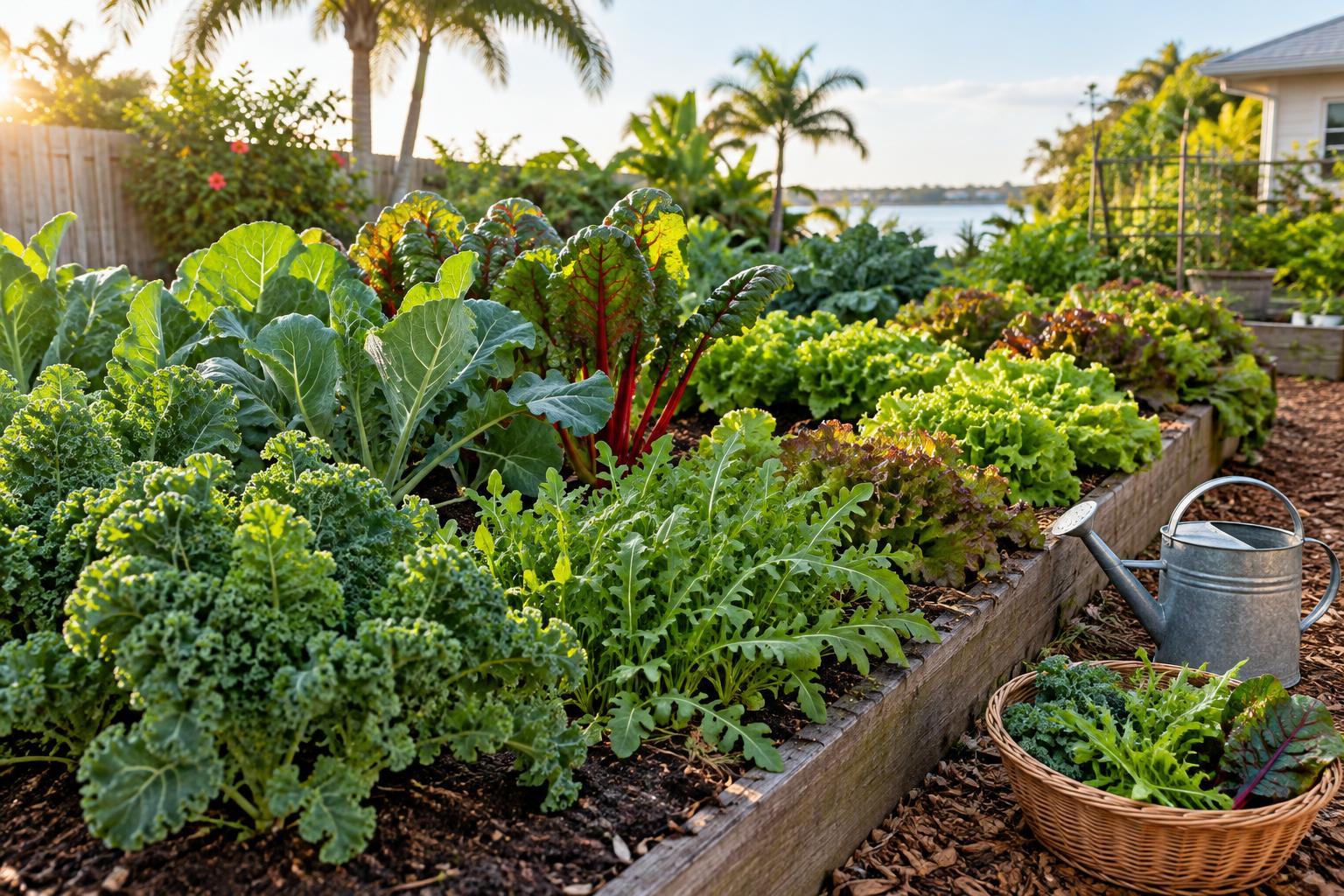
Lettuce, arugula, spinach, kale, collards, mustard greens, and Swiss chard give a home grower plenty of choices. Lettuce and arugula make tender salad harvests when conditions are mild. Kale, collards, and mustard greens offer sturdier leaves for sautéing, simmering, or adding to soups. Chard provides colorful stems as well as leaves and may keep producing as temperatures begin to rise, though heat can still affect its quality.
Your kitchen can guide your planting plan. If you want salads, try a loose-leaf lettuce and arugula. If you cook greens often, give more room to collards, kale, or mustard. Spinach appeals to many gardeners but can be less forgiving of warmth, so it is best treated as a cool-weather experiment rather than a guaranteed crop everywhere in the state. Plant a modest amount of several greens first; you can give more space to the ones that grow and taste best for you.
Give roots room, drainage, and consistent moisture
Most leafy greens grow best with enough sun for healthy growth, but tender leaves may benefit from some afternoon shade as warmer weather approaches. Choose a spot that drains well. In a garden bed, loosen the soil and mix in finished compost before planting. In containers, use potting mix rather than garden soil, and make sure water can leave through drainage holes. A container close to the kitchen can make it easier to notice when plants need water—or when leaves are ready to pick.
Seeds of quick-growing greens can be sown directly where they will grow; transplants can give slower-growing crops a head start. Follow packet spacing once seedlings appear. Crowded plants compete for light and airflow, and thinning them gives the remaining leaves space to develop. Keep the soil evenly moist while seeds germinate and plants establish, checking containers more often because they can dry out quickly. Water the soil gently rather than repeatedly soaking the leaves.
Plant a little at a time for a longer harvest
A whole packet of lettuce planted at once may become ready at once. For greens you use regularly, sow a short row or a small container, then plant another after the first seedlings are growing. This staggered approach spreads the harvest and lets you change course if the weather turns unusually warm or cool. Leave room between plantings so you can tend and harvest each one without trampling its neighbors.
Many leafy greens can be harvested by taking the outer leaves and leaving the center to grow. Pick leaves while they are tender, using clean hands or snips, and avoid removing so much that the plant struggles to recover. If lettuce or arugula sends up a flower stalk, its leaves may become bitter. You can taste a leaf before deciding whether to keep harvesting or clear the space for another planting. Wash harvested greens well before preparing them.
Watch for trouble and learn from each season
Check the undersides of leaves as you water. Chewed edges, clusters of small insects, or yellowing foliage are easier to address when noticed early. Remove badly damaged leaves, make sure plants are not overcrowded, and identify a pest before choosing a control method. Heat, dry soil, and waterlogged roots can also stress greens, so a struggling plant does not always point to an insect problem.
Keep brief notes on what you planted, roughly when you planted it, and whether the harvest lasted as long as you hoped. Those observations will be more useful than a single statewide calendar. With a few suitable greens and repeat plantings through your mild-weather window, even a small Florida garden can provide fresh leaves for salads and cooked dishes.