Start with the season, not the seed packet
Florida’s growing calendar depends on where you live. A mild winter in the south can look quite different from a cold night in the Panhandle, while summer heat, humidity, and heavy rain challenge gardeners across the state. Instead of giving all three herbs one planting date, think about the conditions each prefers: basil likes warmth, parsley is more comfortable in cooler weather, and rosemary needs especially good drainage.
Choose a spot you can visit often, preferably close to the kitchen. Most culinary herbs need plenty of light, but a plant in a pot beside a reflective wall may experience more heat than one in a garden bed. Watch how long the spot receives sun and how quickly its soil dries after rain. Those observations will help you make better decisions than a calendar alone.
Give basil the warm stretch
Basil is a natural choice for Florida’s warm months. Plant it after the risk of frost has passed in your area, or keep a container where you can move it indoors during a cold spell. It grows well in a bed or pot with fertile, freely draining soil. Keep the soil evenly moist rather than constantly wet, checking containers more often during hot, windy weather.
Harvest by snipping a stem just above a pair of leaves. This encourages branching and gives you tender growth for salads, sauces, and sandwiches. Removing flower buds can keep a plant focused on leaves, though you can also let some bloom for visiting pollinators. In prolonged summer heat, basil may need relief from harsh afternoon sun. If leaves spot or decline during humid, rainy periods, improve airflow and avoid crowding plants together.
Make room for parsley when it cools down
Parsley often feels more at home during Florida’s cooler stretch than at the height of summer. Try sowing seeds or setting out young plants as temperatures ease in your area. Parsley seed can be slow to sprout, so keep the surface gently moist and be patient. A container gives you control over its soil and lets you shift the plant if a warm spell makes its location uncomfortable.
Give parsley regular water and harvest the outer stalks near the base, leaving the younger center growth to continue. Flat-leaf and curly types can both supply fresh flavor; choose whichever you enjoy using. As days grow hotter, parsley may send up a flower stalk or produce less appealing leaves. Rather than fighting the season indefinitely, plan to start a new crop when cooler conditions return.
Treat rosemary as a drainage project
Rosemary asks for a different routine. It tolerates some dryness once established but can struggle when its roots stay wet, especially during rainy, humid weather. Put it in a pot with drainage holes and a fast-draining mix, or choose a raised, well-drained garden spot. Avoid planting it in a low area where water collects. Start with a healthy transplant if you want leaves sooner; rosemary is typically slower to establish than basil.
Check the soil before watering rather than following the same schedule you use for parsley. Letting the upper soil dry between waterings is generally safer than keeping it soggy, although a newly planted rosemary still needs attention while its roots develop. Harvest small sprigs as needed without cutting deeply into old, leafless wood. If a plant seems to decline after repeated rain, inspect the drainage before adding water or fertilizer.
Build a small, flexible herb routine
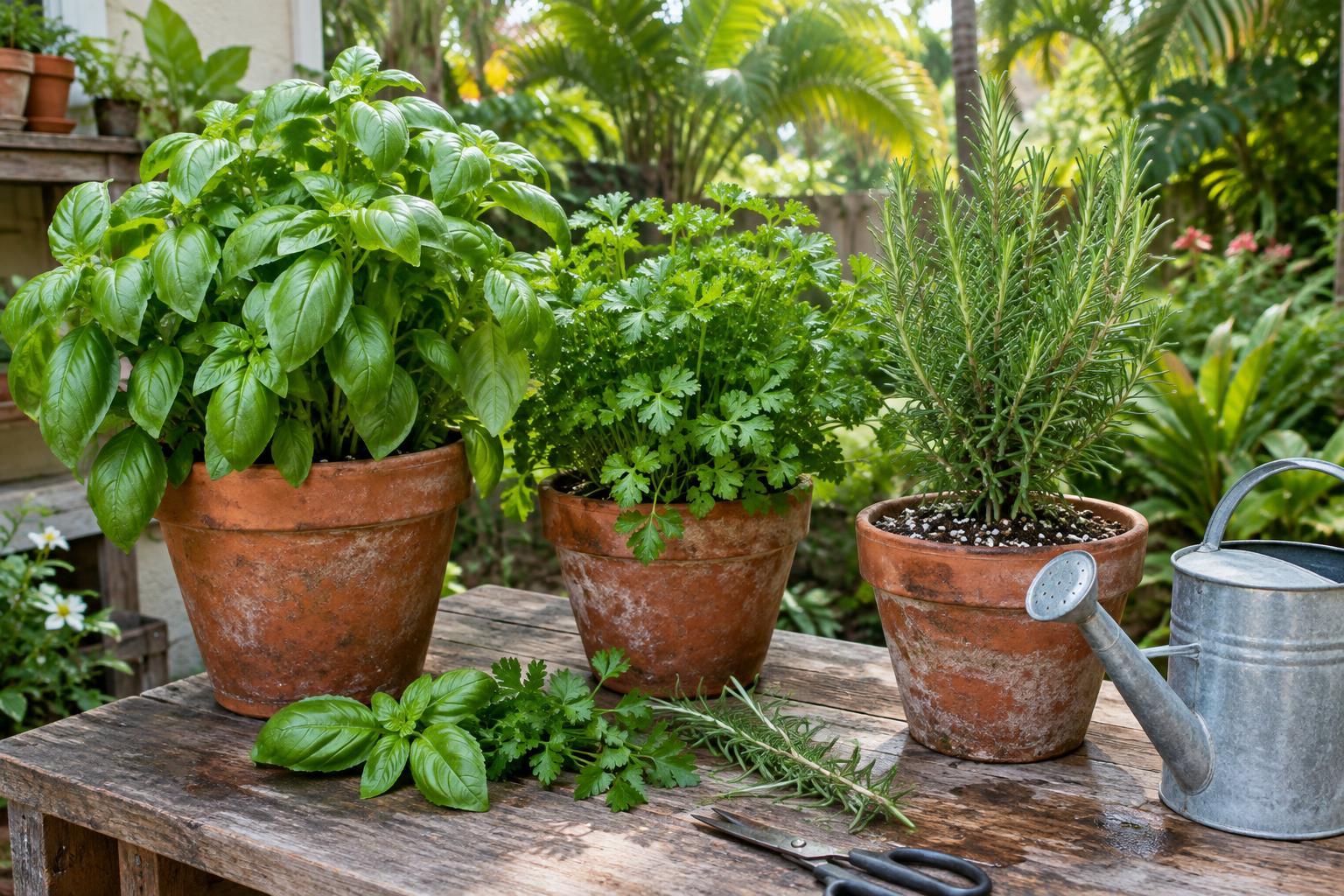
Keeping these herbs in separate pots is a simple way to respect their different needs. Basil can have consistent moisture, parsley can occupy a comfortable cool-season position, and rosemary can dry out between waterings. Pots also make it easier to move tender plants away from frost or shift them out of punishing afternoon heat. Use containers large enough to hold roots and soil without drying immediately, and empty saucers after heavy rain.
Check plants a few times a week for dry soil, damaged leaves, and insects, looking under leaves as well as on top. Harvest modestly and often, then use the cuttings while their flavor is fresh: basil in a quick tomato salad, parsley scattered over cooked vegetables, and rosemary added sparingly to roasted potatoes. The most useful herb garden is not necessarily a permanent one. Replanting basil or parsley as conditions change, while giving rosemary a carefully drained home, can keep a small Florida garden productive through more of the year.