Think of strawberries as a cool-season crop
In Florida, strawberries generally do best during the cooler part of the year. Rather than planting in spring for a summer harvest, home gardeners usually set out young plants in fall and pick fruit through winter and into spring, depending on local conditions. Heat can slow fruit production and put plants under stress, so planting time matters as much as planting technique.
Choose healthy transplants from a nursery rather than starting with berries from the grocery store. Look for varieties recommended for Florida growing conditions; a local nursery or county Extension office can help you choose one suited to your area. North Florida gardens may face more cold nights than gardens farther south, while South Florida gardeners may need to pay closer attention to late-season heat. Treat planting calendars as guides and adjust for the weather and your location.
Give the roots drainage and the leaves sunshine
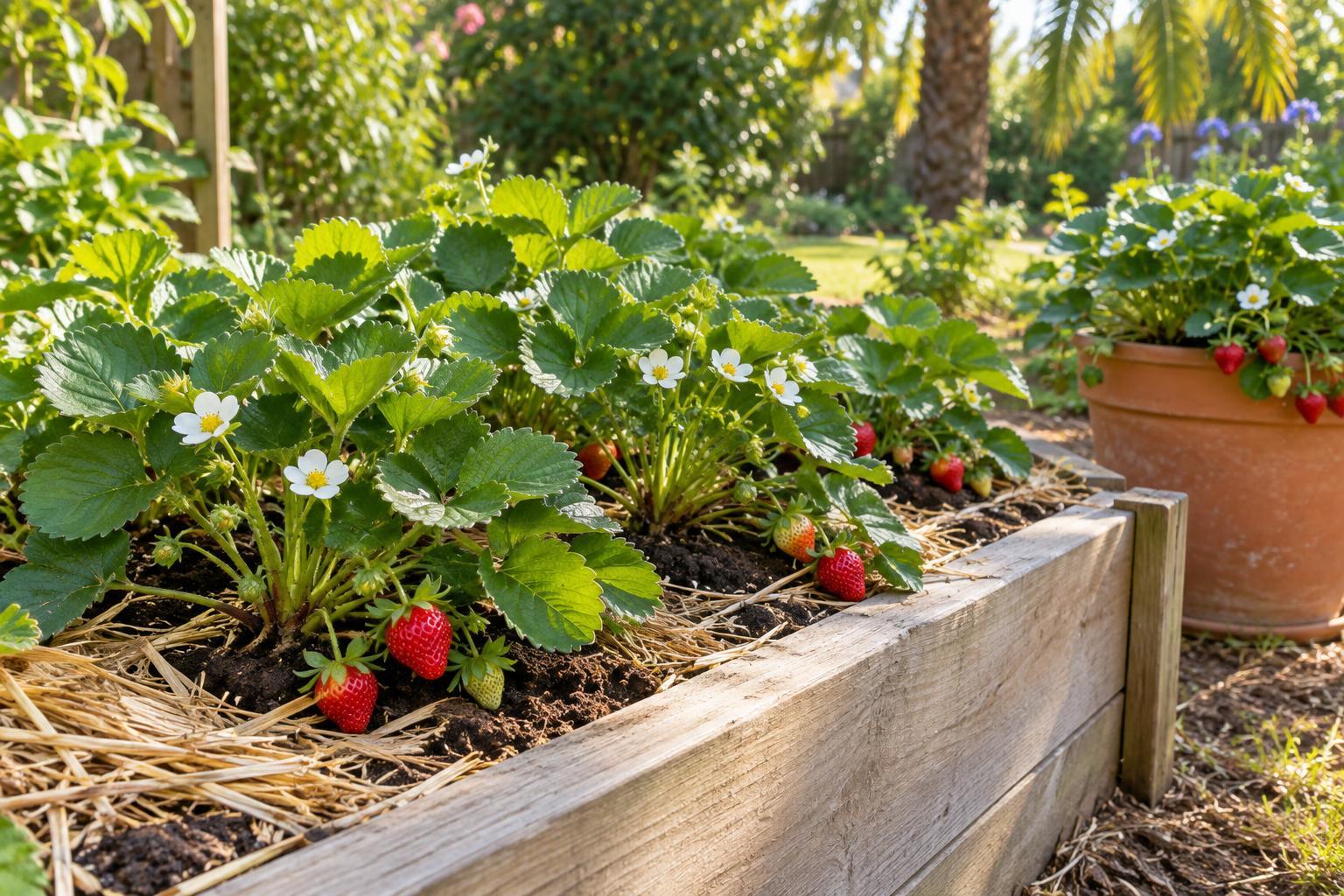
Pick a spot that receives plenty of direct sun, ideally at least six hours a day. Strawberries also need soil that drains well. If water stands after rain, use a raised bed or a container with drainage holes rather than planting directly in the ground. Work compost into garden soil before planting to improve its texture, but avoid making it so rich or heavily fertilized that plants produce abundant leaves at the expense of fruit.
Space plants roughly 12 to 18 inches apart so air can move around the leaves and you can reach the berries. The crown—the short, central point where leaves meet roots—should sit at soil level. Burying it can encourage rot; leaving the roots exposed can dry them out. Water each transplant after planting to settle soil around its roots. If you are growing in containers, choose a pot deep enough for the roots and large enough that the soil will not dry out immediately on a sunny day.
Build a steady watering routine
Strawberries grow best with consistent moisture, not soggy soil. Check the soil with a finger and water when the upper layer begins to dry. Containers often need more frequent attention than beds, especially during warm or windy weather. Water at the base of the plants when possible; a drip line or soaker hose can keep leaves and fruit drier than overhead watering. If you water by hand, morning is a useful time because splashed foliage has a chance to dry.
A layer of clean straw or other suitable mulch helps keep berries off the soil, reduces splashing and slows moisture loss. Leave a little space around each crown rather than piling mulch over it. Feed plants modestly according to the directions on a fertilizer intended for fruiting plants or the guidance of a local Extension office. More fertilizer is not necessarily better: vigorous foliage does not guarantee a good berry harvest.
Watch for trouble before it spreads
Check plants regularly, including the undersides of leaves and fruit hidden beneath the foliage. Birds, slugs and small insects may find berries before you do. Damaged or rotting fruit should be removed promptly so it does not sit against healthy berries. Good spacing, drainage and careful watering can also help limit the damp conditions in which fruit rots tend to develop.
If birds are taking ripe fruit, a lightweight garden net can help, provided it is secured so wildlife cannot become tangled. Row cover may protect plants during a cold spell, but it should not be left in place indefinitely once flowers need access to pollinators. Avoid assuming every spot or chewed leaf calls for a spray. Identify the problem first, then choose the least disruptive practical response.
Pick ripe berries and plan for next season
Strawberries do not become sweeter after picking, so wait until each berry is fully red before harvesting. Gently pinch or snip the stem rather than pulling on the fruit. Check plants often during productive periods: frequent picking lets you catch berries before they become overripe or attract pests. Keep harvested fruit cool, and wash it just before eating rather than before storage.
As Florida weather warms, plants may produce less fruit and become harder to keep healthy. Many home gardeners choose to start with fresh, healthy transplants the following fall instead of carrying plants through summer. Whether you grow a few pots by the back door or a full raised bed, the essentials remain the same: plant for the cool season, protect the crown, keep roots evenly moist and give ripening berries a clean place to rest.