Start with a tree and a place to put it
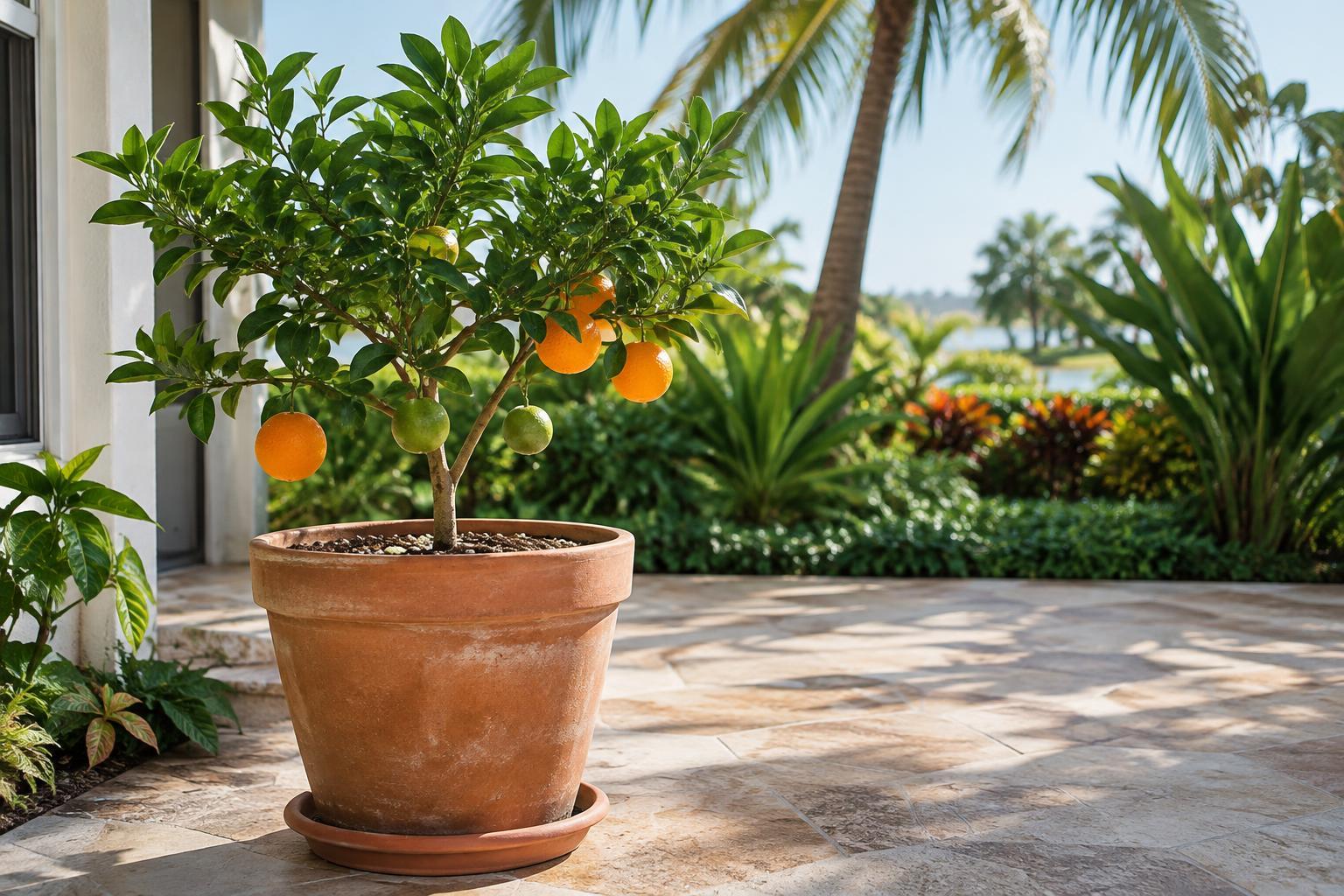
Container citrus can suit a Florida patio, courtyard, or small yard, but it still needs room for its canopy and roots. Choose a healthy, appropriately sized tree from a reputable nursery, and check its label for the variety, expected size, and care guidance. A smaller-growing variety may be easier to manage in a pot than a vigorous tree that needs frequent pruning and repotting.
Give the tree a location with plenty of direct sun. Around six to eight hours a day is a useful goal for citrus, although a site’s heat and exposure also affect how quickly a pot dries. If you are moving a tree from a shaded nursery area into stronger sun, increase its exposure gradually. Leave space around the canopy for airflow, and choose a spot where you can reach the pot easily to check the soil and water it.
Make drainage the first priority
Use a sturdy container with open drainage holes and enough space for the existing root ball. A very large pot is not necessarily better: excess mix around a small root system can stay wet for too long. Fill the container with a potting mix intended for containers rather than garden soil, which may compact in a pot. A citrus-friendly mix should hold some moisture while allowing extra water to drain away.
Set the tree at about the same depth it grew in its nursery container. Keep the base of the trunk above the mix instead of burying it, and leave a little room below the rim so water can soak in without spilling over. Skip a layer of rocks at the bottom; it does not replace a well-draining mix and open holes. Raise the pot slightly if needed so water can escape, and empty any saucer that holds standing water.
Water by checking the mix
Florida weather can change a container’s watering needs quickly. A pot may dry fast during a hot, breezy stretch and remain damp much longer after rain. Before watering, feel the mix a little below the surface. When it begins to dry there, water thoroughly until some runs from the drainage holes. Then let the excess drain rather than giving the tree another small splash. The aim is an evenly moist root zone that is not constantly soggy.
Leaves can signal trouble, but they do not always reveal the cause. Drooping or yellowing may occur when roots are too dry or too wet, so check the mix before changing your routine. As the tree grows, roots may crowd the pot and cause water to run through unusually fast. That can be a sign to inspect the roots and consider moving up to a slightly larger container with fresh mix.
Feed and prune with a light hand
Container-grown citrus depends on you for nutrients because watering gradually carries them out of the mix. Choose a fertilizer labeled for citrus or container citrus and follow its directions for the tree’s size and the product’s timing. More is not always better: overfeeding can stress roots, particularly in a pot. Water and observe the tree regularly, and avoid treating every pale leaf as a request for extra fertilizer.
Prune mainly to remove dead or damaged growth, crossing branches, or shoots that emerge from below the graft union, if the tree is grafted. Keep tools clean, and avoid removing large amounts of healthy canopy at once. If flowers or small fruit drop, do not assume the tree needs a quick fix; young or stressed trees may not hold every fruit. Consistent light, drainage, and watering are more useful starting points than a drastic change in care.
Plan for cold spells and plant health
A container offers flexibility when temperatures fall, but its roots are also more exposed than roots in the ground. If cold weather is expected, move a manageable pot to a sheltered location before it arrives. Keep the tree near good light, and avoid leaving it in a dark space for extended periods. A heavy pot may be easier to reposition on a plant caddy; plan for its weight before filling it.
Check leaves and new growth regularly for pests, damage, or unusual changes. Citrus in Florida can face serious disease pressures, so buy from reputable sources and avoid moving citrus plants or cuttings of uncertain origin. If a tree develops persistent, unexplained symptoms, seek local horticultural guidance rather than guessing at a treatment. Good daily care cannot prevent every problem, but it gives you a better chance of noticing one early—and of enjoying the simple pleasure of tending a tree close to home.