A term with a history, not a single menu
In Florida, “Cracker” can refer to a rural cultural identity associated in part with cattle herding and ranching. Some Floridians use the term proudly for themselves or their families. It can also sound dismissive when applied to someone else. In food writing, it is best used with context: “Cracker cooking” describes a set of traditions and associations, not a precise cuisine with one agreed-upon menu.
You may encounter explanations linking the name to the sound of cattle drivers’ whips, but the term’s history is more complicated than a single neat origin story. What matters at the table is the setting: people preparing filling meals with the ingredients, equipment, time, and labor available to them. A ranch household, a camp away from home, and a modern restaurant may all serve different food while drawing on that same image of rural Florida.
Cattle work and everyday meals
Florida ranching involves more than putting beef on a plate. Cattle work could take people away from a home kitchen, while households still needed dependable daily meals. Food had to suit the occasion. A camp meal might rely on a pot, a fire, and provisions that traveled well; a meal at home could make fuller use of a garden, stored foods, and ingredients obtained nearby.
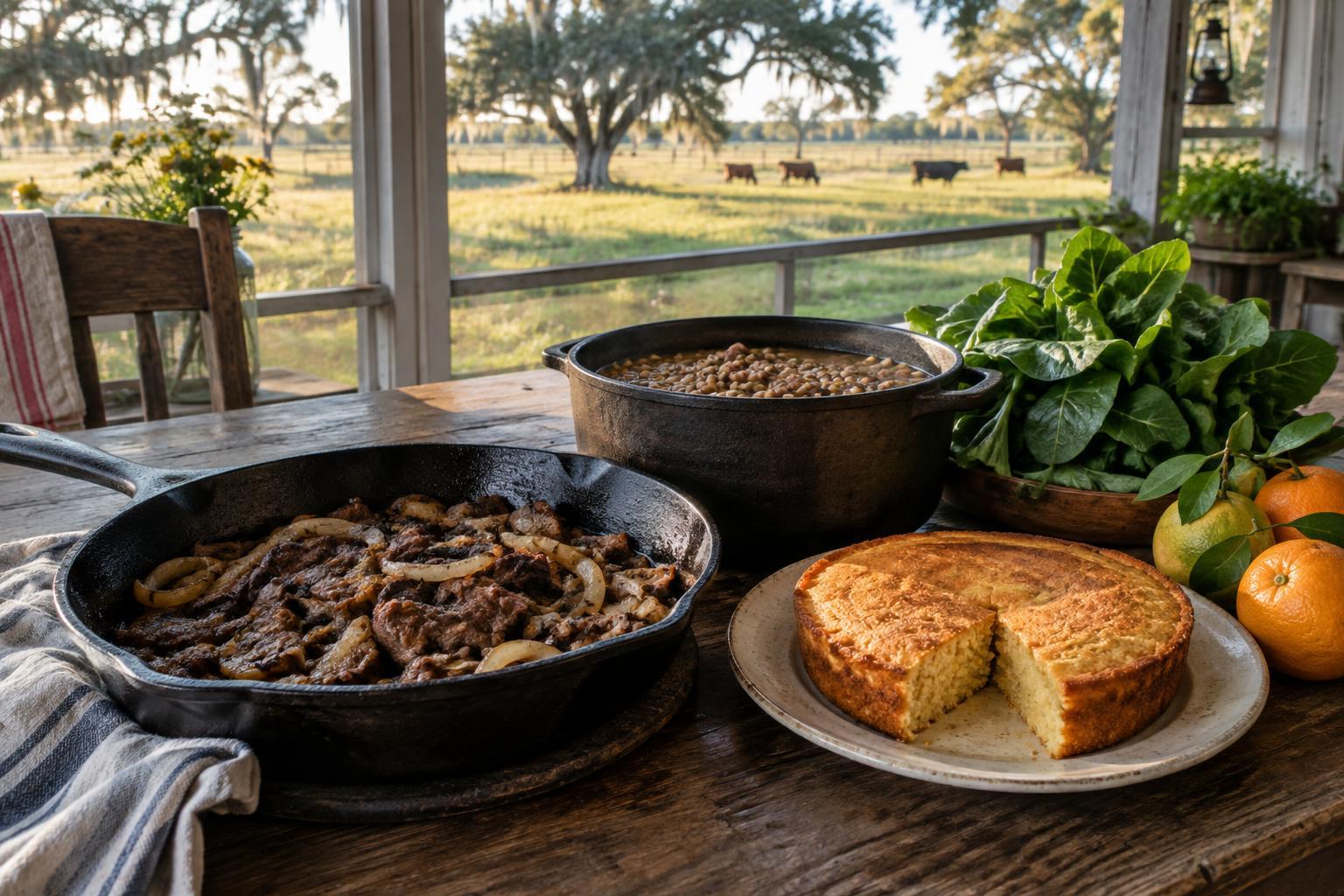
Grits, cornbread, beans or peas, greens, and slow-cooked meats help convey the character of many rural Southern meals found in Florida. Methods such as simmering tougher cuts until tender or making a substantial dish from a small amount of meat reflect practical cooking rather than a rigid set of recipes. Not every cattle-ranching family ate the same foods, and many of these dishes belong to broader Southern traditions as well. The ranching connection lies partly in how meals fit around work, season, and place.
Florida ingredients beyond beef
The landscape helps distinguish a Florida version of rural cooking. Depending on the region and household, cooks might have drawn on garden vegetables, citrus, field peas, sweet potatoes, fish, or game alongside foods bought or traded. Cane syrup, where available, could bring sweetness to a simple breakfast or baked dish. These examples are possibilities, not a checklist of foods every ranch family would have used.
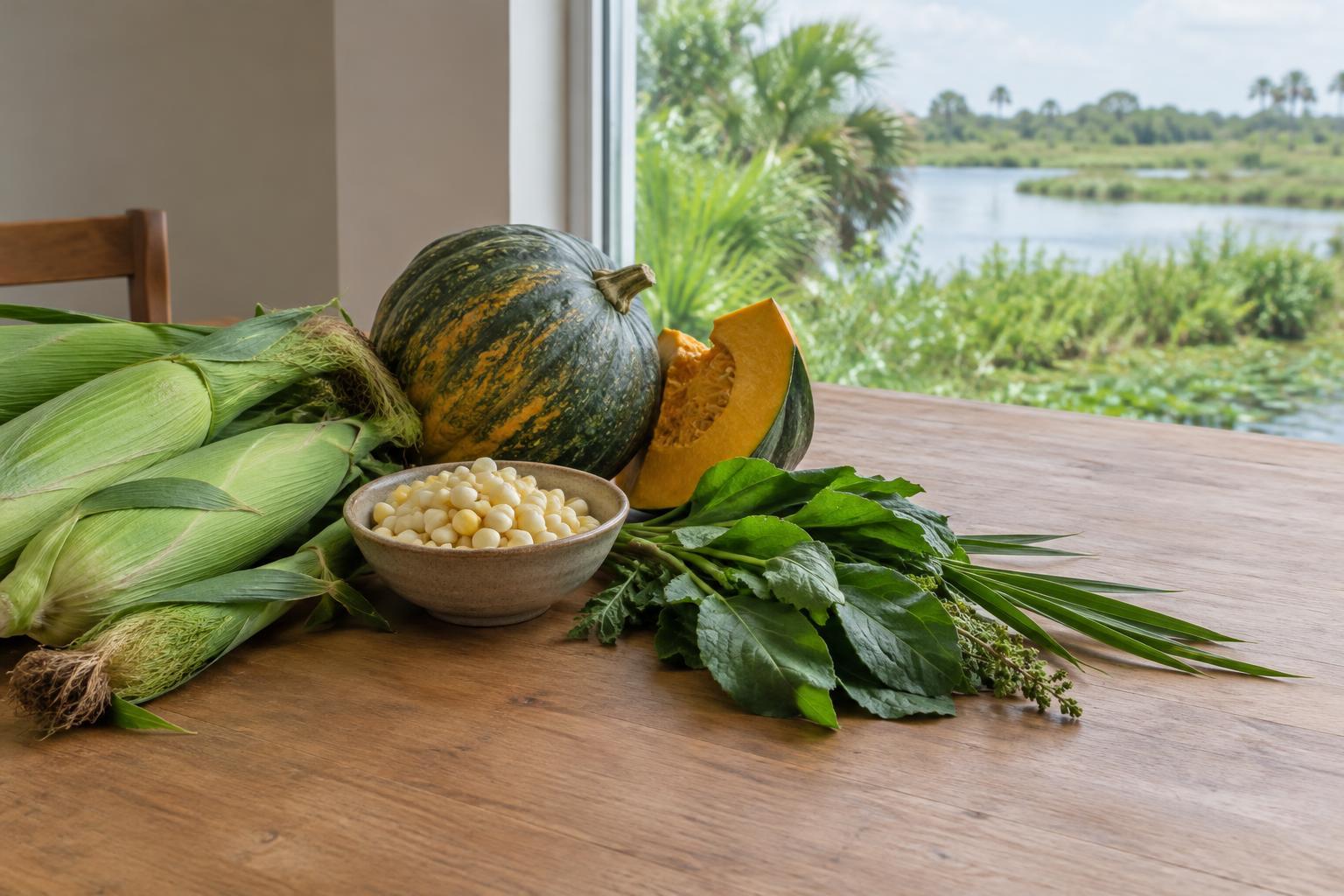
One ingredient often mentioned in accounts of older Florida foodways is swamp cabbage, made from the tender heart of a cabbage palm. Its name can be misleading: it is palm heart, not a head of garden cabbage. Removing the growing heart can kill the palm, and harvesting wild plants may be restricted. Anyone curious about its flavor should seek a responsibly sourced food product rather than assume a nearby palm is free to cut.
Whose traditions shaped the table?
A label centered on ranching can obscure the people who grew, cooked, shared, and adapted Florida’s food. Rural foodways developed through contact among Indigenous peoples, African Americans, settlers of varied backgrounds, and later communities. Ingredients and techniques moved between households and regions. A dish served as “Cracker cooking” today may carry more than one history.
That is why it helps to be specific when describing a meal. Rather than calling every pot of greens or skillet of cornbread uniquely “Cracker,” ask what makes the example local: a family preparation, a ranch-camp setting, an ingredient grown nearby, or a cook’s own account of the dish. Specificity leaves room for shared traditions without erasing the people who contributed to them.
How to explore the tradition today
At a market, start with ingredients that support a simple, satisfying meal: seasonal greens, peas or beans, sweet potatoes, and something for cornbread or grits. Ask growers how they like to prepare what they sell, then adapt those ideas to your kitchen. A pot of peas served with greens and cornbread, for example, evokes the practical spirit of rural cooking without pretending to reproduce one historic ranch dinner.
If a cookbook, menu, or family story uses the word “Cracker,” pay attention to who is using it and what they mean. Let a cook’s description guide you more than a romantic image of campfires and cattle. Florida cattle-ranching foodways are worth exploring not because they offer a single authentic plate, but because they show how work, landscape, and many communities have shaped everyday food.