Think of citrus season as a sequence, not a single harvest
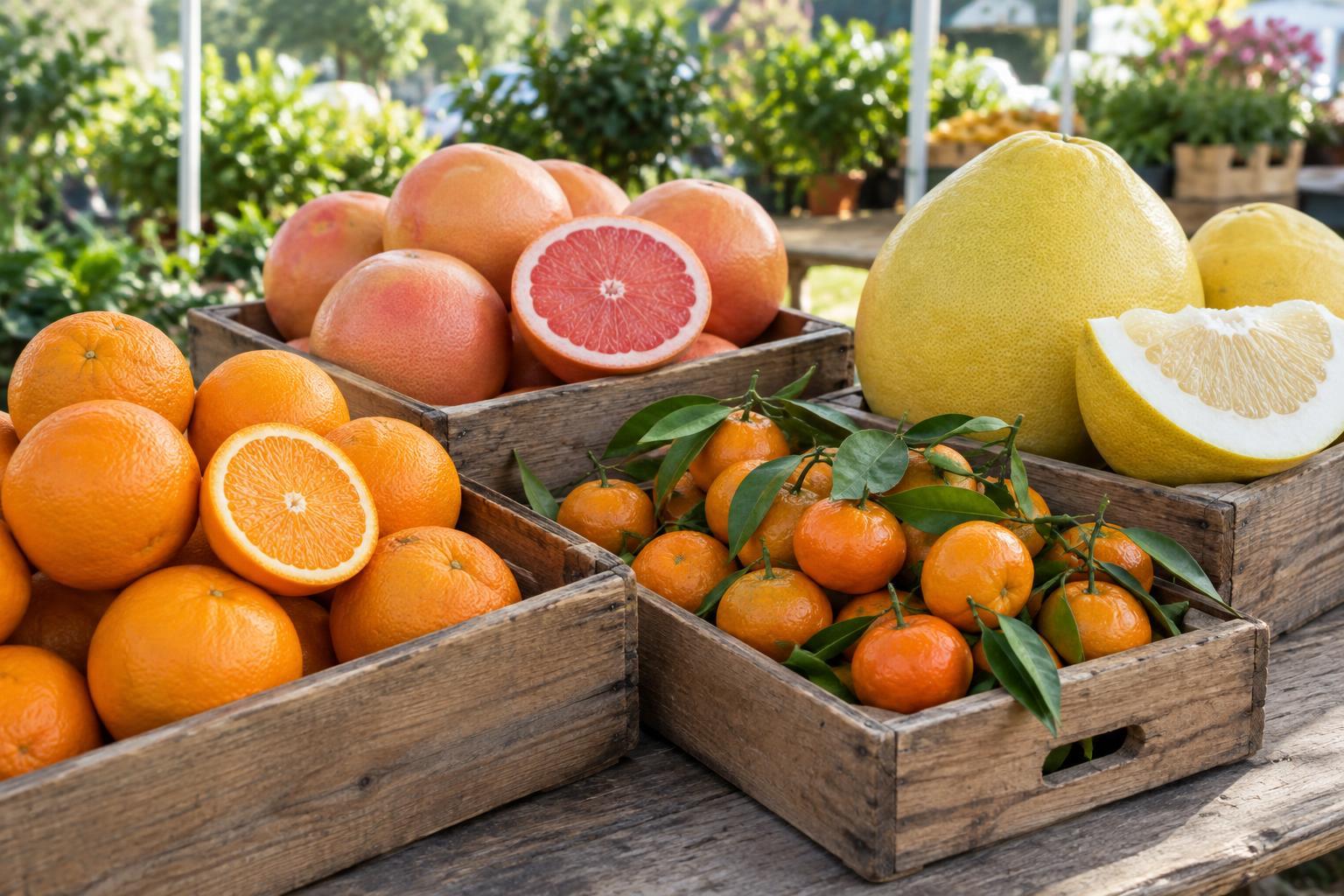
Florida citrus is closely associated with the cooler part of the year, but there is no one harvest window that fits every fruit. Variety, growing location, weather, and the choices of individual growers all affect what appears at a market. Tangerines and many pomelos tend to feel like fall-to-winter fruit, while grapefruit and oranges can extend farther through winter and into spring. Some orange varieties arrive earlier than others.
Use those patterns as a shopping guide rather than a calendar promise. A stall may carry several kinds of citrus at once, then shift to different varieties as the season progresses. If a label names the variety, keep track of the ones you enjoy: two fruits sold under the broad name “orange” may have noticeably different textures, sweetness, and amounts of juice.
Oranges: choose for eating or juicing
Oranges are a useful starting point because they show how much variety matters. Navel oranges are generally easy to peel and divide into sections, making them convenient for snacks and salads. Valencia oranges are often valued for their juice and may appear later in the broader citrus season. Other varieties can differ in size, seediness, and the balance of sweetness and acidity.
At the market, pick up a few oranges rather than judging by color alone. Fruit that feels heavy for its size is often a promising choice when you want juice. The skin should feel reasonably firm, without soft or moldy areas, though minor surface marks need not affect the fruit inside. For a simple comparison at home, taste a segment before adding sugar or dressing to a recipe; the orange may already provide all the sweetness needed.
Grapefruit: bright, tart, and versatile
Florida grapefruit commonly appears during the cooler months, with availability sometimes continuing into spring. Its flavor can range from distinctly tart to gently sweet, depending on the variety and the particular fruit. Pink or red flesh adds color to a plate, but appearance alone cannot tell you exactly how sweet a grapefruit will taste.
Choose grapefruit that feels substantial in the hand and has no soft spots. Serve it in sections, squeeze it for a brisk drink, or pair it with ingredients that balance its sharp edge, such as avocado or tender greens. When cutting segments free from the membranes, work over a bowl to catch the juice for a dressing. If you take medication, check with a pharmacist before making grapefruit a regular part of your diet; it can interact with some medicines.
Tangerines: small fruit with big differences
Tangerines are typically an earlier part of the citrus lineup, often showing up in fall and winter. The name covers fruit with different levels of sweetness, seeds, and ease of peeling. Some have loose skins that make them ideal for eating out of hand; others take a little more work but reward it with fragrant juice.
Look for fruit that feels heavy relative to its size and is free of wet or collapsing spots. A slightly loose peel can be normal for an easy-peeling variety, so it is worth asking the seller what to expect. Tangerine segments brighten a lunchbox or grain salad, while a little zest can bring aroma to a cake or vinaigrette. Wash the fruit before zesting or cutting it, even if you do not plan to eat the peel.
Pomelos: make room for the thick peel
Pomelos can look like oversized grapefruit, but expect a different eating experience. Their thick rind and white pith take more effort to remove, and the inner membranes are often best peeled away from each segment. The flesh is commonly milder and less juicy than grapefruit, with a texture that holds up well when separated into pieces. Availability varies, but pomelos are worth watching for during the fall and winter citrus season.
Do not judge a pomelo’s value by its outer size alone: much of that volume may be peel. Choose one that feels weighty and firm, then allow a little extra preparation time. Once freed from the membranes, the pieces work well in a salad with herbs, crunchy vegetables, and a lightly salty dressing. For any citrus you bring home, keep it in a cool place for short-term use or refrigerate it for longer storage, and use cut fruit promptly.