Mango season is a sequence, not a single date
In Florida, mangoes generally become a familiar sight from late spring through summer, but there is no one week when every tree delivers ripe fruit. An early variety may be finishing just as another reaches its peak. Some later fruit may remain available beyond the main summer rush, depending on where and how it was grown.
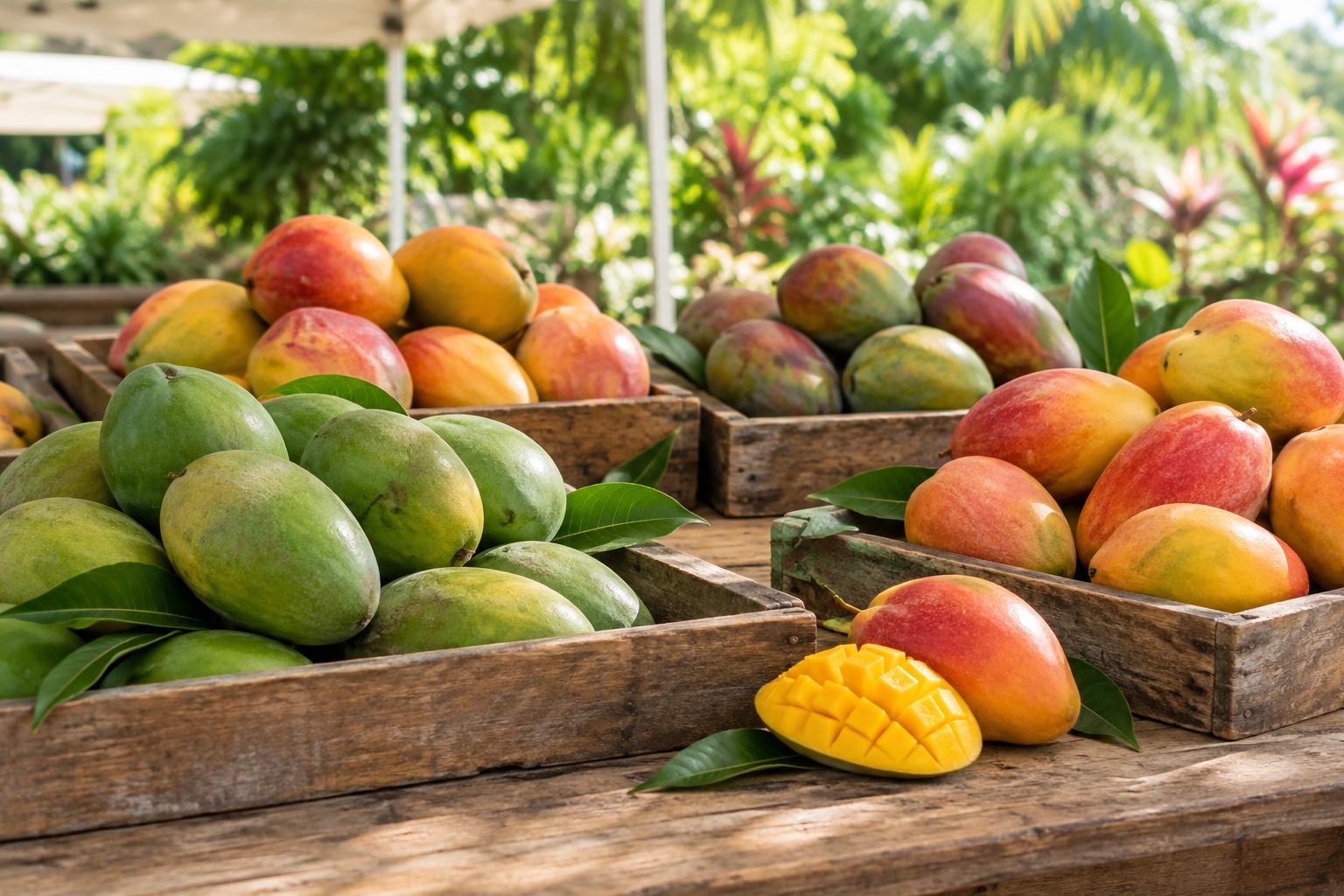
That changing lineup is part of the pleasure of shopping for local mangoes. A market table may offer fragrant, softening fruit ready for tomorrow’s breakfast alongside firmer mangoes better suited to a few days on the counter. Rather than treating the first or last mango you see as a verdict on the whole season, think of each visit as a snapshot of what particular trees are producing.
Variety sets the starting pace
Mango varieties differ in when they flower, how long their fruit takes to develop and when that fruit is mature enough to pick. Those inherited differences help explain why growers with several varieties can bring mangoes to market over a longer stretch than a grower relying on just one. They also explain why a favorite mango may disappear from a stall while other local mangoes are still plentiful.
Variety affects more than the calendar. Mangoes can differ in size, aroma, texture and the amount of fiber in their flesh. Skin color is especially variable: a red blush does not reliably mean that one mango is riper than a green-skinned mango of another variety. If a vendor knows the variety, asking its name can help you recognize one you enjoy the next time it appears.
Weather and location can move the window
Even trees of the same variety do not always follow identical schedules. Flowering and fruit development respond to growing conditions, and a warm or cool spell can alter the pace. Rain, wind and other stresses may also affect how much fruit a tree carries or how evenly it develops. A calendar from a previous year is therefore a useful guide, not a promise.
Conditions vary within Florida, too. A tree’s exposure, its immediate surroundings and local weather can all influence its progress. Individual trees may produce fruit at slightly different times, and fruit on a single tree need not be ready on the same day. This is why a grower may harvest in several passes instead of clearing the tree at once. It is also why a shopper might find a variety at one market before seeing it at another.
Harvest maturity is different from eating ripeness
A mango does not have to be soft on the tree to be ready for harvest. Growers generally aim to pick fruit that has developed enough to ripen well afterward, while allowing for the time it takes to handle and sell it. Fruit picked too immature may never develop the flavor or texture a shopper expects; fruit left to become very soft may be harder to transport without bruising. The best picking point depends partly on the variety and the intended route to the table.
At the market, gently assess the fruit rather than judging by color alone. A mango intended for eating soon should give slightly to careful pressure and may have a pleasant aroma near the stem. For use later in the week, choose mature-looking fruit that is still firm and ask the seller how they expect it to ripen. Avoid fruit with obvious leaking or extensive soft, damaged areas.
Make the most of a changing harvest
Let firm mangoes ripen at room temperature, checking them daily. Once they reach the softness you like, refrigeration can help slow further ripening for a short time. Handle them gently, and wash the outside before cutting so the knife does not carry surface dirt into the flesh. If you have several ripe mangoes at once, cut and freeze the flesh for smoothies or sauces.
A changing selection is an invitation to adjust your cooking. A ripe, aromatic mango needs little more than a spoon; it can also brighten a fruit salad or a simple salsa. Firmer fruit may be easier to dice neatly, though its flavor and texture will depend on how mature it is. Ask what was picked recently, taste across varieties when samples are offered, and note the ones you want to look for again. Following those small shifts makes Florida mango season more interesting than any fixed date on a calendar.