When to look for Florida guava
Guava is a tropical fruit that can grow in Florida’s warmer areas. For many trees, the main harvest falls in summer and extends into fall, but timing varies with location, variety, weather and growing conditions. A tree may also flower and fruit outside its main season. Rather than planning around a fixed calendar date, watch the fruit as it matures and check the tree regularly once the first guavas begin to change color.
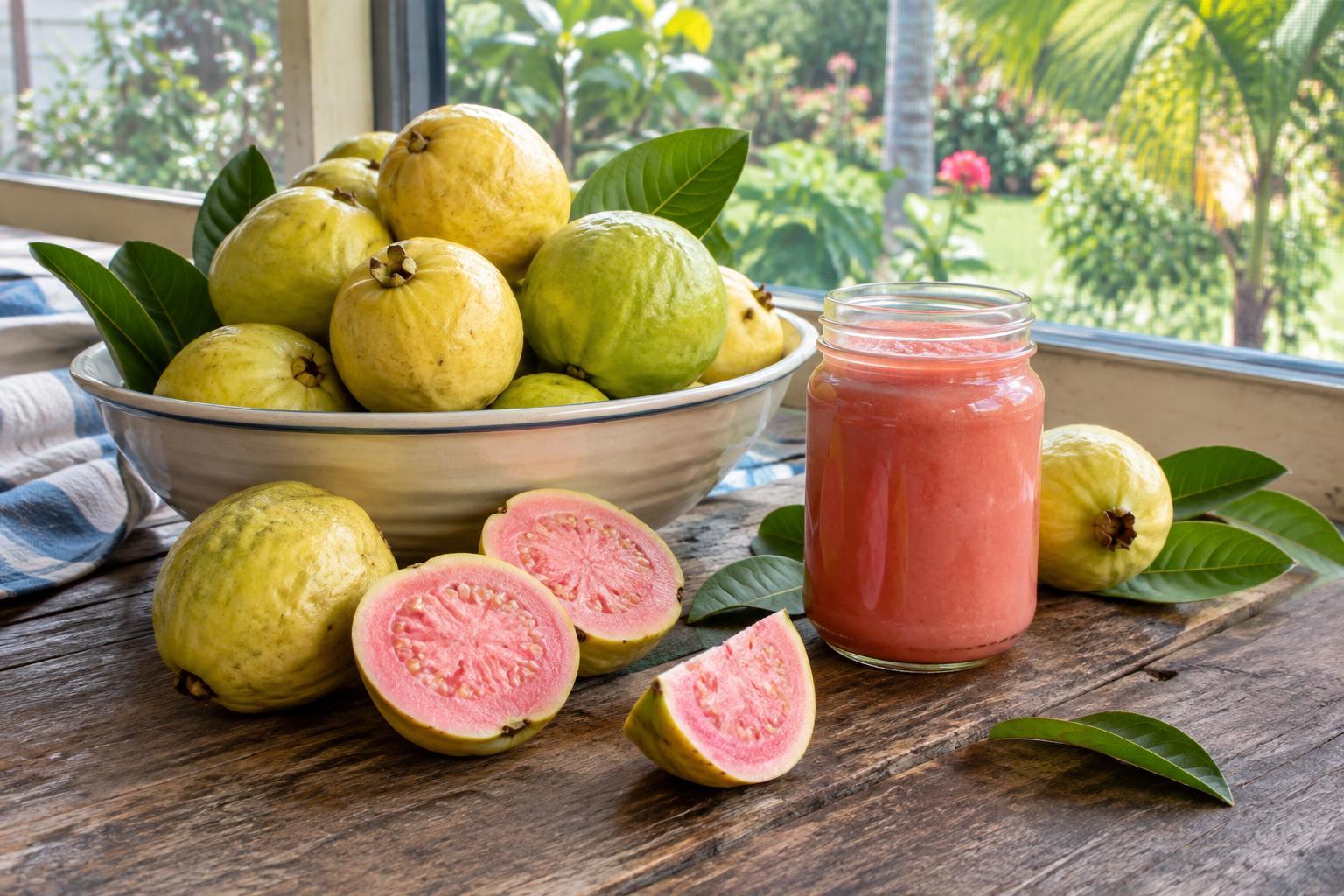
A ripe guava is usually fragrant and yields slightly to gentle pressure. Depending on the variety, its skin may turn yellow, remain greenish or develop a pink blush; the flesh may be white, pink or red. Color alone is not a reliable test. If you are buying guavas at a market, ask whether they are ready to eat or would benefit from a day or two on the counter. Pineapple guava, sometimes sold under the name feijoa, is a different fruit with different ripening habits, so check what you are getting.
Sort the harvest before it gets ahead of you
A productive guava tree can deliver fruit faster than one household can eat it. Gather sound fruit regularly, handle it gently and sort it as soon as you bring it inside. Set aside fragrant, slightly soft guavas for immediate use. Leave firm, mature fruit at room temperature to ripen, checking it daily. Once ripe, refrigerate fruit you cannot use right away, but plan to eat or process it soon; guava does not keep indefinitely.
Wash guavas under running water before cutting them. Trim bruised spots from otherwise sound fruit, but discard any fruit with mold, extensive decay or an unpleasant smell. Cut a few open, especially if they fell to the ground, and check for insect damage. For a large harvest, separate the best-looking fruit for fresh eating, the ripe but imperfect fruit for cooking, and excess sound fruit for freezing or sharing.
Eat it fresh, seeds and all
Guava needs little preparation for a snack: wash it, slice it and eat the flesh with the skin if you enjoy its texture. The seeds are edible, though some varieties have hard seeds that people prefer not to chew. For a smoother result, scoop or cut the fruit into pieces, blend it with a small splash of water, and press the mixture through a fine-mesh sieve. The resulting purée can be stirred into yogurt, spooned over oatmeal or used in a chilled drink.
Guava’s sweet, floral flavor also works well alongside tart or savory ingredients. Try slices with a squeeze of lime, add firm pieces to a fruit salad just before serving, or use a small amount of purée in a dressing with citrus juice and a pinch of salt. Taste before adding sugar: sweetness and tartness vary from fruit to fruit, even on the same tree.
Turn ripe fruit into a flexible guava sauce
A simple sauce uses up soft, sound guavas without committing the whole harvest to one recipe. Blend washed, trimmed fruit and strain out the seeds if desired. Put the purée in a saucepan and simmer it gently, stirring often, until it reaches a consistency you like. Add a little lime juice for brightness and sugar only if needed. Let the sauce cool, then refrigerate it promptly or freeze it in portions.
Spoon the sauce over pancakes, swirl it into plain yogurt or serve it with a mild cheese. It can also add fruit flavor to a glaze for roasted vegetables or cooked meat. If you want a spread that can be stored at room temperature, use a tested preservation recipe suited to guava and follow its processing directions. A sauce made by taste, however delicious, should not be treated as shelf-stable.
Freeze the surplus and share the rest
Freezing is a practical option when the next batch is already ripening. Freeze strained purée in small, labeled containers, leaving room for expansion, or portion it into an ice-cube tray before transferring the frozen cubes to a freezer container. Small portions are easy to add to smoothies, sauces or desserts. You can also freeze prepared fruit pieces on a tray before packing them together; their texture will soften after thawing, so they are best used in cooked or blended dishes.
If you still have more than you can use, offer sound fruit to neighbors or friends along with a note that ripe guava should be enjoyed soon. Keep an eye on fallen fruit beneath the tree and remove it regularly rather than letting it accumulate. A little sorting each day makes the harvest easier to manage—and leaves more time to enjoy guava at its fragrant best.