Why “summer squash” can be a confusing name
Zucchini and yellow squash are called summer squash because they are harvested young, while their skins are tender and their seeds are still small. The name describes how they are picked and eaten, not a promise that locally grown squash will be plentiful throughout a Florida summer. Unlike hard-skinned winter squash, these varieties are usually cooked or served with their skins intact.
Florida’s heat, humidity, and heavy summer rains can make squash harder to grow. In many parts of the state, growers have better conditions during cooler stretches of the year. That means a shopper looking for Florida-grown zucchini in the hottest months may find less of it than expected, even while squash from elsewhere remains available in stores.
When to look for Florida-grown squash
The useful rule of thumb is to look for local summer squash from fall through spring, rather than assuming midsummer is its main Florida season. The window is not identical across the state: cooler weather reaches North Florida differently than South Florida, and individual farms adjust planting and harvests to their conditions. A warm spell, cold snap, or prolonged wet period can also change what arrives at a market in a given week.
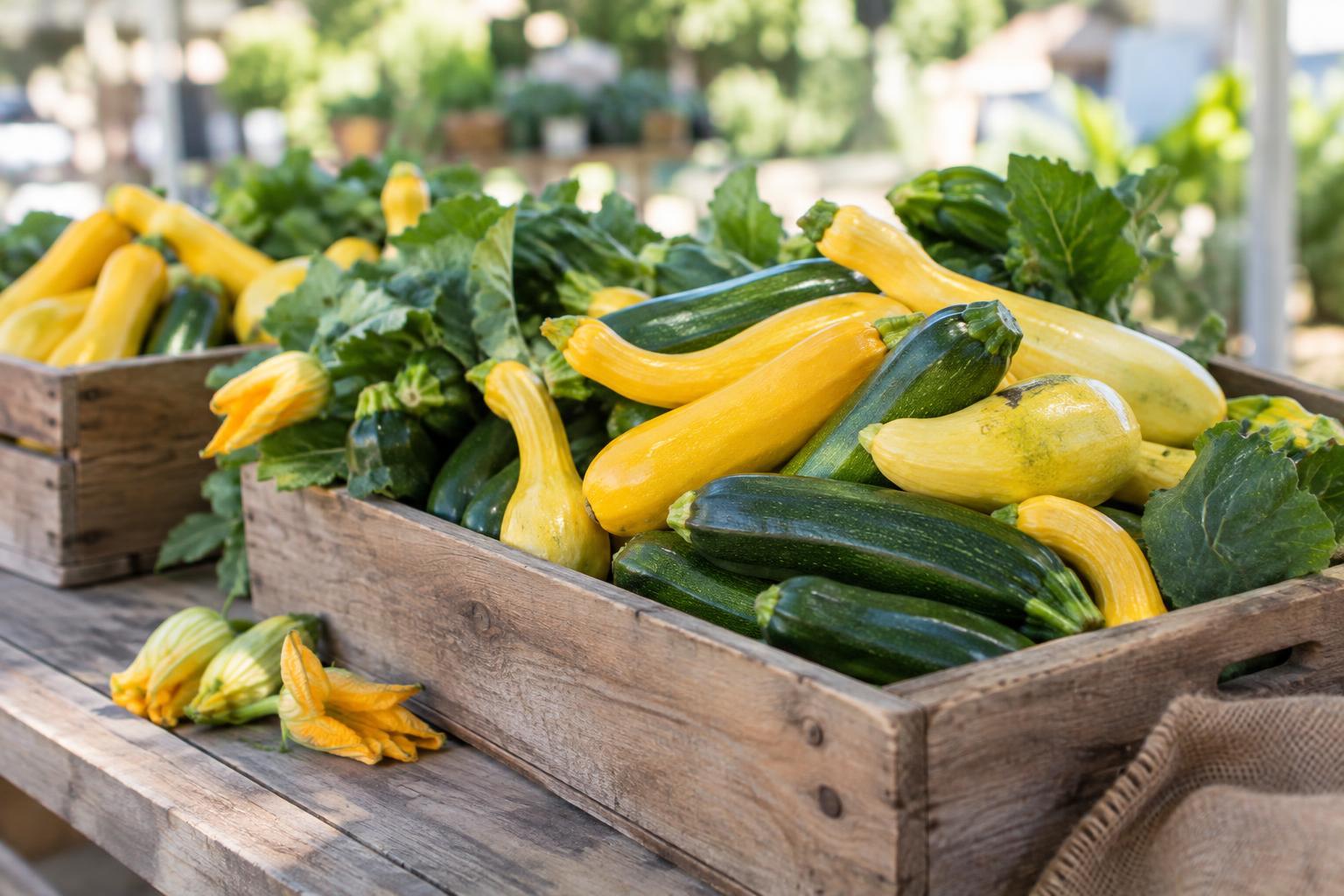
If local origin matters to you, ask the vendor where the squash was grown. A market stall can offer excellent produce without every item being grown nearby. Asking about the farm and the latest harvest is more reliable than judging by the month alone. It may also lead you to varieties you had not planned to buy, such as pale yellow straightneck squash or a small batch of round zucchini.
Choosing zucchini and yellow squash
Zucchini is typically green and cylindrical, while yellow squash may be straight or gently curved with a narrow neck. Their flavors are mild enough to use in many of the same dishes. Shape and color matter less than condition: choose squash that feels firm for its size, with skin that looks fresh rather than shriveled. Minor surface marks are usually less important than soft spots, deep cuts, or signs of decay.
Small to medium squash are convenient when you want tender slices for a quick sauté. Larger ones can still be useful, especially for grating into fritters or baking, but they may contain more prominent seeds and release more moisture. If you are buying for a particular meal, tell the grower how you plan to cook it. They can often help you choose between delicate squash for the pan and bigger pieces for shredding.
Keep it fresh, then cook it simply
Summer squash is more perishable than hard-skinned squash. Keep it dry and refrigerated, loosely wrapped or in a produce bag that allows a little airflow. Wash it just before cooking, and use it while it is still firm. If you have more than you can cook promptly, grating and freezing it for a cooked dish is an option; thawed squash will be softer, so it is better suited to soups, fritters, or baking than to crisp sautéed slices.
For an easy side dish, cut zucchini and yellow squash into similarly sized pieces, cook them in a wide pan with a little oil, and season near the end. Giving the pieces room helps moisture evaporate instead of collecting in the pan. You can also roast thicker pieces until their edges brown, or add thin slices to a soup shortly before serving. If the squash is especially fresh, keep the preparation modest so its gentle flavor remains noticeable.
Let the market shape the meal
A seasonal approach leaves room for variation. On a week when Florida-grown squash is abundant, make it the center of dinner alongside beans, rice, pasta, or eggs. When the supply is limited, one zucchini can still add color and texture to a larger dish. Pairing it with other produce available from the same grower can be an easy way to build a meal without relying on a fixed calendar.
The most useful question is not simply “Is it summer squash season?” but “What is growing here now?” That distinction makes shopping more flexible in a state with varied growing conditions. It also helps you enjoy zucchini and yellow squash when they are in good shape, regardless of what their name suggests.